Free Delivery
 365-Day Returns
 10 Million Happy Customers
 500,000 Products in Stock
Cast Iron Pots: Top Benefits & Why You Should Use Them
Reviewed by the Beliani Content Team · Updated October 2026
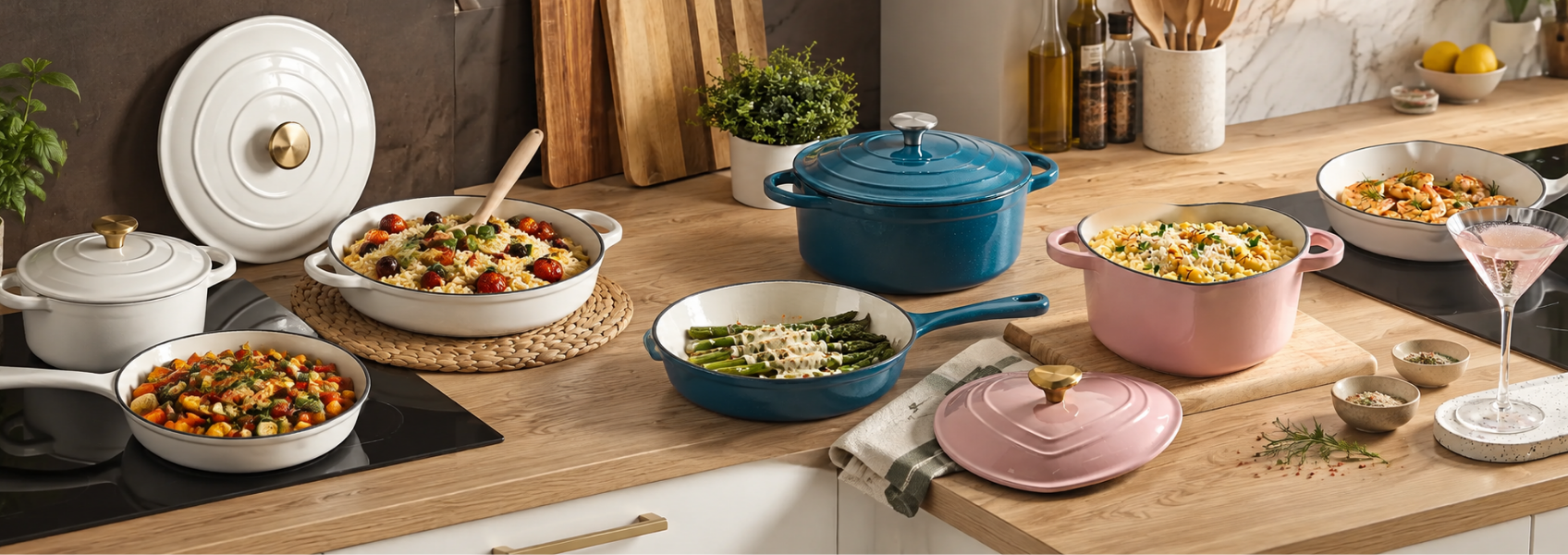
A cast iron pot behaves differently from almost anything else in the kitchen: it takes longer to heat up, holds that heat with unusual stubbornness, and keeps working for decades rather than years. That makes it worth understanding before you buy one, since the same qualities that make it so good for a slow stew come with a handful of care habits you don't need with lighter cookware. This guide looks at what cast iron does well, how to look after it day to day, and what to avoid.
In short
Why are cast iron pots worth buying?
Cast iron pots hold and release heat more evenly than thin metal pans, which keeps stews, braises and sauces at a steady simmer with little attention needed. The iron itself is magnetic, so the same pot works on induction, gas, electric and ceramic hobs without any adaptor. With basic care, a cast iron pot can last for decades, whereas lighter non-stick cookware typically needs replacing every few years.
How does cast iron keep food at an even temperature?
Cast iron's natural ferromagnetism makes it ideal for induction hobs, and it works equally well on gas, electric, and ceramic. Uncoated cast iron can also handle open flames and grills, unlike enamelled options.
Two quick safety rules for hob care:
- Glass-ceramic: Lift, don't drag - the rough base can scratch the surface.
- Induction: Avoid the boost setting; rapid heating at maximum power can warp the base.
Does cast iron work on every type of hob?
Yes. Cast iron is naturally ferromagnetic, which is exactly what an induction hob needs to generate heat, so it heats up there in moments and works just as reliably on gas, electric and ceramic hobs. Bare, uncoated cast iron can also go directly onto a grill or an open flame, which enamelled versions should avoid.
The only hob to treat carefully is glass-ceramic: cast iron's rough base can scratch the glass if it's dragged rather than lifted into place, so set it down gently and use a trivet when moving it on and off. On an induction hob, avoid the boost setting with cast iron, since pushing it to maximum power too quickly is one of the more common ways to warp a base.
Shop now: pots and pans
Enamelled or Bare: which suits your kitchen?
Bare cast iron
- Tolerates much higher oven and grill temperatures
- Typically the lower purchase price
- Needs seasoning and must be dried immediately to prevent rust
- Frequent acidic cooking can strip the seasoning over time
Enamelled cast iron
- Hand wash only, no seasoning needed
- Safe with acidic foods - the enamel doesn't react
- Oven-safe to around 230–260°C, depending on brand and handle
- Typically the higher purchase price
Can you grill indoors with a cast iron pan?
Yes, though this is usually a job for a ridged cast iron frying pan rather than the pot itself. The raised ridges lift meat, fish or vegetables above the fat and juices that collect in the base, so the food chars and picks up visible grill marks instead of stewing in its own liquid. Cast iron's heat retention matters here too: once the ridges are hot, they stay hot enough to sear several batches of food in a row, which thinner pans struggle to do.
One safety note worth flagging: this means a ridged cast iron pan on the hob, never an actual outdoor charcoal or gas grill brought indoors, which produces dangerous levels of carbon monoxide in an enclosed room.
Which dishes suit a cast iron pot?
Cast iron isn't the right choice for every meal, but it earns its place for dishes that benefit from steady, lasting heat.
Low and slow
Braises and stews
Even heat keeps a long simmer steady without hot spots, so tougher cuts of meat soften evenly over hours rather than catching on one side of the pot.
Stovetop to oven
Roasts and bread
The same pot sears on the hob, then moves straight into the oven to finish, so there's no need to transfer the dish and lose heat or moisture.
Pot to table
Casseroles
Because the pot stays hot for a long time after cooking, it can go straight to the table and keep a casserole or stew warm through the meal.
Read more: choosing dinnerware for the table
Five dishes worth cooking in cast iron
Tap a dish to see how it's done
Steakhouse sear
A deep, crackly crust without overcooking the centre - cast iron holds intense heat without dropping temperature when cold meat hits the pan.
- Pat steak completely dry, season generously with salt, and dry-brine in fridge for 40–60 minutes
- Preheat skillet over high heat until smoking; add 1 tbsp high-smoke-point oil (avocado or canola)
- Sear 2–3 minutes per side; add butter, crushed garlic, and thyme during the last minute to baste
- Remove at 52°C–54°C (medium-rare) and rest for 5–8 minutes on a warm plate before slicing
Seared steak
Tap for the recipe
Golden edges
A thick, ultra-crispy bottom crust - pouring batter into a piping-hot greased pan fries the exterior immediately on contact.
- Preheat empty pan in oven at 200°C for 15–20 minutes while preparing batter
- Carefully add 2 tbsp butter (or bacon fat) to hot pan, swirling until sizzling
- Pour batter directly into centre and bake at 200°C for 20–25 minutes until golden brown
- Rest in pan for 10–15 minutes so the structure sets before slicing into wedges
Skillet cornbread
Tap for the recipe
Brunch for the table
Eggs poached gently in an aromatic tomato sauce - best in an enamelled pot, since the sauce is acidic.
- Sauté diced onions, bell peppers, garlic, cumin, and paprika in olive oil for 8–10 minutes
- Add crushed tomatoes and simmer gently for 12–15 minutes until sauce thickens
- Make small wells in sauce, crack in eggs, cover, and cook on low heat for 5–8 minutes
- Garnish with crumbled feta and fresh herbs; serve straight from the pot with crusty bread
One-pan shakshuka
Tap for the recipe
Sunday roast
Heavy iron radiates heat evenly, roasting root vegetables in savory drippings while keeping chicken skin golden and ultra-crisp.
- Pat 1.5–2 kg chicken dry, season thoroughly with salt, pepper, herbs, and olive oil
- Arrange chopped onions, carrots, and garlic in bottom of pan; place chicken breast-side up on top
- Roast UNCOVERED at 210°C for 50–60 minutes until thickest part of thigh reaches 74°C
- Rest for 10–15 minutes before carving to allow juices to redistribute
Whole roast chicken
Tap for the recipe
Friday night
An oiled pan base fries dough from underneath while cheese caramelised against iron walls creates an iconic crispy crown.
- Coat pan interior with 2 tbsp olive oil; press dough into base and 2 cm up sides
- Layer low-moisture mozzarella first (to edges), then spoon tomato sauce and toppings over cheese
- Bake on lowest oven rack at 245°C for 18–22 minutes until crust is deep golden
- If needed, heat on stovetop over medium heat for 1–2 minutes to finish bottom crispiness
Deep-dish style pizza
Tap for the recipe
How long does a cast iron pot last?
A cast iron pot that's cared for properly can realistically last for decades, and many households pass a well-used one down between generations. Enamelled pots are less fussy to maintain long-term since there's no seasoning to keep up, while bare cast iron rewards regular use by improving with age.
Bare cast iron builds its own non-stick surface
Every time you cook with oil in a bare cast iron pot, a thin layer bonds to the surface and builds up over repeated use. Unlike a factory non-stick coating, this seasoning doesn't wear out, it keeps improving the longer the pot is used.
How to care for a cast iron pot day to day?
A few consistent habits do more for a cast iron pot's lifespan than any single deep clean.
Step 1
Wash by hand
Use warm water, and skip harsh detergents and abrasive scourers on bare iron.
Step 2
Dry completely
Do it straight after washing, since damp bare iron can start rusting within hours.
Step 3
Oil bare iron
Add a thin layer after every wash. Enamelled cast iron doesn't need this step.
Step 4
Store lid ajar
Leave the lid slightly open, ideally with a paper towel inside to absorb leftover moisture.
What to check before buying a cast iron pot
A few practical checks will narrow down the right pot for your kitchen and how you cook.
- Match the capacity to how many people you usually cook for, not just the dish you have in mind today
- Check that the handles and any lid knob are rated for the oven temperatures you'll actually use
- Decide between enamelled and bare iron based on how much seasoning and drying you're willing to do
- Confirm it suits your hob type, which matters most if you cook on induction or an open flame
- Lift the empty pot in the shop if you can, since cast iron is heavy and a full pot adds considerably more weight
- Check the lid sits tightly, which matters for slow braises where you don't want moisture escaping
Frequently asked questions
Can you put cast iron pots in the dishwasher?
Most manufacturers recommend hand washing cast iron pots, including enamelled ones, because repeated dishwasher cycles can dull the enamel or strip seasoning from bare iron. Washing by hand with warm water and drying straight away also helps prevent rust on bare cast iron.
Do you need to season an enamelled cast iron pot?
No, enamelled cast iron has a smooth, glass-like coating that doesn't need seasoning and is ready to cook with from new. Only bare, uncoated cast iron needs the oil-based seasoning process used to build up a natural non-stick surface.
Can you use metal utensils on a cast iron pot?
Bare cast iron is tough enough to resist scratching from metal utensils. On enamelled cast iron, it's better to use wood, silicone or nylon, since repeated contact with metal can eventually chip the glossy coating.
How do you remove rust from a cast iron pot?
Scrub the rusted area with a stiff brush or fine steel wool and warm water, then dry the pot completely and re-season it with a thin layer of cooking oil baked on in the oven. This only applies to bare cast iron, since enamelled pots don't rust.
Why shouldn't you add cold liquid or food to a hot cast iron pot?
Cast iron expands unevenly when its temperature changes too quickly, which can crack the metal or cause an enamelled coating to craze. Let cold ingredients sit at room temperature first, or add them before the pot gets hot, rather than dropping them straight into a hot pan.
Can you store leftovers in a cast iron pot?
It's best not to. Food left sitting in the pot, especially anything acidic, can react with bare iron and pick up a metallic taste, and even enamelled pots are better off emptied so they can be washed and dried properly. Move leftovers to a separate container once you've finished cooking.