Free Delivery
 365-Day Returns
 10 Million Happy Customers
 500,000 Products in Stock
The Ultimate Guide to Choosing the Right Coffee Table
Reviewed by the Beliani Content Team · Updated September 2026
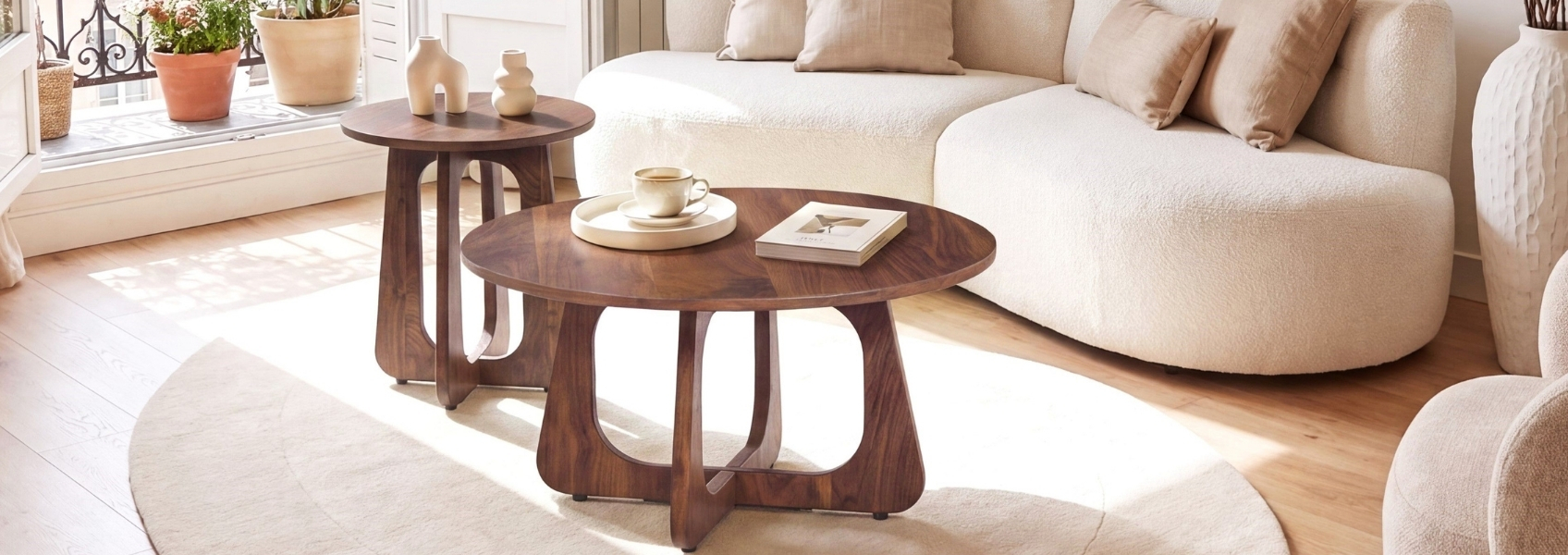
A coffee table sits at the centre of daily life in the living room, holding everything from morning coffee to evening board games, so getting the right one shapes how the whole room feels and works. The wrong choice throws off the balance between your sofa and the rest of the space, or leaves you short on somewhere to put a cup down. This guide works through sizing, shape, material and function so you can match a table to your sofa and your room with confidence.
In short
How do I choose the right coffee table
Pick a table sized and shaped around your sofa, then choose the material and features based on your household and how the table will be used day-to-day. A coffee table should sit 2.5-5cm lower than the seat of your sofa, and the tabletop length should be 50-70% of the sofa's length. Leave 35-45cm of clearance between the table and the couch front.
- Small households and tight rooms favour round or oval shapes with smaller footprints
- Homes with young children benefit from solid wood over glass
- Sectionals and L-shaped sofas often need a rectangular table sized to the main seating run, not the full outer silhouette
What size coffee table do I need
The tabletop length should be 50-70% of your sofa's length, which keeps the table visually balanced without overwhelming the seating area or leaving an awkward gap. A 220cm sofa pairs well with a table between 110-154cm long, while a 180cm two-seater suits a table closer to 90-126cm.
Height matters just as much as length. Your coffee table top should sit 2.5-5cm lower than your sofa's seat cushions, measured with the cushion compressed by someone sitting on it rather than empty. Most sofa seats sit 40-48cm from the floor, which is why the standard coffee table height range is 40-46cm. A table set higher than your sofa seat forces you to reach up awkwardly; on the other hand, if it's too low, it means leaning down further than is comfortable for regular use.
| Sofa type and length | Rectangular or oval table (length) | Square or round table (width/diameter) |
|---|---|---|
| 2-seater sofa 140-180cm |
70-125cm | 60-80cm |
| 3-seater sofa 180-230cm |
90-160cm | 70-90cm |
| Large 4-seater sofa 230-300cm |
115-210cm | 80-100cm |
| Corner or L-shaped sectional main seating run 180-230cm |
90-160cm, sized to the straight run rather than the full sectional footprint | 70-90cm, often positioned near the open corner or chaise |
What shape of coffee table should I choose
Shape affects how a table fits your room's layout and how safely you can move around it, as much as it affects style.
Square
Balanced and boxy
Suits symmetrical layouts, such as two sofas facing each other. Its equal proportions keep the space feeling ordered and calm.
Rectangular
The natural fit for most sofas
Echoes the long, straight line of a standard three-seater or sectional couch. The most practical choice when you need surface area for drinks, books, or even working.
Oval
Softer lines, same footprint
Keeps a rectangular table's length without sharp corners, making it a safer option around young children while still suiting a longer sofa.
Round
Best for tight or awkward spaces
Has no corners to navigate around, so it feels less bulky in small rooms or tucked into a sectional's open corner near a chaise.
Shop now: coffee tables and side tables
Which material works best for daily use
Material is one of the biggest factors in how a coffee table performs day to day. It shapes how much upkeep the table needs and how well it holds up to daily contact with cups, remotes and feet.
| Material | Durability and care | Best suited to |
|---|---|---|
| Solid wood | Resists knocks well with no shatter risk. An oiled finish needs reapplying every six to twelve months; a lacquered or sealed top just needs regular dusting. Typically the most durable option over the table's lifespan. | Family homes and households with young children |
| Wood veneer | A thin layer of real wood over an engineered core. Lighter and generally lower cost than solid wood, but more vulnerable to damage if the surface is deeply scratched or exposed to standing water. | Budget-conscious buyers who still want a genuine wood-grain look |
| Glass | Shows fingerprints and dust readily, needs frequent wiping. Choose tempered glass with rounded edges for safety. | Smaller rooms, where a glass top keeps the space feeling open |
| Marble and stone-look | Natural marble is porous and needs sealing, plus prompt wiping of acidic spills such as wine or citrus to prevent staining and etching. Engineered or sintered stone-look tops resist stains without sealing, trading the natural veining of real marble for lower upkeep. | Buyers who want a stone look, weighed against how much sealing and care they're willing to do |
| Rattan | Clean with a soft brush and a lightly damp cloth, following the direction of the weave. Avoid soaking the material and keep the table out of direct sunlight to prevent fading and brittleness. | Rooms with an otherwise natural material palette, where a lighter, textured table suits the space |
| Metal and mixed material | Metal frame adds structural strength; a wood, glass or stone-look top gives a different surface feel. Wipe metal with a mild detergent and dry thoroughly to prevent tarnishing. | Contemporary or industrial-style living rooms |
Finish durability matters as much as the material itself. If you have kids, pets, or use the table for actual dining or working rather than just resting drinks, a scratch- and stain-resistant finish matters more than pure looks. A beautiful but delicate finish that marks easily will show wear within months in a household that puts it to daily use.
What functionality do I need from a coffee table
Beyond size, shape and material, a coffee table needs to match how you actually use your living room. Three factors decide this.
- Storage needs: drawers, shelves or a lift-top add somewhere to keep remotes, throws or a laptop out of sight if a flat surface alone isn't enough
- Surface use: a table that only holds drinks and books casually can be lighter and simpler than one that needs to stand up to meals, board games or laptop work
- Nesting and modular options: a set of nesting tables gives you flexibility to spread out for entertaining, then tuck away again to free up floor space
Weigh these against each other rather than choosing on looks alone. A table with drawers and a sturdy, wipeable top suits a household that uses the living room hard; a simple fixed-top table suits one where the coffee table is mostly décor.
How to match a coffee table with your living room
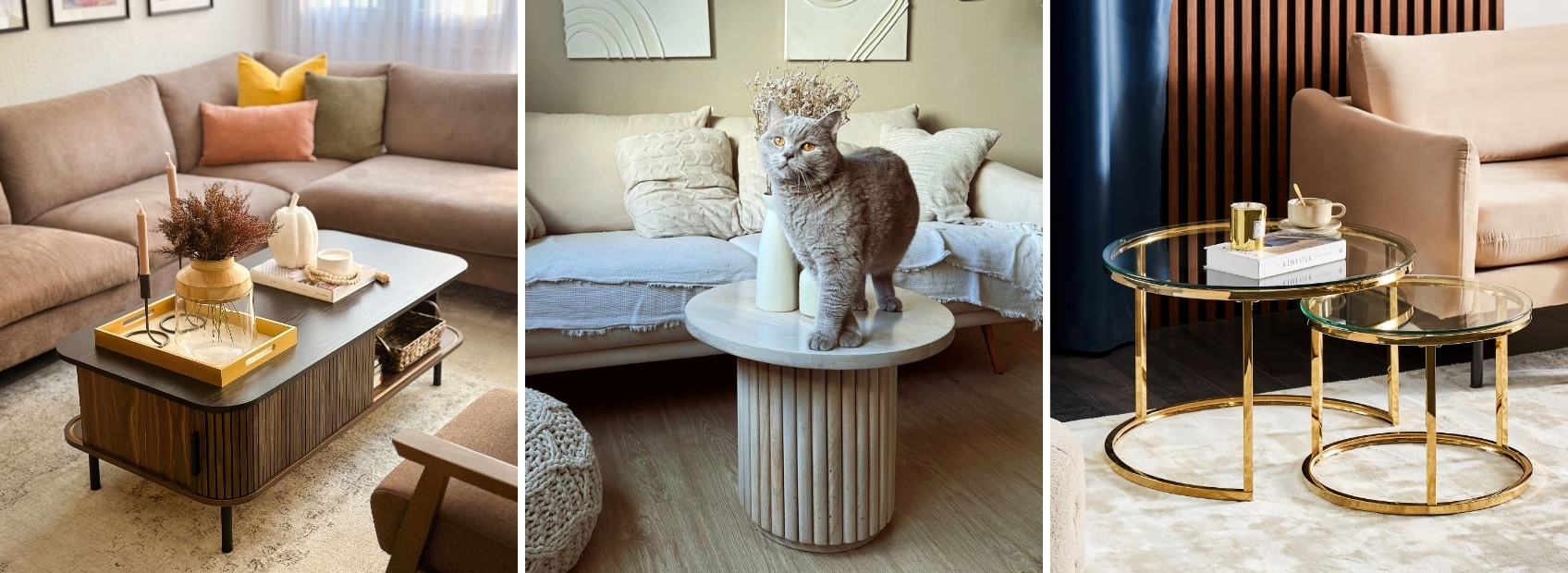
A coffee table should read as part of a set with your sofa and flooring, not as an isolated piece. Match the table's undertone, warm or cool, to your flooring or your largest wood item in the room, such as a sideboard or shelving unit. The tones do not need to be identical, but an oak table against cool grey flooring with no other warm tones in the room will look disconnected.
Consider the room's overall proportions too. A large coffee table in a small living room narrows the walkway and makes the space feel cramped, even if it is correctly sized against the sofa. In a compact room, prioritise the 35-45cm clearance rule over the table-to-sofa length ratio if the two are in tension, since daily comfort matters more than a perfect proportion.
Working with a rug
The common styling rule is that all four legs of the coffee table should sit on the rug. A rug that only reaches partway under the table, with legs hanging off the edge, tends to look unfinished rather than intentional. Keep furniture placement consistent across the whole seating area: if the sofa's front legs sit on the rug, apply the same rule to any accent chairs nearby so the layout reads as one coordinated space rather than a mismatch of choices.
Working with an open-plan layout
In an open-plan living and dining space, the coffee table sits within a larger visual system rather than as a standalone piece. Keep its height and tone consistent with the seating area's other furniture so the living zone still reads as a defined space within the open plan, rather than blending into the dining or kitchen zone next to it.
The most common mistake
Choosing a coffee table for its appearance alone, without checking it against your sofa's actual seat height and length, is the single most common mistake. A beautiful table that sits too high or too far from the sofa will feel wrong every time you reach for it, regardless of how well it photographs.
Read more: our sofa upholstery guide
How to match a coffee table with your sofa
Beyond height and length, consider how the table's silhouette relates to your sofa's own lines. A sofa with soft, rounded arms generally pairs well with a round or oval table, while a sofa with sharp, tailored lines suits a rectangular table with clean edges. This is a visual preference rather than a fixed rule, but it keeps the seating area feeling coordinated rather than assembled from unrelated pieces.
Colour and material contrast can work in your favour. A dark wood table against a light fabric sofa, or a pale table against a deep leather sofa, creates definition between the pieces rather than letting them blend together. Aim for one point of contrast, whether that is tone, material or shape, rather than three at once, which can make the pairing feel uncoordinated.
Coffee tables for your situation
Small living rooms
Choose a round or nesting table
A round table or a set of nesting tables takes up less visual space than a large rectangular piece and makes it easier to move through a compact room.
Families with young children
Choose solid wood with rounded edges
Solid wood tolerates knocks without shattering, and rounded corners reduce the risk of injury at child height.
Limited storage elsewhere
Choose a table with drawers or a lift-top
Built-in storage keeps remotes, throws and games out of sight without needing a separate sideboard or shelving unit.
Shop now: fabric sofas and corner sofas
What to check before buying
Here's a quick checklist to run before deciding on a table:
- Measure your sofa's seat height with the cushion compressed, not empty
- Measure your sofa's length, then aim for a table length at 50-70% of that figure
- Leave a clearance of at least 35cm between the table and the sofa front
- If the room has young children, go for rounded edges and solid wood
- If your sofa has a sectional corner rather than a straight run, choose a shape that fits around it
- Decide whether storage, a sturdy surface, or nesting flexibility matters most for how you'll use it
- Match the table's tone to the undertone of your flooring or largest wood piece
Frequently asked questions
Should the coffee table match the height of the sofa exactly?
Not exactly. Slightly lower rather than higher than the seat height tends to look and feel more natural, and keeps sightlines across the room open.
What shape coffee table works best for a small room?
Round or oval tables are often recommended for tight spaces since they have no corners to navigate around and tend to feel less bulky.
Can a coffee table be a different wood tone to my other furniture?
Yes. Matching every wood tone exactly can make a room feel flat. A contrasting tone works as long as it shares an undertone, warm or cool, with your flooring or largest wood piece.
Is glass or wood better for a family home with children?
Solid wood is generally the safer choice for households with young children, since it has no shatter risk and tolerates knocks well. If you prefer glass, choose a tempered top with rounded edges.
Should the coffee table sit on the rug?
It doesn't have to, but if it does, all four legs should rest on the rug - this usually means sizing the rug generously enough to extend beyond the sofa's footprint too.
What shape works best for an L-shaped sectional?
Square or rectangular tables suit the straight seating run of an L-shaped sectional, while a round or oval table works well tucked into the open corner near a chaise, where sharp edges would otherwise be a knock hazard.