Free Delivery
 365-Day Returns
 10 Million Happy Customers
 500,000 Products in Stock
Cosy Reading Corner Ideas & Furniture
Reviewed by the Beliani Content Team · Updated September 2026
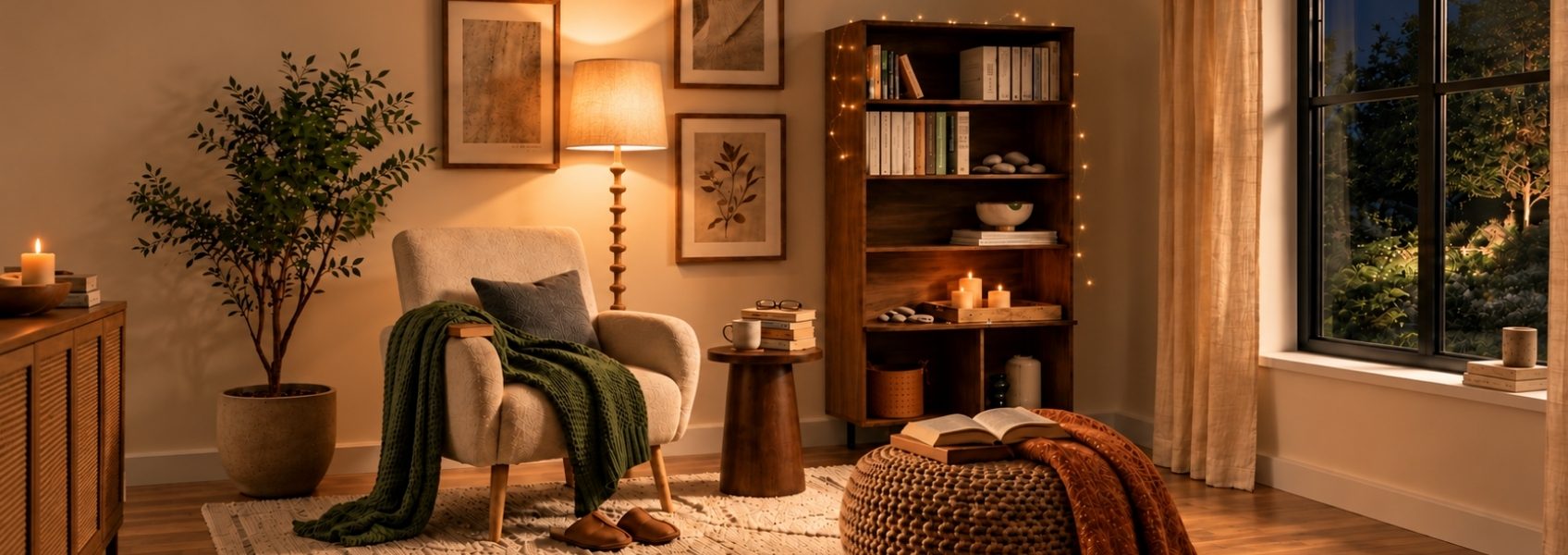
A good reading corner should make it easy to settle in for more than a few pages without constantly shifting position, reaching for a drink or adjusting the light. The most successful reading nooks combine physical comfort with a sense of separation from the rest of the room, even when they occupy only a small corner. This guide explains how to plan the furniture, lighting and softer details so the space works as well as it looks.
In short
What do you need for a cosy reading corner?
A cosy reading corner really only needs three things: a comfortable, supportive armchair, a lamp that lights the page without glare, and a small table close enough to hold a book and a drink. That's genuinely all it takes - most reading corners fit into little more than the footprint of the chair itself, so there's no need to treat it as a bigger project. A rug, a cushion or two and a nearby shelf for books are optional extras that add warmth once the basics are right.
Reading corner ideas for every home
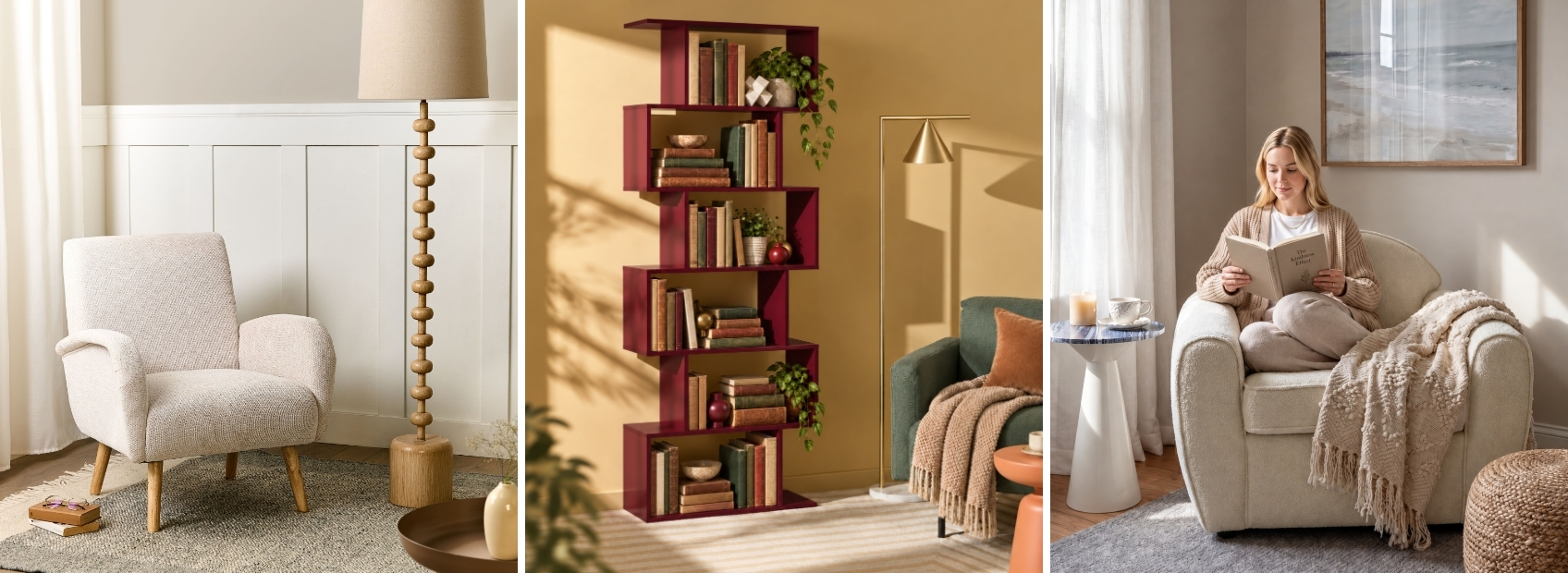
Reading corners take their character from where they sit and how they're dressed, more than from how much space they use. A chair pulled up to a window catches daylight during the day and turns into a quieter spot once the curtains close in the evening. An unused corner, an alcove or the end of a hallway can work just as well, particularly if it sits away from a television or a busy walkway, since the sense of separation from the rest of the room matters more than the number of square metres involved.
The materials and colours you choose set the mood. A pared-back Scandinavian-style corner might pair a light wood or metal-framed chair with a single wool throw and one plant, letting the chair itself take the attention. A more layered, textured look mixes a patterned rug, two or three cushions in different fabrics and a warm-toned lamp, and reads as more relaxed and lived-in. Neither approach is more correct than the other - the right one is whichever matches the rest of the room and how much visual detail you enjoy living with.
A window seat, a built-in bench or simply the end of a sofa can all serve as the starting point just as well as a dedicated armchair. Whichever spot you choose, the furniture and lighting guidance below applies in the same way.
What makes an armchair comfortable for reading?
A reading chair should support the body without forcing you into one rigid position. Very deep lounge chairs can look inviting but may leave shorter users with unsupported feet, while shallow upright chairs can become tiring during longer sessions. Check the internal seat dimensions rather than relying only on the overall width of the armchair.
| What to check | Useful starting point | Why it matters when reading |
|---|---|---|
| Seat height | Around 40-48 cm for many adults | Your feet should rest flat on the floor without the front edge of the seat pressing into the backs of the legs. |
| Seat depth | Around 45-55 cm is a practical range to start from | When sitting against the backrest, aim to leave a small gap of roughly 2-5 cm between the seat edge and the back of the knees. |
| Seat width | Around 50-60 cm of usable sitting width suits many adults | Enough width allows you to change position without requiring an oversized chair that dominates a small nook. |
| Backrest | At least enough support to reach the shoulder blades | A higher back is worth considering if you often rest your head while reading. |
| Armrests | Forearms should rest without lifting the shoulders | Support under the arms reduces the effort needed to hold a book or e-reader for longer periods. |
Shop now: armchairs
What armchair features are useful in a reading nook?
The best reading chairs combine support with flexibility. Features that may look like design details can significantly change how comfortable the chair feels during longer reading sessions. Think about how you usually read: sitting upright with a book, relaxing with an e-reader, changing position frequently or occasionally taking a break to look outside.
Swivel function
Turn towards what you need
A swivel base allows you to rotate towards the reading light, window or side table without moving the whole chair. It is useful in open-plan rooms where the chair serves more than one purpose.
Reclining backrest
Adjust your sitting position
A reclining mechanism can make long reading sessions more comfortable by changing the angle of your back. Check the space behind the chair, as reclining models need extra clearance to move safely.
High backrest
Support your shoulders and head
A higher backrest is useful if you often read for an hour or longer. It provides support beyond the lower back and can make a chair feel more relaxing than a low accent chair.
Footrest
Change leg position
An integrated or separate footrest can improve comfort during relaxed reading. Make sure it does not reduce the available walking space when extended.
Armrests
Support your arms naturally
Armrests should allow your shoulders to stay relaxed while holding a book or e-reader. Very low or very high armrests can make your sitting position less comfortable.
Shop now: reclining armchairs
What lighting works best for reading?
A ceiling light can illuminate the room but usually does not put enough controlled light directly onto a book. A reading nook works better with its own task lamp, positioned so the page is bright without the bulb shining into your eyes. As a practical target, aim for approximately 300-500 lux on the reading surface; readers who prefer small print or stronger illumination may find the upper end more comfortable.
For an evening reading corner, a warm-white light around 2700-3000 K creates a softer atmosphere than cool white light while still providing useful illumination. A dimmer or adjustable lamp is particularly useful because the amount of light needed changes between daytime, evening and different types of reading material.
| Lighting option | Best use | How to position it |
|---|---|---|
| Adjustable floor lamp | Small nooks without space for a large table | Place it beside or slightly behind the chair and direct the beam down towards the book rather than towards your face. |
| Table lamp | Reading corners with a generous side table | Choose a shade and lamp height that hides the exposed bulb from your seated eyeline while still throwing light across the page. |
| Directional lamp | Detailed reading, studying or craft work | Aim the head at the reading surface and adjust it when you change position so the brightest part of the beam stays on the page. |
| Ambient room light | Supporting the reading lamp | Keep some background illumination in the room rather than surrounding a very bright page with complete darkness. |
Shop now: floor lamps
How do you choose a side table for a reading nook?
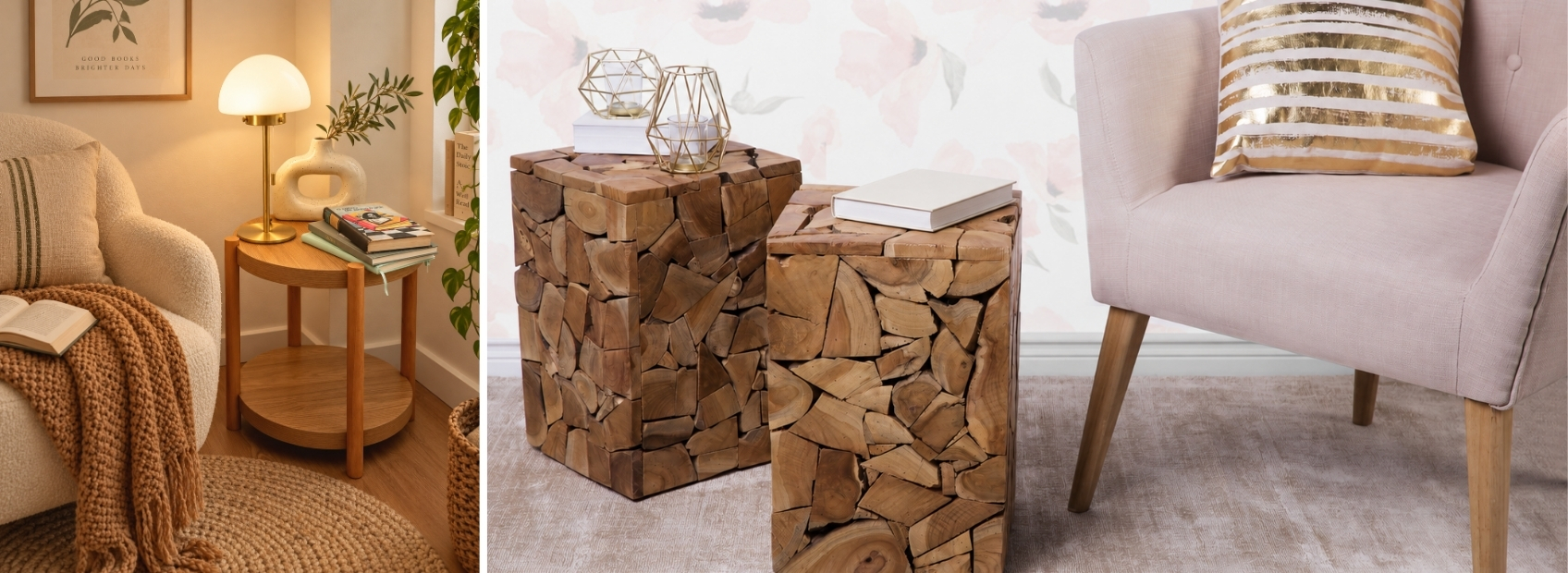
A side table is worth choosing deliberately rather than reaching for whatever spare table is nearest. Keep the tabletop close to the height of the chair arm, within about 5 cm of it, and place the table near enough to reach without leaning forward or twisting your back away from the backrest.
For a book and a drink, around 30 x 40 cm of clear tabletop is usually enough; if the table also holds a lamp, look for 40 x 50 cm or larger so a hot drink isn't pushed up against the lamp base. A broad, stable base matters more than an elegant but light table that shifts when you reach for it, and a lower shelf is a useful place to keep the next book in the queue or manage a charging cable for an e-reader, tablet or headphones.
How to make a reading corner cosier?
A reading nook should feel personal, but too many small objects quickly reduce usable space. Accessories work best when they contribute texture, greenery, scent or soft light without interfering with the chair, lamp or tabletop.
Cushions
Support your back and neck
A firm cushion behind the lower back or a softer one tucked beside the shoulder can fill gaps a chair's own upholstery doesn't quite reach. Two or three in varying sizes are usually enough - more than that just ends up on the floor every time you sit down.
Plants
Bring in greenery without blocking light
Place taller plants beside the nook rather than between the lamp and chair. In darker corners, choose plants that suit the available light or use artificial greenery instead of constantly moving a live plant towards the window.
Scented candle
Use scent as a background detail
Keep candles on a stable surface away from books, curtains, blankets and other flammable materials, and never leave a burning candle unattended. If the side table is already crowded, a diffuser or flameless candle avoids adding an open flame beside your reading materials.
Use the rug to define the reading zone
A rug can make a single armchair feel like a deliberate zone within a living room or bedroom. Rather than using a very small rug floating in front of the chair, choose one large enough for at least the front legs of the armchair to sit on it; in a more generous nook, place the chair and side table within the same rug area. Plush or high-pile rugs add softness underfoot, while a shorter pile is easier if you frequently move a footstool or side table.
Do you need a bookcase next to the reading corner?
E-readers make it possible to carry an entire library in one slim device, but readers who love physical books often want more than access to the words. The weight of a favourite novel, a visible row of finished books and the feel of real paper under the fingers are part of the reading ritual, which makes a bookcase a natural partner for a dedicated reading nook.
For most novels and standard hardbacks, a shelf depth of roughly 20-30 cm is usually sufficient. Deeper shelving can be useful for larger books, but excessive depth often wastes space or encourages double rows that hide the books at the back. Keep heavier volumes on lower shelves and position the books you reach for most frequently between roughly waist and eye level.
Important when using a tall bookcase
Do not treat a tall bookcase as decoration only. Follow the manufacturer's installation instructions and use fixings appropriate to the wall type when securing furniture against tipping, especially in homes with children or pets. Place the heaviest books and objects towards the bottom rather than loading the highest shelves first.
Shop now: bookcases and shelving units
How can you create a reading nook for children?
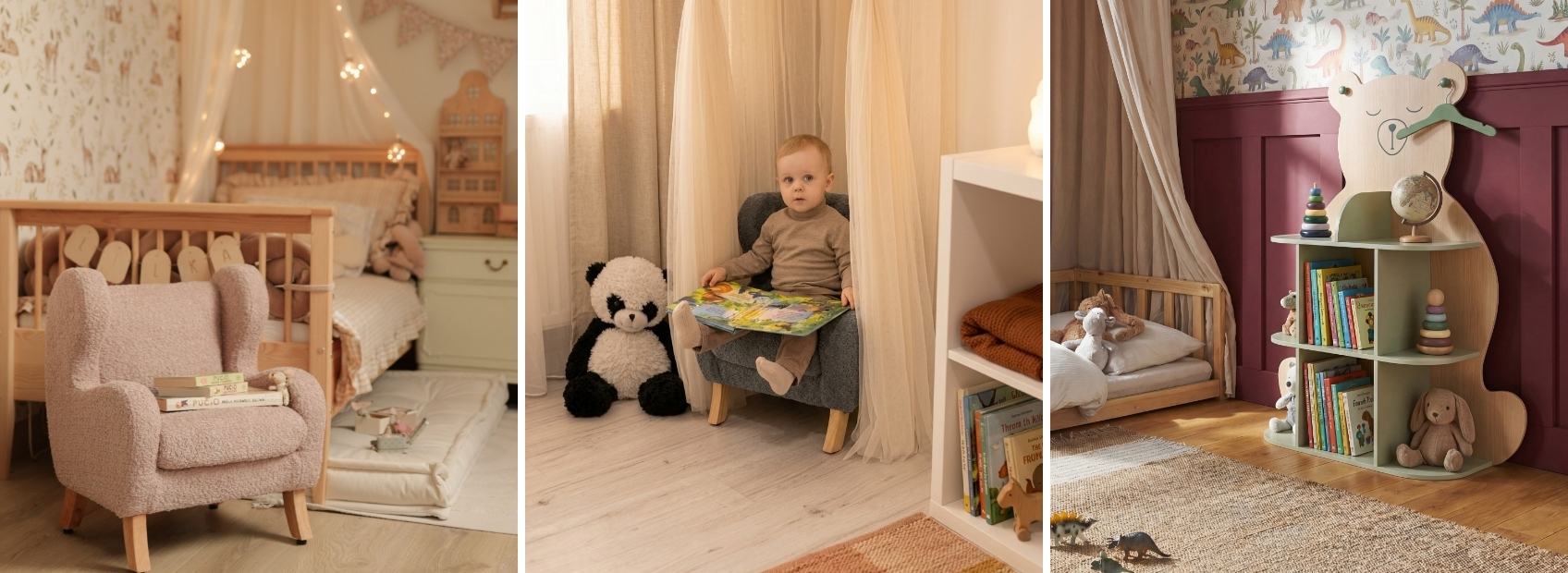
A children's reading corner should make books easy to access and comfortable to use independently. Furniture should match the child's size, with seating that allows their feet to rest on the floor and shelves positioned so they can choose books without climbing.
Low bookcases, washable cushions and soft rugs can make the area inviting, while good lighting remains essential for picture books, comics and smaller text. As children grow, the same corner can adapt by replacing a small chair with a larger seat or changing storage from picture-book displays to standard shelving.
Safety matters in children's reading areas
Secure tall furniture according to the manufacturer's instructions and keep cords organised to reduce trip hazards. Choose materials and textiles that can handle frequent cleaning and everyday use.
Shop now: kids chairs and storage
Final tips: how to build a reading nook in 5 steps
Create the space around the way you actually read. Start with the practical elements first, then add decorative details once the chair, lighting and storage work together.
1
Choose the location
Find a corner with suitable light, enough space and fewer everyday distractions.
2
Select the chair
Choose seating with the right dimensions, support and features for your reading habits.
3
Add reading light
Position a focused lamp so the page is clearly illuminated without glare.
4
Create storage
Add a side table or bookcase where books and everyday items stay within reach.
5
Layer textures
Finish with rugs, cushions, throws and accessories that make the space comfortable.
Frequently asked questions
What's the best location for a reading nook?
Near a window is the classic choice for natural light, though a quiet corner away from household traffic works just as well, especially for evening reading.
Can I create a reading nook in a rented home?
Yes - freestanding shelving, a plug-in floor lamp and a chair placed on a rug need no drilling or fixings, making a reading nook easy to set up and take with you when you move.
What light bulb temperature is best for a cosy feel?
Warmer tones around 2700-3000K tend to feel cosier and more relaxing than cooler, bluish-white light.
Can you use an accent chair as a reading chair?
Yes, provided the chair supports your back and lets your feet rest comfortably on the floor. Some decorative accent chairs have shallow backs, firm seats or upright angles that are better for short periods than an hour of uninterrupted reading.
What colours work well in a reading nook?
Warm neutrals, muted greens, earthy browns and subdued blues can create a calm backdrop without competing visually with the book or screen. Darker colours can make a reading corner feel more enclosed, but they usually benefit from stronger task lighting so the page remains clearly illuminated.