Free Delivery
 365-Day Returns
 10 Million Happy Customers
 500,000 Products in Stock
How to Create a Functional and Cosy Children's Bedroom
Reviewed by the Beliani Content Team · Updated September 2026
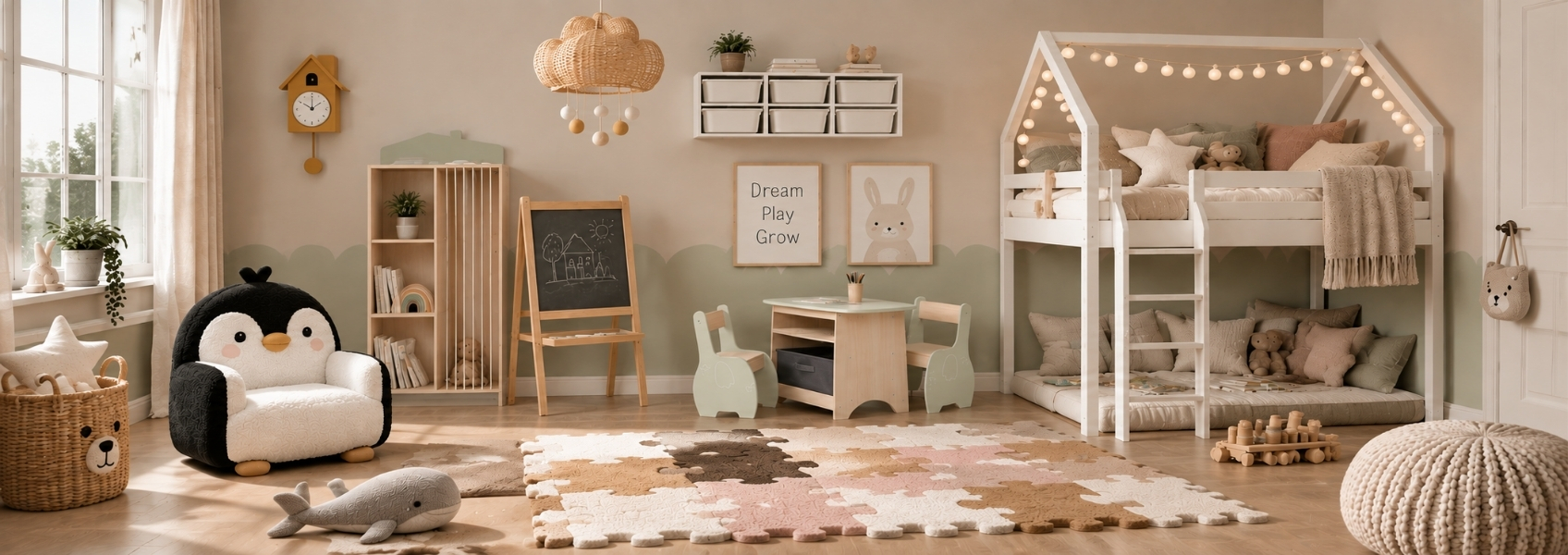
A children's bedroom should support everyday routines, from sleeping and getting dressed to playing, reading and learning. Choosing furniture that fits your child's age, room size and changing needs helps create a space that stays practical for years. This guide explains how to select beds, storage, layouts, lighting and décor that work together.
In short
How do you create a functional and cosy children's room?
A practical children's room needs a comfortable bed, suitable mattress, organised storage and separate areas for sleep, play and learning. Choose furniture based on available space and update smaller elements such as textiles and décor as your child grows.
How to choose the right bed for a child's room?
The bed is usually the largest furniture piece, so choose it based on comfort, available space and how long you want it to be useful. A standard single bed works well for everyday use, while storage beds, bunk beds and high sleepers can solve specific needs such as limited space or shared rooms. Before buying a bed, measure the available area and check that it leaves enough room for comfortable movement. As a general guide, keep around 60 cm of clear space around accessible sides of the bed where possible, and make sure drawers, wardrobes and doors can open fully without blocking walkways.
| Bed type | Best for | Why choose it |
|---|---|---|
| Single bed | Everyday sleeping | A versatile option that can work for many years |
| Storage bed | Smaller rooms | Adds space for bedding, toys or clothes |
| Bunk bed | Shared rooms | Creates two sleeping areas while saving floor space |
| High sleeper bed | Compact rooms | Creates extra space underneath for desks or storage |
Consider bed safety
When choosing a bed, also consider safety features and age recommendations. Bunk beds and high sleepers are generally not suitable for children under 6 years old. Always follow the manufacturer's instructions, use safety rails where provided and make sure ladders and access points are secure.
Choose a suitable mattress
A good mattress should provide comfortable support, good airflow and a sleeping surface suitable for your child's size and age. Avoid choosing only by softness: a mattress that is too soft may not provide enough support, while one that is too firm may feel uncomfortable. For better airflow, look for breathable cotton covers, natural fibres such as wool, or ventilated foam structures with channels or perforations, as well as removable covers that make regular cleaning easier. Pairing a suitable mattress with a durable bed frame also means the sleep setup can remain practical as your child grows.
Read more: how to choose the right mattress
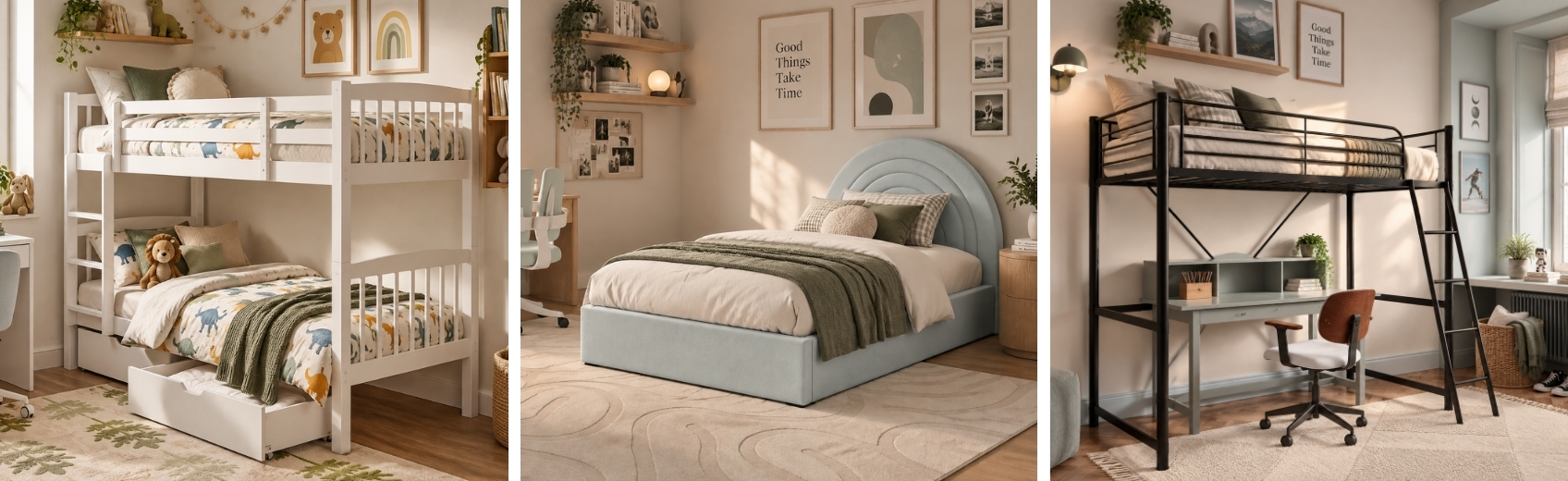
Shop now: kids' beds
What storage solutions work best in children's rooms?
Choose storage based on everyday needs
Good storage makes everyday organisation easier and helps children learn where their belongings belong. Open shelves, bookcases and low storage units work well for toys, books and frequently used items, while wardrobes with drawers provide space for clothes and accessories. When choosing wooden furniture, look for FSC® certification, which indicates that the wood comes from responsibly managed sources. For smaller items, use baskets and boxes to keep belongings organised and easier to put away.
Use storage efficiently in smaller rooms
In compact rooms, choose furniture that provides storage without taking away too much floor space. A wardrobe with multiple compartments, under-bed drawers or wall shelves can keep belongings organised while leaving more room for play. Narrow storage units around 40–50 cm deep can be useful where space is limited. Safety is also important when arranging storage furniture. Tall wardrobes, bookcases and cabinets should be secured to the wall where recommended to reduce the risk of tipping. Keep heavier items on lower shelves and avoid placing unstable furniture where children play.
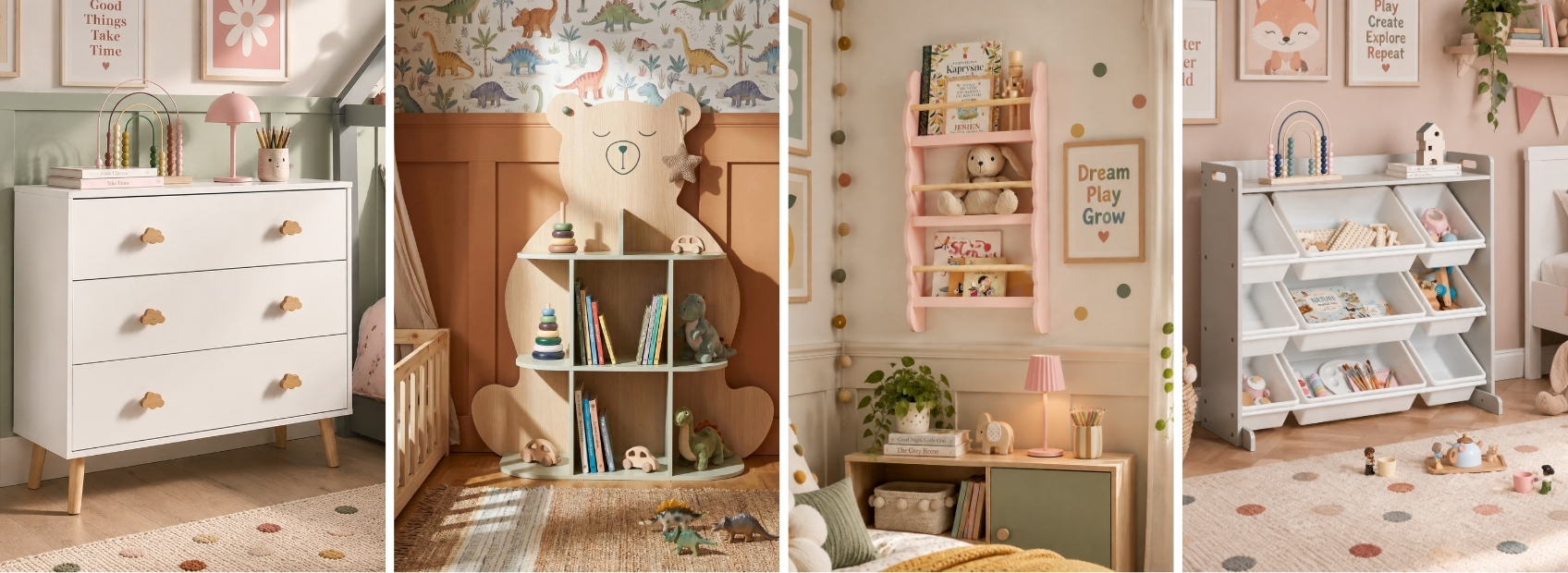
Shop now: kids' storage furniture
How to plan a children's room layout?
A good layout should balance sleeping, storage, play and learning areas while leaving enough space for everyday movement. Instead of filling every corner with furniture, create clear zones that make daily routines easier.
Create zones for different activities
The sleeping zone should feel calm, with the bed positioned away from busy areas where possible. The learning zone needs a desk, comfortable chair and suitable lighting, while the play zone benefits from open floor space, a rug and easy-access storage for toys.
When planning a study area, leave enough room for comfortable use. A desk should usually have around 60–80 cm of working depth, while the chair should move freely without blocking walkways.
Plan shared rooms around each child's needs
In a shared room, give each child their own area where possible. Separate shelves, storage boxes or bedside spaces help children organise their belongings. Bunk beds can save space, while two single beds may work better in larger rooms where each child needs more independence.
Adapt the layout for rented homes
If permanent changes are not possible, use flexible solutions that do not require drilling. Freestanding shelves, storage boxes, under-bed drawers and movable furniture can help organise the room without changing the structure of the space.
Need more ideas? Find out here how to arrange small spaces.
Small room
Save floor space
Choose multifunctional furniture such as a storage bed, compact wardrobe or wall shelves to keep essentials organised while leaving room to play.
Shared room
Create separate areas
Use bunk beds or compact beds to maximise space. Add individual storage boxes, shelves or bedside areas so each child has their own place.
Older child's room
Add a study area
Combine a desk, comfortable chair and task lighting to create a practical space for homework, drawing or hobbies.
How to adapt the room as your child grows?
Children's needs change quickly, but the whole room does not need to be redesigned every few years. Choose larger furniture pieces that can stay useful for longer, such as a neutral bed, spacious wardrobe, versatile storage units and a desk that can adapt from drawing activities to homework.
During the nursery stage, focus on practical storage, easy access to everyday items and a comfortable sleeping area. As your child becomes more independent, introduce furniture that supports new routines, such as lower shelves for toys, a reading corner or a dedicated space for creative activities.
When children start school, the room usually needs to support more focused activities. A comfortable desk, ergonomic chair, task lighting and better organisation for books and hobbies can transform the space without replacing the main furniture. Update the atmosphere with easier-to-change elements such as rugs, scatter cushions, wall décor and accessories as interests and preferences develop.
How should you choose lighting for a child's room?
A child's room needs different types of lighting because it is used for sleeping, reading, playing and studying. Combining general, task and softer lighting helps create a space that supports different activities throughout the day.
- Ceiling light: provides general lighting for everyday activities.
- Bedside lamp: creates softer light for reading and bedtime routines.
- Desk lamp: provides focused lighting for homework and creative activities.
- Night light: offers softer lighting during the evening or when children need a gentle light source.
Use different lighting for different moments of the day. A desk lamp supports focused activities, while softer bedside lighting helps create a calmer evening routine. For children who are sensitive to early morning light, blackout curtains can help create a darker sleeping environment, while filtered curtains reduce strong daylight without blocking natural light completely. Limit bright screens close to bedtime where possible, as tablets, phones and televisions can make it harder for some children to relax before sleep.
Shop now: kids' lighting
How to add cosy décor to a child's room?
Décor and soft furnishings help make a child's room feel personal without replacing the main furniture. Rugs, scatter cushions, blankets and wall decorations are easy to update as your child grows and can add colour, texture and character to the space.
Choose colours that support the mood
Colour choices can influence how a room feels, but the best palette depends on the child's personality, age and how the space is used. Instead of relying on simple colour associations, combine different tones to create the right atmosphere. Soft, muted shades such as sage green, dusty blue, warm beige or gentle grey can create a calmer background, while warmer tones like terracotta, peach or soft yellow can make the room feel more welcoming and energetic.
For a balanced look, use stronger colours as accents rather than covering the entire room. Bright shades can work well through rugs, cushions, artwork or accessories, which are easier to replace as your child's interests change. Deeper colours can also be used thoughtfully, for example on one feature wall or in decorative elements, to add character without making the room feel overwhelming.
Use textiles that are practical for everyday life
A soft rug next to the bed or in the play area creates a warmer surface for sitting, reading and playing. Scatter cushions and blankets can make a reading corner or armchair more comfortable, while different textures add softness to the space.
Choose easy-care textiles where possible, such as washable rugs and removable cushion covers, especially in areas used for creative activities and play. For allergy-conscious choices, select materials that are easy to clean and follow care instructions to reduce dust build-up. Certifications such as OEKO-TEX® can be useful when choosing textiles tested for certain harmful substances.
Add personality with flexible décor
Choose decorations that can easily change over time, such as wall art, posters, cushions and decorative accessories. Display favourite books, artwork or small items on shelves to make the room feel personal while keeping enough open space for everyday activities.
Avoid adding too many decorative items that make cleaning harder or reduce available play space. A balanced combination of soft textiles, practical accessories and open areas creates a room that feels inviting and easy to maintain.
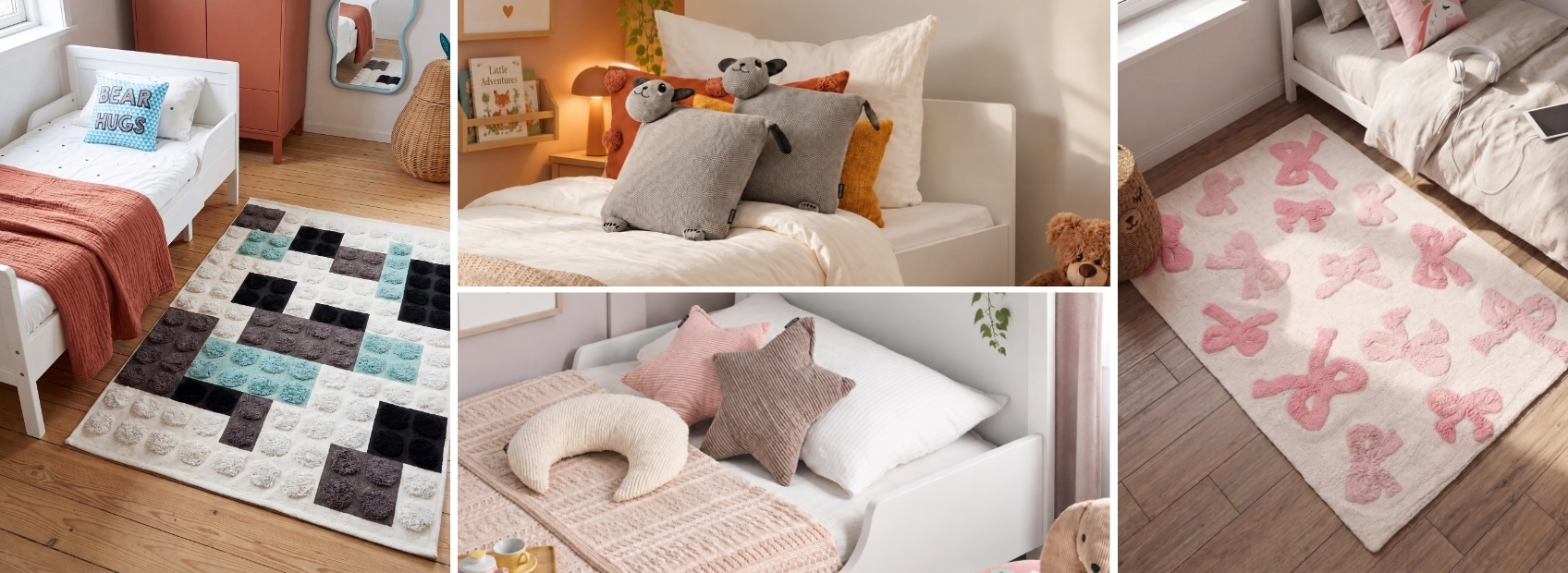
Shop now: kids' rugs and kids' cushions
What to check before buying
Before choosing furniture and accessories, check these practical details:
- Room measurements: make sure beds, wardrobes and desks fit comfortably while leaving enough space for movement.
- Bed and mattress choice: choose a setup that provides comfort, support and suits your child's age.
- Safety: check age recommendations, secure tall furniture where required and follow product instructions.
- Storage needs: consider clothes, toys, books and school supplies before choosing storage furniture.
- Adaptability: choose larger furniture pieces that can work through different stages of childhood.
- Maintenance: select practical materials and textiles suitable for everyday family use.
Frequently asked questions
What size bed is best for a child?
A single bed is usually a practical choice for children because it provides enough space for sleeping while fitting most room layouts. Choose a larger bed if you want a solution that can stay comfortable as your child grows.
How do you organise a small children's room?
Use multifunctional furniture such as storage beds, high sleepers, wall shelves and compact wardrobes to save floor space. Keep the centre of the room open for movement and choose storage that children can easily access and use.
How much storage does a child need?
A child needs storage for everyday items such as clothes, toys, books and school supplies. Combine wardrobes, shelves, drawers and boxes to create separate places for different belongings and make tidying easier.
What mattress is best for a child?
Choose a mattress that provides comfortable support, good airflow and a firmness level suitable for your child's size and sleeping habits. Features such as breathable materials and removable covers can make the mattress easier to maintain over time.
Are bunk beds safe for young children?
Bunk beds and high sleepers are generally not suitable for children under 6 years old because younger children may have difficulty using the upper sleeping area safely. Always follow the manufacturer's age recommendations and use safety features such as guard rails where provided.