Free Delivery
 365-Day Returns
 10 Million Happy Customers
 500,000 Products in Stock
Hot Tub & Outdoor Spa Buying Guide
Reviewed by the Beliani Content Team · Updated September 2026
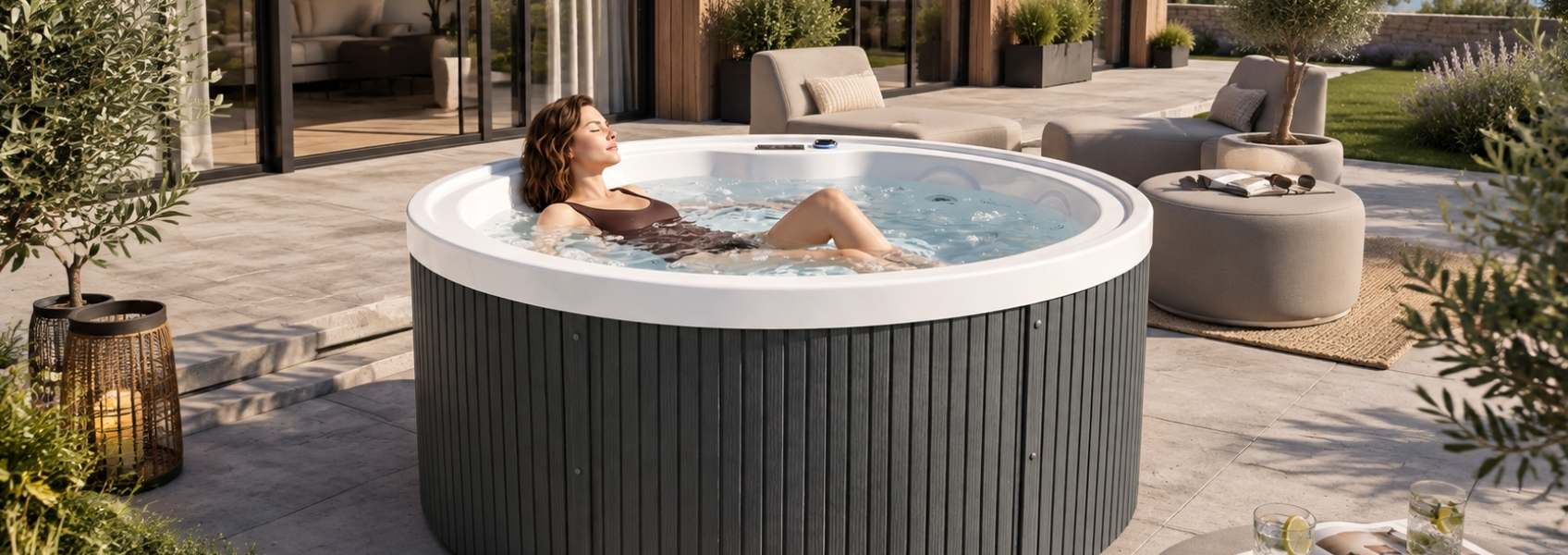
A hot tub turns a garden or terrace into a year-round spa, but the details that decide whether it works well long-term are mostly hidden: the electrical supply behind it, the base underneath it, and the filter inside it. This guide covers the technical requirements that shape an installation, alongside the running costs, jets and accessories that shape day-to-day use.
How do you choose the right outdoor hot tub for your garden?
To choose the right outdoor hot tub, select a model that fits your available space while confirming your base can support a filled weight of roughly 1,200 to 1,800 kg. Decide between a plug-and-play connection for simpler installation, running through a standard outdoor-rated socket, or a hardwired supply for faster heating and simultaneous multi-pump operation - the exact amperage, voltage and phase depend on local electrical standards, so have either option assessed and fitted by a certified electrician. Prioritise a well-insulated cabinet and an insulated thermal cover to hold water temperature and keep running costs predictable.
- A plug-and-play tub typically runs one jet pump; a hardwired tub can run two jet pumps plus a circulation pump at once
- Colder climates need a better-insulated cabinet, not just a stronger heater
- Decking under the tub must be reinforced, since standard garden decking is not rated for the load
What electrical connection does a hot tub need?
Nearly all domestic hot tubs run on a dedicated electrical circuit, with the exact voltage, amperage and phase depending on local standards. Broadly, tubs fall into two categories: a lower-power, plug-and-play connection limited to one jet pump, and a higher-power, hardwired connection supporting two jet pumps plus a separate circulation pump. The plug-and-play option connects through a dedicated outdoor IP-rated waterproof socket, wired as its own circuit from the consumer unit or fuse board rather than an extension lead or a shared ring main; running it off a shared circuit voids most manufacturer warranties. The higher-power option must be hardwired using armoured cable or suitable conduit, run to a waterproof isolator switch positioned 2 to 3 metres from the tub.
Both connection types must be installed by a certified, registered electrician, following the wiring standards and certification requirements that apply in your country. The electrician will also usually fit an earth rod so the earthing system matches ground potential, and the isolator switch must stay within reach for emergency shutoff but positioned so it is not touched while using the tub.
Plug-and-play or hardwired: which to choose
Both options are safe and common; the right choice comes down to how you plan to use the tub, how much installation work you want to take on, and which standard applies where you live — your electrician can confirm the exact specification for your country.
| Connection | Best for | Installation | Trade-off |
|---|---|---|---|
| Plug-and-play | An easy setup using a standard outdoor waterproof socket, with no major electrical work | A dedicated outdoor socket fitted by an electrician; no armoured cable run needed | Only one jet pump can run at a time, and reheating after cover-off use is slower |
| Hardwired | High-performance jets and steady heating for frequent, year-round soaking | A full hardwired installation with armoured cable and an isolator switch | Higher upfront installation cost and a longer electrician job |
If your household will use multiple jet zones at once regularly, or heat the tub back up often after guests, a hardwired supply is the better long-term fit. If you want the tub running with minimal disruption to your garden and lower upfront cost, a plug-and-play connection is the simpler route.
Shop now: outdoor hot tubs
What water connections does a hot tub need?
A hot tub does not need a permanent plumbed water supply. It is filled manually with a standard garden hose through the top of the shell, typically taking 30 minutes to a few hours depending on tub size and hose flow rate, and topped up the same way as water evaporates or splashes out between uses. Drainage is just as simple: most tubs have a drainage valve near the base that connects to a garden hose for emptying, usually needed every three to four months for a full water change.
The only connection that does need professional input is a nearby outdoor tap or isolation valve if you want a permanent, easily accessible fill point rather than running a hose from indoors each time. This is a plumbing convenience, not a functional requirement of the tub itself.
How much does it cost to run a hot tub?
Running costs are the detail most first-time buyers underestimate. Costs vary widely by market, tariff, and season, but as a general rule, a well-insulated tub with a tight-fitting thermal cover costs noticeably less to run than a poorly insulated one left uncovered, since the heater is the main ongoing expense. Ambient climate, how often the tub is used, and local electricity prices all shift the running cost up or down, so it's worth checking a specific model's heater wattage and insulation rating rather than assuming a fixed figure applies everywhere.
Tip: keep a warm standby temperature
Heating a hot tub from a cold fill typically takes several hours, depending on heater wattage and starting water temperature. Keeping the tub at a lower standby temperature between uses, rather than letting it cool down fully, means the heater only has to bridge a small gap each time instead of reheating from cold, which uses noticeably less energy over a month of regular use.
How do hot tub filters work, and are they needed?
A filter is essential, not optional: it is the main line of defence against cloudy water, clogged jets and strained pumps. Water is drawn through a pleated cartridge filter as it circulates, which traps hair, skin cells, lotion residue and other debris before the water passes back through the heater and jets. Without a working filter, sanitiser has to work harder against visible particles instead of primarily targeting bacteria, which increases chemical use and running cost.
Filters need rinsing under a hose roughly once a week, a deeper clean with a dedicated filter cleaning solution every four to six weeks, and full replacement every 12 to 24 months depending on usage and water hardness. Owning a spare cartridge to rotate in during cleaning avoids downtime and lets the just-cleaned filter dry fully, which helps prevent bacterial growth in the folds.
A common mistake: skipping the pre-rinse
Entering a hot tub without rinsing off lotion, sunscreen or sweat is a leading cause of cloudy water and clogged filters. A quick rinse under an outdoor shower before every session cuts down on filter cleaning and extends the interval between full water changes.
How do adjustable jets and hydrotherapy zones work?
Hydrotherapy jets mix air and water to massage specific muscle groups, and most hot tubs group them into zones: lower back, calves, feet and shoulders are the most common. Adjustable jets let you control both the direction of the stream and, on most models, the intensity, by turning the jet's outer ring or a nearby dial.
Jet count varies widely, from around 10 on compact two-seat models to over 60 on large multi-seat spas, but a higher count does not automatically mean stronger therapy. What matters more is whether jets are positioned at the points where you actually want pressure, and whether the pump can maintain consistent flow when several jets run at once, which ties directly back to whether the tub has a 13 Amp or 32 Amp supply.
Choosing jet zones for your main use case
If the hot tub is mainly for muscle recovery after exercise or physical work, prioritise models with dedicated lower-back and calf jets over a high total jet count. If it's mainly for relaxation and entertaining, wider, gentler jet coverage across more seats matters more than concentrated pressure in one zone.
Do you need an ozone system or UV steriliser?
Ozone and UV systems are secondary sanitisers that reduce, but don't eliminate, the amount of chlorine or bromine you need to dose by hand. An ozone system injects ozone gas into the circulating water to break down oils, lotions and bacteria; a UV system exposes water to ultraviolet light as it passes through the filtration line, neutralising microorganisms without adding any gas or chemical.
Either system is worth having if you want lower manual maintenance and fewer harsh chemical smells, and both extend the interval between full water changes. Neither replaces routine water testing or the filter itself, and a tub without either system still works fine with a standard chlorine or bromine routine, just with more frequent hands-on dosing.
Comparing hot tub features by what they actually affect
| Feature | What it changes | Worth prioritising when |
|---|---|---|
| Hardwired electrical supply | Simultaneous pump operation and reheating speed | Multiple jet zones used at once, regular household use |
| Insulated heater and cabinet | Running cost and how fast temperature drops | Cold climates or year-round outdoor use |
| Ozone/UV steriliser | How often you dose chemicals by hand | Hard water areas or a preference for lower maintenance |
| Extra features (speakers, cup holders, headrests) | Comfort and convenience only, no effect on water quality or running cost | Frequent social or entertaining use |
What accessories make an outdoor spa setup work?
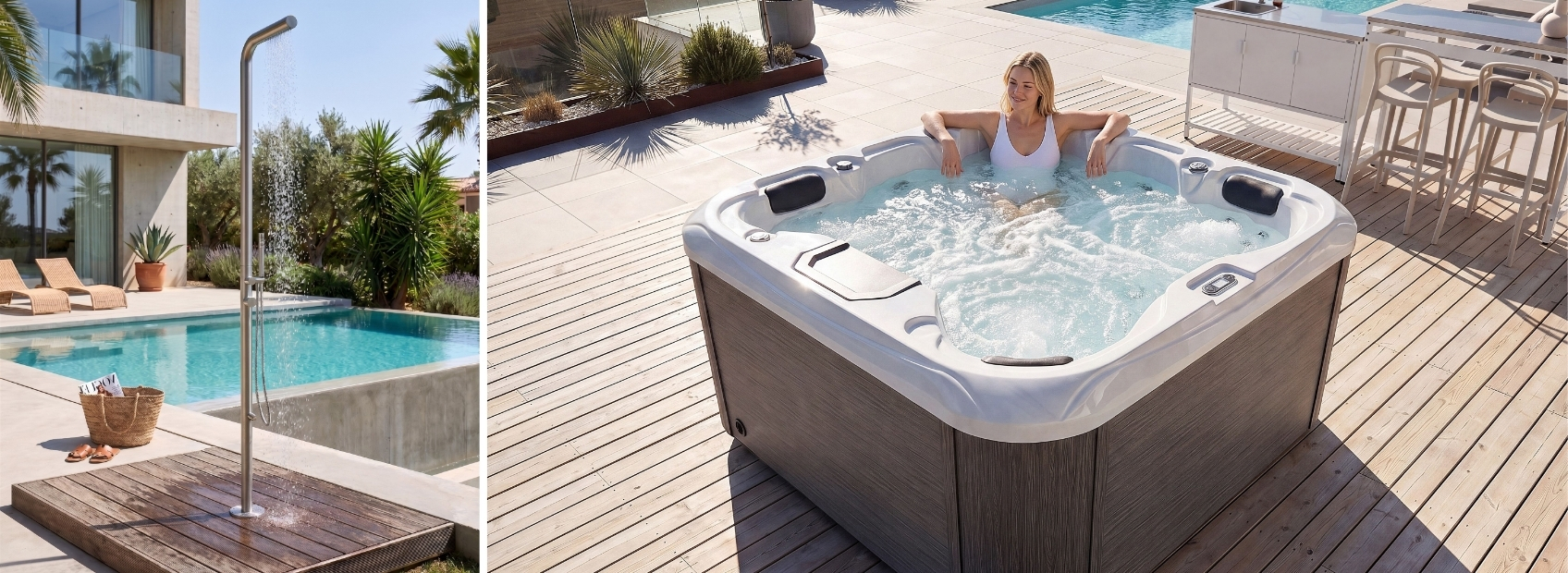
A hot tub rarely sits well on its own; a few accessories make daily use noticeably easier and protect the tub itself. Hot tub steps reduce the height you need to climb over the tub wall, which matters most for children, older users or anyone with reduced mobility, and most step units are freestanding so they can be repositioned or removed without tools.
An outdoor shower placed near the tub lets bathers rinse off before and after use, which keeps the water cleaner for longer and reduces filter strain. A stable, slip-resistant floor beneath both the tub and the shower matters as much as the fixtures themselves, since decking or paving that stays wet becomes a genuine slip hazard.
Access
Hot tub steps
Reduce the step-over height at the tub wall. Choose a width that matches your tub's entry point and check the tread surface is slip-resistant when wet.
Rinse-off
Freestanding outdoor showers
Let bathers rinse before and after the tub without going back indoors. Freestanding units need no wall mounting, so they can sit anywhere with a suitable water connection.
Safety
Outdoor shower floor
A slatted or slip-resistant floor beneath the shower stops standing water and reduces the chance of a slip on wet decking or paving.
Shop now: outdoor showers
How big a hot tub do you actually need?
Size the tub to the number of people who will realistically use it together on a typical day, not the maximum you might host once a year. A 2-3 seat tub suits couples or small households and takes up noticeably less deck space and running cost than a 6-8 seat model bought for occasional guests.
- Check the internal seating width per person, not just the total seat count, since cramped seating discourages regular use
- Leave at least 60-70 cm of clearance around the tub for step access and cover removal
- Confirm your base is rated for the filled weight, not the empty tub weight quoted in the spec sheet
How do you clean and maintain a hot tub throughout the year?
Regular maintenance keeps the water clear, protects the filter and helps the hot tub components work efficiently.
- Clean the filter cartridge by rinsing it regularly; use a dedicated filter cleaner for a deeper clean
- Test the water frequently and adjust sanitiser levels using chlorine, bromine, or a saltwater system
- Every 3-4 months, drain the tub completely, remove residue from the shell using a non-abrasive cleaner suitable for acrylic surfaces, and rinse thoroughly before refilling with fresh water
- Keep the cover, steps, and surrounding area free from leaves and debris
- Debris in the water increases the workload on the filtration system
Hot tubs' winter use
Most hot tubs are suitable for winter use when maintained correctly:
- Keep the water circulating and avoid switching the system off during freezing weather
- Use a well-insulated cover to reduce heat loss
- In very cold climates, add cabinet insulation or a higher-wattage heater to maintain temperature efficiently
What to check before buying
In short
Work through these checks in order before finalising your setup
- Seating capacity matched to your typical number of daily users, not your maximum guest count
- Plug and play or hardwired electrical supply decided based on how many pumps you'll run at once, installed by a certified electrician
- Base confirmed to bear the filled weight (roughly 1,200-1,800 kg), not just the empty tub weight
- Jet zones positioned where you actually want pressure, not just a high total jet count
- Heater and cabinet insulation rated for your climate, so running costs stay predictable through winter
- Filter cartridge type and cleaning schedule understood, plus a spare cartridge to rotate in
- Ozone or UV steriliser included if you want lower manual chemical maintenance
- Steps sized to your tub's entry height, with a slip-resistant tread, and a rinse point nearby such as an outdoor shower
Frequently asked questions
Do I need planning permission or an electrician to install a hot tub?
In most cases no planning permission is needed for a portable hot tub, but hardwired electric connections should be installed by a qualified electrician, and some larger permanent installations may need building regulations sign-off - worth checking local rules.
How do I keep the water clean?
Regular filter cleaning/replacement, routine chemical dosing (chlorine, bromine, or a saltwater system), and shocking the water periodically to break down contaminants.
What kind of base does a hot tub need?
A filled tub weighs substantially more than its empty weight, typically in the range of 1,200 to 1,800 kg once water and bathers are accounted for, so the base underneath needs to bear that load without shifting or cracking. A flat, solid, level surface works best - concrete slabs or reinforced decking are the safest bet rather than standard grass or unreinforced decking.
How long does a hot tub take to heat up?
Typically several hours from a cold fill, depending on heater wattage and starting water temperature. Most owners avoid this wait entirely by keeping the tub at a lower standby temperature between uses rather than letting it cool down fully.
How noisy is a hot tub when it's running?
The pump and jets produce a steady hum similar to a dishwasher or pool pump, usually noticeable but not disruptive at normal conversation distance. Placing the tub away from bedroom windows and on a solid, vibration-absorbing base helps reduce perceived noise further.
Can a hot tub be moved once it's been installed?
Yes, but it must be drained and disconnected from its electrical supply first, since a filled tub is far too heavy to move safely. Moving an empty tub still typically needs at least two or three people or specialist equipment, depending on its size and shell material.
Will hot tub chemicals irritate sensitive skin?
Correctly balanced water shouldn't cause irritation for most people, but those with sensitive skin sometimes find bromine gentler than chlorine, or prefer a saltwater system with lower chemical concentration. Rinsing off after each use and keeping pH and sanitiser levels within the recommended range reduces the risk of irritation regardless of which system is used.