Free Delivery
 365-Day Returns
 10 Million Happy Customers
 500,000 Products in Stock
How to Clean Outdoor Furniture and Prepare It For Winter
Reviewed by the Beliani Content Team · Updated September 2026
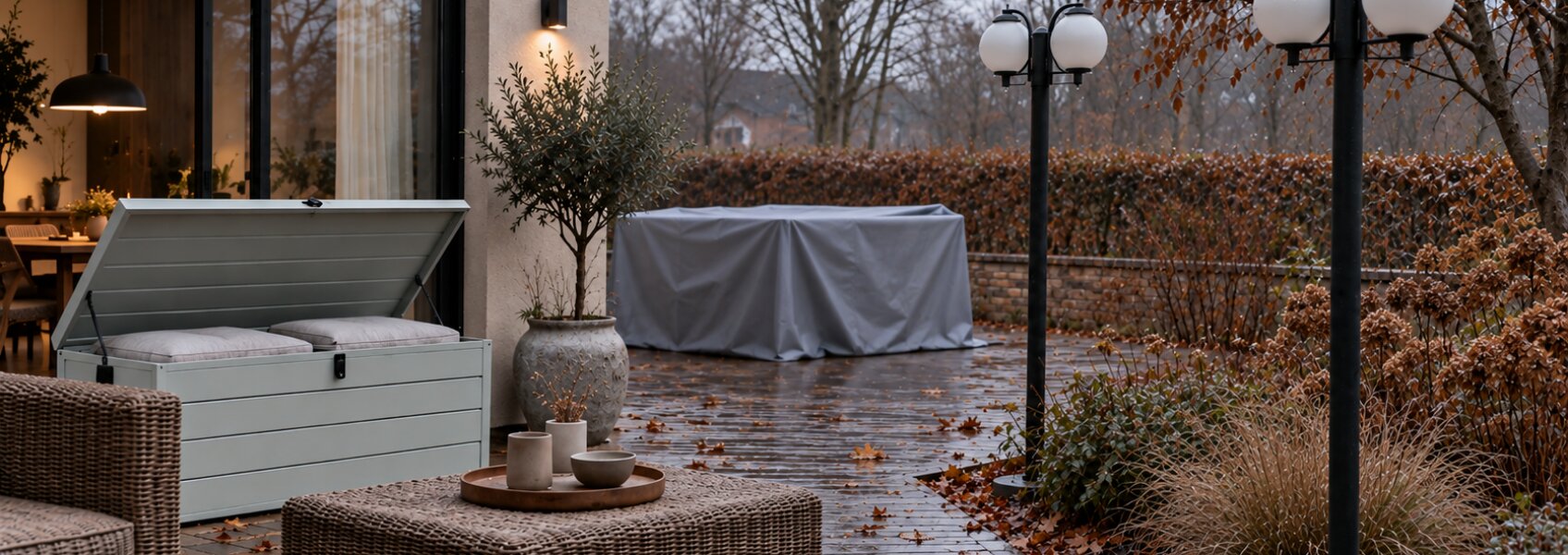
Preparing outdoor furniture for winter helps protect materials from moisture, dirt and seasonal wear. A proper cleaning routine and suitable storage method can extend the usable life of garden tables, chairs, sofas and accessories. This guide explains how to clean different surfaces including rattan and fabric, what to do and avoid before covering furniture, and how to store removable elements safely.
Why should outdoor furniture be prepared before winter?
Outdoor furniture is exposed to rain, humidity, temperature changes and falling leaves throughout the year. Leaving dirt or moisture on surfaces during colder months can increase the risk of stains, mould growth and material damage.
Winter preparation is not only about storage. It also includes checking furniture condition, cleaning joints and removing accessories that are more sensitive to moisture.
When is the best time to start?
Pick a dry, calm stretch of autumn weather before the first hard frost. Starting on a dry day means cushions, cushion covers and any washed fabric have a real chance to dry out fully rather than being packed away damp, and it gives cleaned wood or metal enough time to dry before a cover or coating goes on.
How should you clean outdoor furniture by material?
The cleaning method depends on the furniture material. Using the wrong products or tools can damage finishes, coatings or fabrics.
| Material | Cleaning approach | Winter preparation |
|---|---|---|
| Metal | Remove dirt with a soft cloth and mild cleaning solution. Avoid abrasive tools that may scratch the surface. | Dry thoroughly and check for any damaged protective coating before covering. |
| Wood | Clean gently following the care requirements of the wood type and finish. | Keep away from prolonged moisture and protect with suitable covers or storage. |
| Rattan and wicker | Wipe with a soft cloth in mild soapy water and rinse with a gentle hose setting, never a pressure washer. Use a soft brush for dirt caught in tight weaves. | Dry fully before storing, since prolonged damp can cause natural rattan to sag or warp. Synthetic wicker is more forgiving but should still avoid standing water. |
| Plastic or synthetic materials | Use mild soap and water to remove dust, marks and seasonal dirt. | Clean, dry and cover to prevent unnecessary exposure to weather. |
| Fabric and cushion covers | Remove covers where possible and wash according to the care label. Sponge-clean fixed covers with mild soap and water instead of soaking them. | Dry completely, then store indoors rather than under an outdoor cover alone. |
Shop now: outdoor furniture
Handy tools for the job
A soft brush in a smaller size gets into wicker and rattan weaves more easily than a larger one. A garden hose rinses away loosened dirt without heavy scrubbing, and a dry microfibre cloth is useful for a final wipe-down so nothing is left damp before the next step.
Would you like to find out more about furniture care? Take a look at our guide
How do you treat mould, mildew or rust before storage?
Do not cover or store furniture over a mould, mildew or rust spot, since sealing it in only lets the problem spread. On frames, a diluted white vinegar solution lifts mould and mildew when wiped on, left briefly, then rinsed off and dried. On plastic or metal, a paste of baking soda and water works on stubborn marks. Treat visible rust on metal as soon as it appears, since it spreads faster once the protective coating has broken down.
Test any solution on a small hidden area first, since acidic or abrasive mixtures do not suit every finish, and rinse thoroughly afterwards so no residue is left to attract more dirt.
How can small habits reduce winter maintenance?
A few habits kept up throughout the season can mean far less work when the big winter clean comes around.
- Lower umbrellas and tip chairs forward so rainwater cannot collect and pool on the fabric
- Secure lightweight pieces before storms so they are not blown across the garden
- Refresh wood oil or wax at the start of each season if you want to keep the original colour
- Check exposed metal regularly for early rust spots and treat them before they spread
- Use a UV-protectant spray on synthetic rattan every few months to slow fading and brittleness
What should you do before covering outdoor furniture?
A cover works best when furniture is already clean and dry. Covering damp furniture can trap moisture and create conditions where mould or unpleasant smells may develop.
It helps to treat this as one proper session rather than squeezing it in between other jobs. Gather your sponges, mild soap, brushes and cloths together beforehand so you are not making repeated trips indoors.
Do not cover wet furniture
Always allow outdoor furniture to dry completely before adding a protective cover. This simple step helps prevent moisture from becoming trapped during storage.
Shop now: rain covers
How should cushions and removable parts be stored?
Cushions, covers and soft accessories are usually more sensitive to moisture than the furniture frame. Clean and dry these items before storing them indoors or in a protected storage area.
- Remove cushions and textiles before prolonged winter exposure
- Wash fabrics according to the care instructions
- Dry all parts fully before storage
- Store in a dry place with some airflow
Shop now: outdoor cushion covers
What should you do, and what should you avoid?
Weigh these up together, since most winter damage comes from doing one half and skipping the other.
Do
Clean, dry, then cover or store
Follow that order every time, and treat rattan and fabric with extra care since they hold moisture longer than metal or plastic.
Don't
Store furniture while it is still damp
Trapped moisture is the single biggest cause of mould, mildew and warped joints over winter.
Don't
Use harsh chemicals without checking compatibility
Bleach and strong solvents can weaken rattan fibres and strip protective coatings on metal.
Don't
Leave cushions outside without protection
Even a breathable cover over the furniture will not stop damp cushions developing mildew.
What to check before winter storage?
Use this checklist before covering or moving outdoor furniture:
- Clean each surface using a method suitable for its material
- Check that furniture is completely dry, including rattan weaves and fabric seams
- Remove cushions, covers and decorative accessories
- Inspect for loose parts, rust spots or visible damage
- Treat any mould, mildew or rust found during inspection
- Use suitable protection for the expected winter conditions
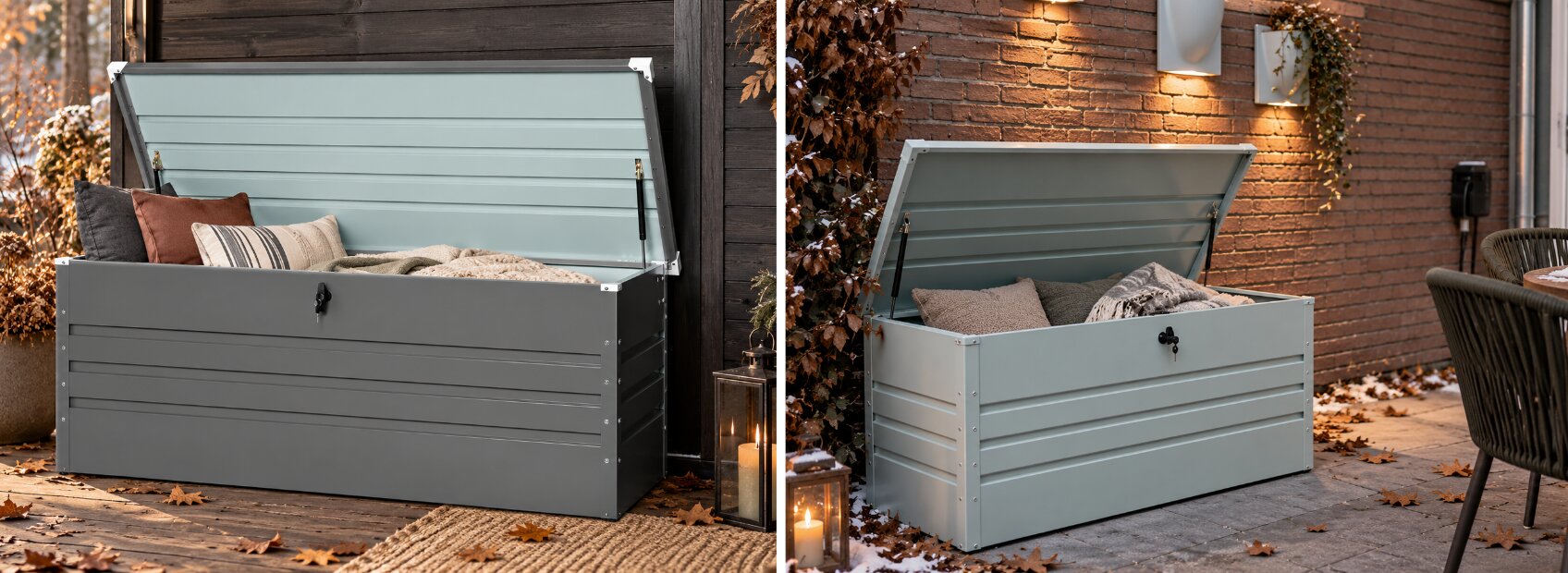
Shop now: storage boxes and garden sheds
Quick tips for a smoother winter switch-over
Keep these points in mind whenever you tackle the seasonal changeover.
Mind standing water
Keep furniture off wet grass or waterlogged ground where possible.
Choose breathable covers
And anchor them well so wind cannot lift or flip them.
Check in occasionally
A quick look during winter catches problems while they are still small.
Keep weaves ventilated
Avoid airtight wrapping on rattan and wicker so trapped damp cannot build up underneath.
Frequently asked questions
Can outdoor furniture stay outside in winter?
Some outdoor furniture can stay outside during winter if it is made from weather-resistant materials and protected correctly. Covering furniture or storing removable parts helps reduce exposure to moisture, frost and dirt.
How should outdoor cushions be stored in winter?
Outdoor cushions should be cleaned, dried completely and stored in a dry, ventilated place during winter. Keeping cushions indoors helps prevent moisture damage and keeps fabrics looking better for longer.
What should be checked before covering outdoor furniture?
Before covering outdoor furniture, check that all surfaces are clean, dry and free from damage. A suitable cover should allow some airflow while protecting furniture from rain, dirt and debris.
Are there any home tips for cleaning outdoor furniture?
A mix of mild dish soap and warm water handles everyday dirt on most materials. A diluted white vinegar solution can help lift mould or mildew from frames, and a paste of baking soda and water works on stubborn marks on plastic or metal surfaces. Always test a small hidden area first and rinse thoroughly, since acidic or abrasive solutions do not suit every finish.
Is it better to oil or varnish outdoor furniture?
Oil soaks into the wood and keeps its natural look, but it needs reapplying roughly once a season and is easy to touch up in patches. Varnish forms a harder, glossier protective layer that can last longer between coats, but once it chips or peels the whole surface usually needs sanding back before it is redone. Oil suits a natural finish with simple, gradual upkeep, while varnish suits those who want more shine and do not mind a fuller refinishing job when it is due.
Can you use a pressure washer on rattan furniture?
No, a pressure washer is too harsh for rattan and wicker weaves and can force water and dirt deep into the fibres. A garden hose on a gentle setting, combined with a soft brush for tight weaves, cleans effectively without straining the material.