Free Delivery
 365-Day Returns
 10 Million Happy Customers
 500,000 Products in Stock
How to Decorate Your Home for Christmas: Room-by-Room Guide
Reviewed by the Beliani Content Team · Updated September 2026
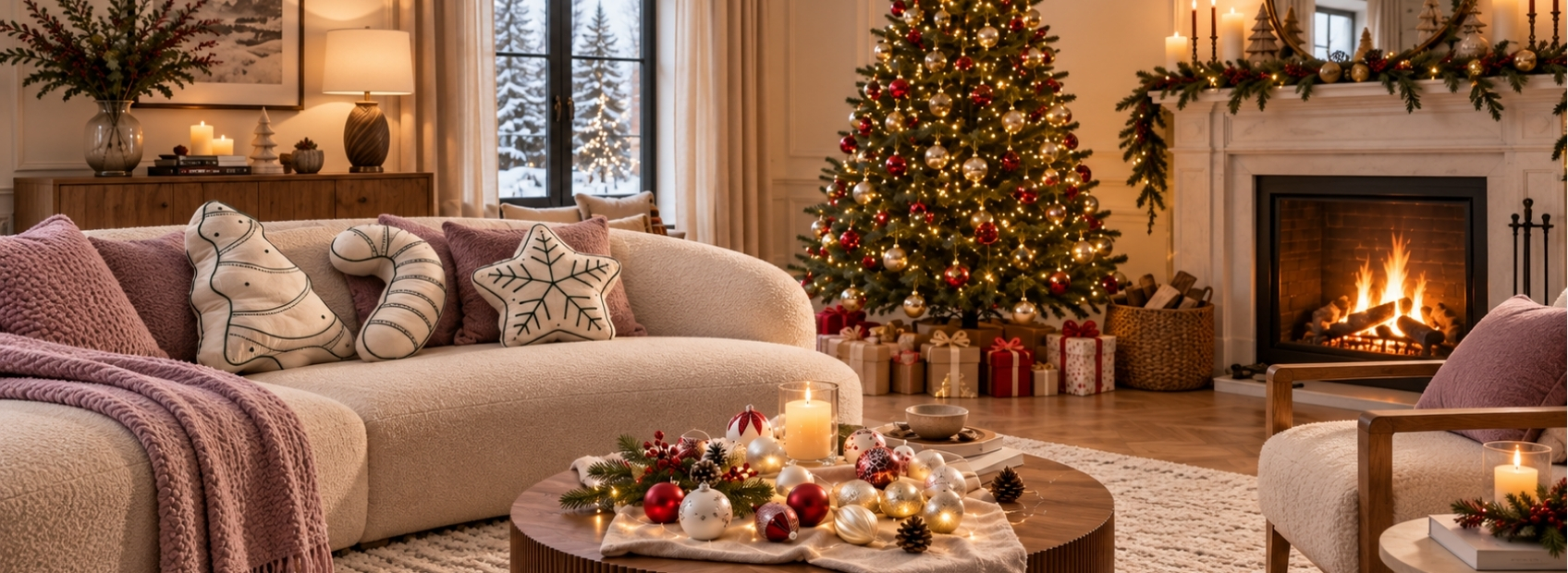
Christmas decorating rarely fails because of taste – it fails because the same approach gets applied to every room regardless of how that room is actually used. A living room built for gathering needs different decoration to a hallway people only pass through, or a bedroom meant for winding down. This guide works through each main room in turn, so you can decide what to add, what to skip, and where to spend your effort.
In short
Where should I focus my Christmas decorating effort?
Put most of your effort into the living room and dining room, since these are where people gather longest. Give the hallway one strong focal point rather than full coverage, and treat the bedroom as a low-light, low-clutter space. Matching two or three colours across rooms ties the whole home together without needing identical decorations in each one.
What does each room need, at a glance?
| Room | Main focus | Keep in mind |
|---|---|---|
| Living room | Scaled tree, textiles, layered lighting | Keep the seating area clear |
| Dining room | Tableware, linen, low centrepiece | Centrepiece under 15cm to keep sightlines clear |
| Hallway and entrance | One focal display (wreath, garland or lantern) | Restraint over full coverage |
| Bedroom | Warm, dimmable lighting | Skip a full-size tree; go tabletop if wanted |
| Outdoors | Weatherproof lighting and decorations | Concentrate near the entrance, not spread thin |
What makes a Christmas living room feel finished?
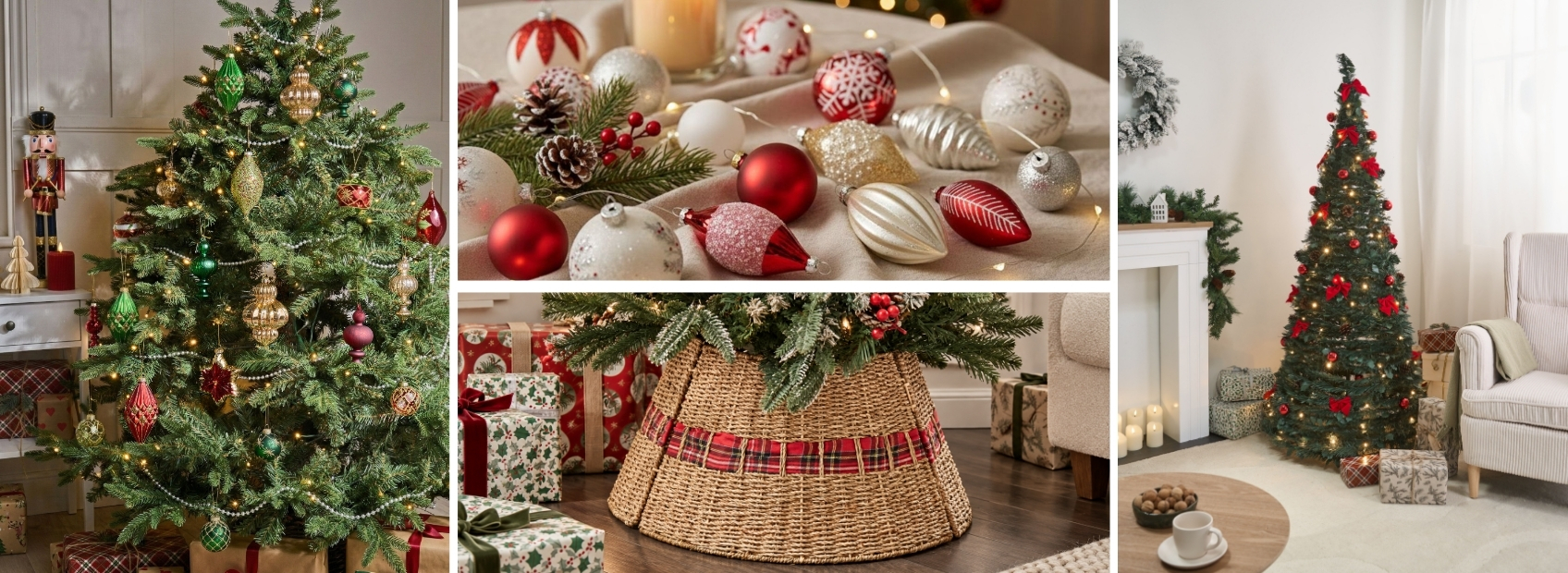
The living room carries the most decoration in the home, so build it up in four layers rather than adding everything at once: the tree as the anchor, textiles for warmth, lighting for atmosphere, and small decor for the finishing detail.
Main accent
Christmas tree
Leave a gap of about 30cm between the top of the tree and the ceiling for a topper. In a standard room with a 2.4m ceiling, that means a tree around 1.8-2.1m tall – any taller and it will look cramped.
Warmth
Christmas textiles
A chunky knit throw over the sofa arm, cushion covers in a seasonal colour or pattern, and a table runner on the coffee table bring in warmth and colour without anything breakable. Textiles are also the easiest element to swap out year to year.
Finishing detail
Smaller decor
Small ornaments, pinecones, or a bowl of baubles on the coffee table or shelving fill the gaps between the tree and the furniture. Group these in odd numbers (three or five) rather than spreading them evenly, since odd groupings tend to look more natural.
Atmosphere
Lighting
Layer three heights rather than relying on the tree alone: warm white string lights on the tree, a floor or table lamp for steady ambient light, and candles or a lantern on the mantel or coffee table for a lower, flickering layer.
- Keep the seating area itself clear of decoration so guests have somewhere to sit
- If the space already feels busy, add texture through the textiles rather than more ornaments
Shop now: Christmas trees and Christmas textiles
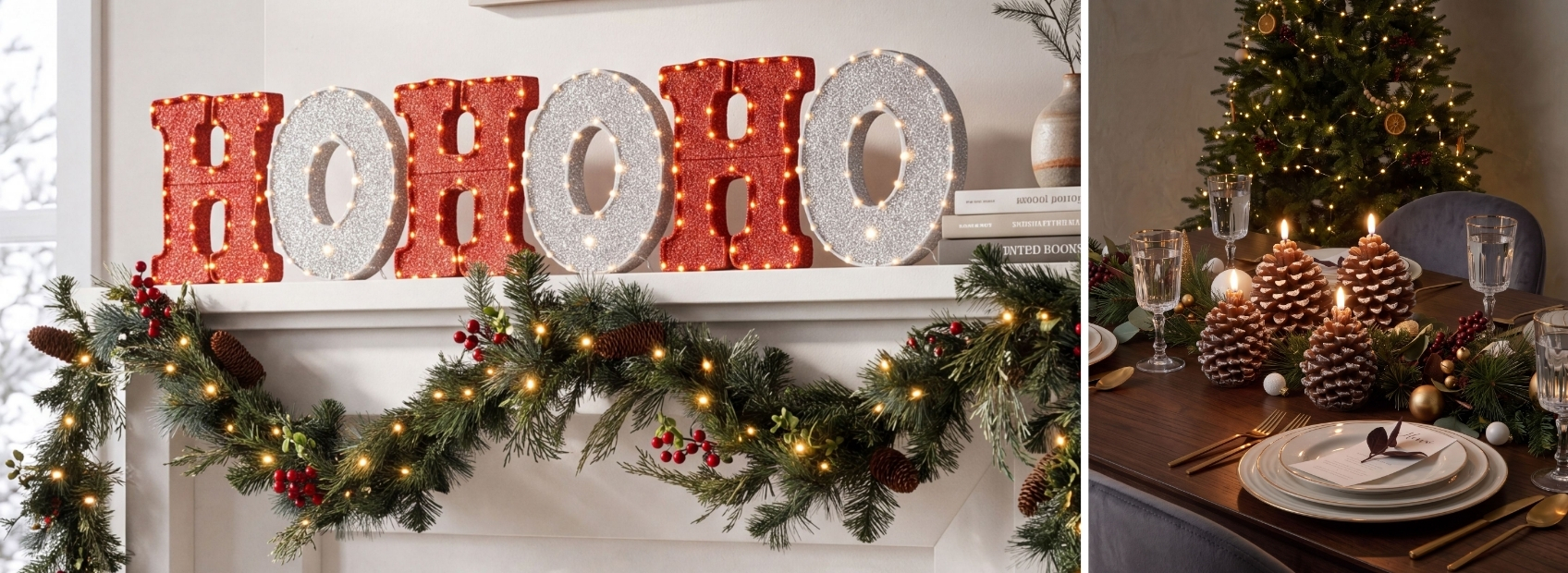
What belongs on a Christmas dining table?
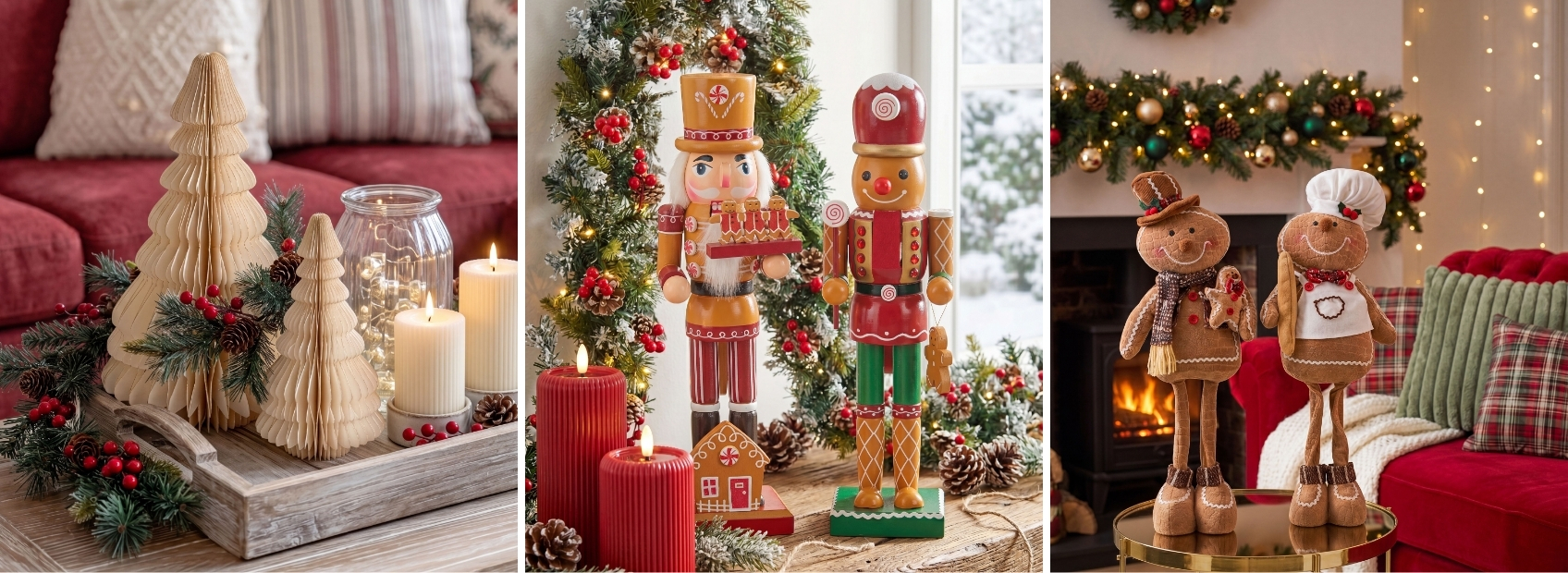
A dining table has one constraint most other surfaces don't: people need to see and talk across it. Five elements do the work, from the plate up.
- Tableware – seasonal plates or chargers layered under the everyday dinner plate, in one consistent accent colour
- Linen – a tablecloth or runner plus placemats and coasters, kept plain if the tableware already has a pattern
- Centrepiece – a flat arrangement or low greenery runner, under 15cm tall so it doesn't block sightlines when seated
- Candles – short candles in holders, clear of anything overhanging; save tall tapers for a sideboard or mantel instead
- Place setting – one small touch per setting, such as a sprig of greenery or a name tag, so it doesn't feel crowded
Save the more elaborate centrepiece for when the table isn't actively being used for a meal, and keep the everyday version flatter and simpler.
Shop now: Christmas tableware and Christmas candle holders
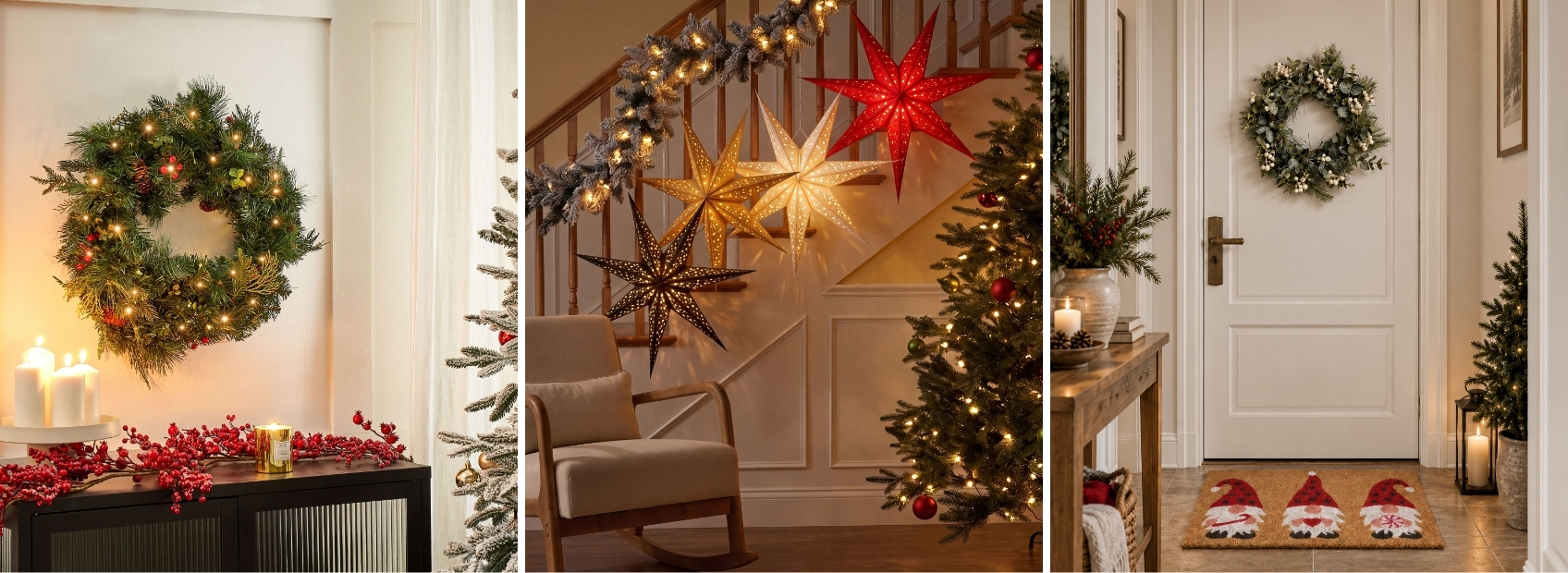
Why does the hallway need less, not more?
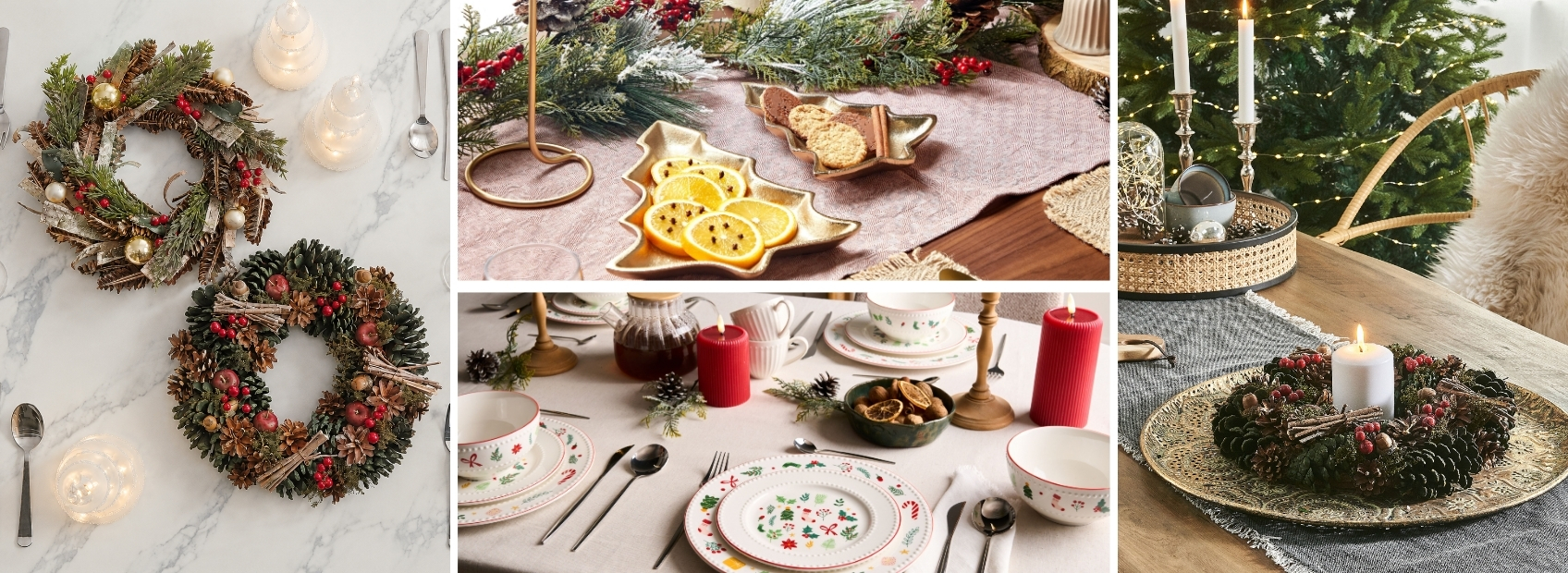
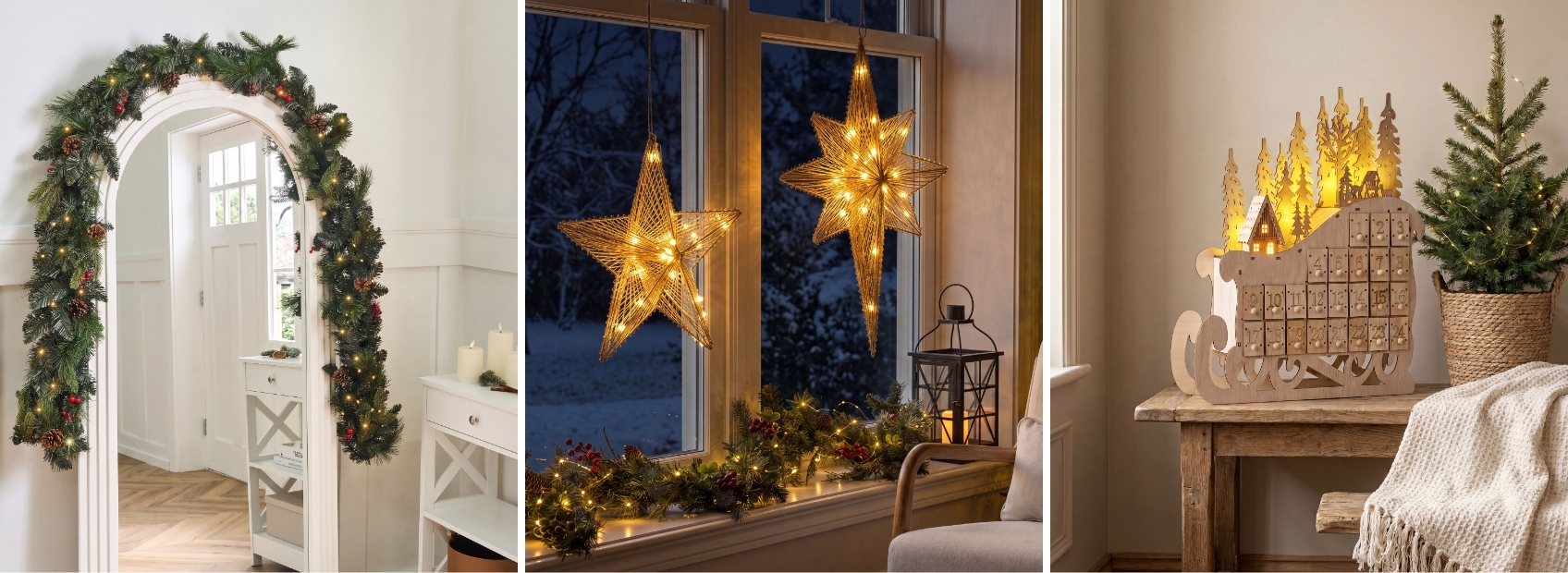
The hallway is a transition space – people move through it rather than linger – so it rewards restraint. One well-lit focal point, such as a wreath on the door, a garland along a bannister, or a single lantern on a console table, does more than decorating every surface.
- Choose battery-powered lights for anything near a door that opens to cold air, since draughts can affect flame-based candles
- Keep the floor clear, since a hallway is also a walking route and often the first thing guests see
- Match the entrance colour scheme loosely to the living room so the transition between the two doesn't feel disjointed
Shop now: Christmas wreaths and Christmas garlands
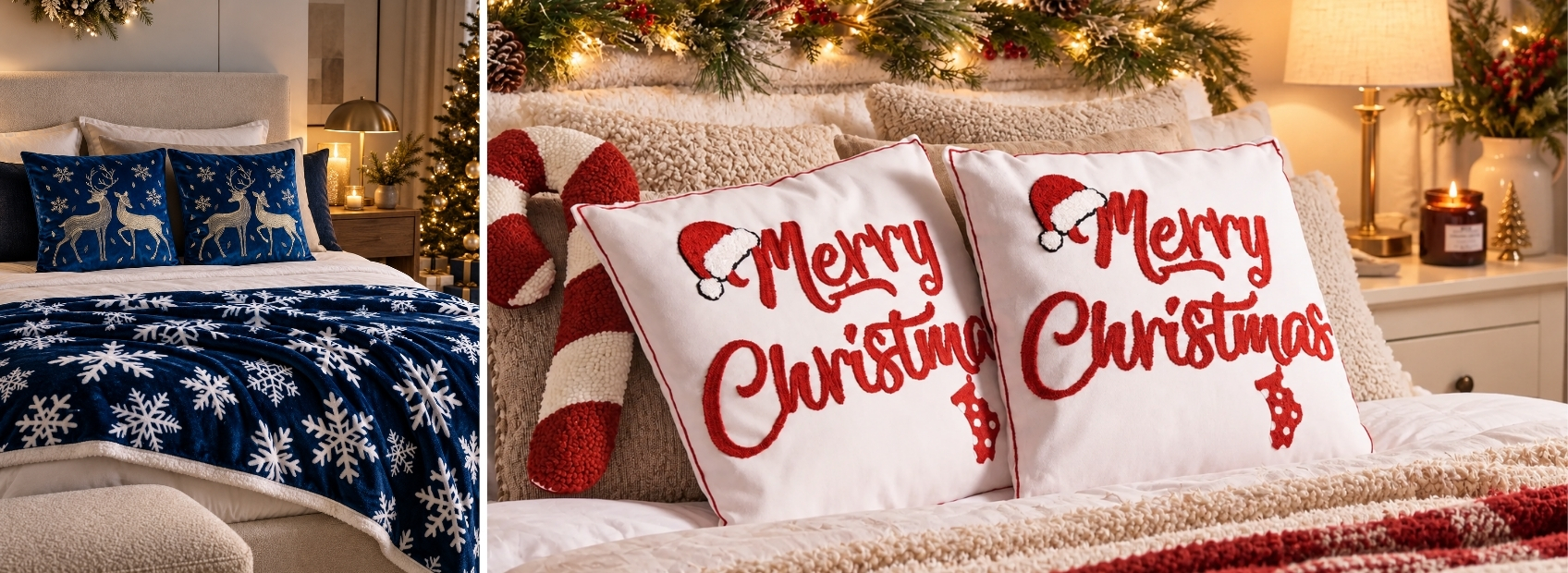
What actually makes a bedroom feel festive?
Bedrooms are for winding down, so warm, dimmable lighting does more for the mood than a tree. If you still want one, a small tabletop version on a chest of drawers or windowsill keeps floor space free.
Shop now: Christmas lights
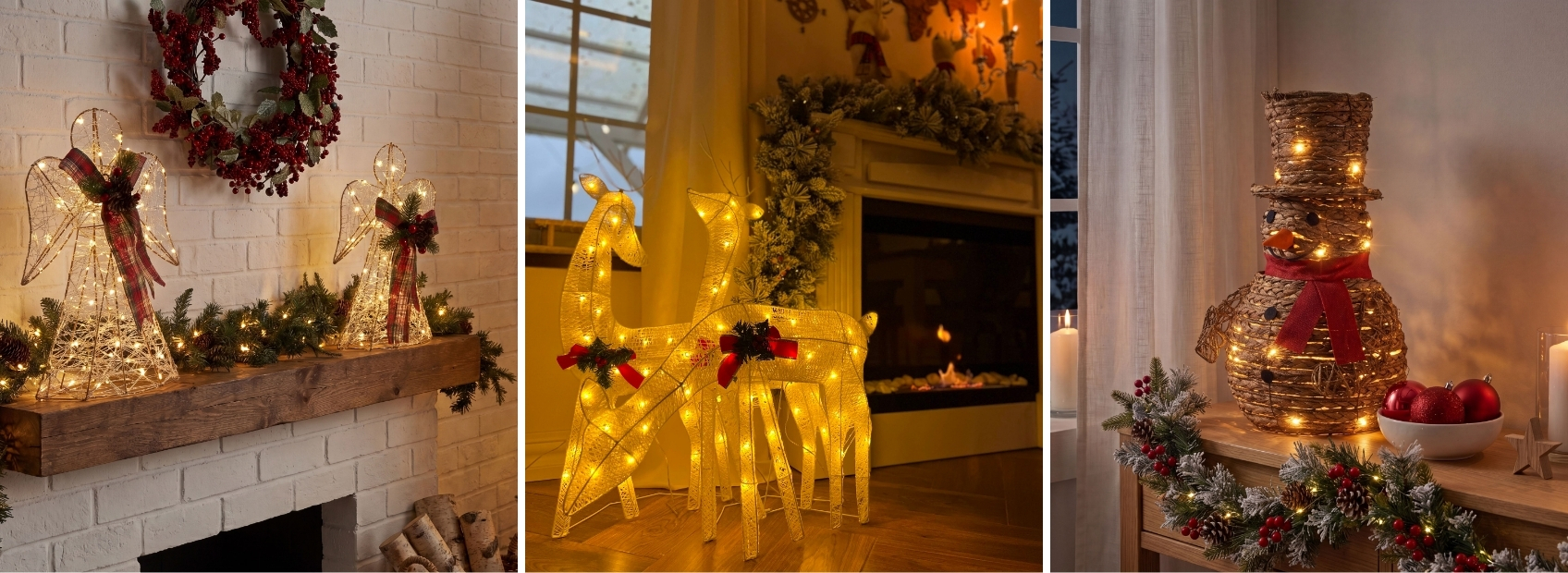
What are the top Christmas motifs to choose from?
1
Snowman
Fits a brighter, whiter scheme, and works well in a bedroom or hallway for a subtle touch.
2
Reindeer
Suits a natural, muted palette of browns, greens and cream, paired with wooden ornaments.
3
Snowflake
A versatile, colour-neutral motif that layers easily onto linen, baubles and lights.
4
Star
Traditional and gold-toned, most often used as a tree topper or in table settings.
5
Angel
Pairs with the star motif for a classical, gold-and-white look on the tree and mantel.
6
Nutcracker
Brings a playful, characterful note that suits a living room or a child's room.
7
Gingerbread
A warm, homely motif that works well on textiles, tableware and small ornaments.
8
Pinecone
A natural filler motif, used loose in bowls or wired into wreaths and garlands.
9
Holly and berries
A classic evergreen accent for wreaths, garlands and table settings.
10
Bell
A traditional accent motif, usually small-scale on ribbon, garlands or ornaments.
Most homes lean on one or two motifs rather than combining several. Picking one family for the main rooms, rather than mixing several, keeps the overall look coherent even when the individual decorations come from different collections.
Shop now: Christmas tree decorations
Which small swaps make decorations safer and longer-lasting?
A few swaps make a real difference to how safe and durable your decorations are, without changing the look much at all.
- LED candles instead of real ones – removes the risk of an open flame near dry branches or fabric, on the tree, mantel or table
- Plastic or wooden baubles instead of glass – survives a knock from a child or pet without shattering, especially on the lower branches
- LED string lights instead of incandescent – runs cooler and uses less electricity across long evenings of use
- Artificial greenery instead of real, for anything left up for weeks – real foliage dries out over time and can become a fire risk
- Washable polyester or cotton-blend linen instead of delicate fabrics – holds up better if the table will be used for more than one gathering
What should you decorate outdoors, and how?
Outdoor decoration works on different rules to anything indoors, since everything has to withstand rain, frost and wind for several weeks.
- Use lights and ornaments explicitly rated for outdoor use, since indoor string lights and paper or fabric decorations degrade quickly once exposed to damp
- Pick two or three features rather than covering every surface, such as a lit garland or lanterns along a path, a wreath on the front door, and one standout piece like an outdoor tree
- Concentrate the display near the entrance and front-facing windows, where it's most visible from the street
- Check outdoor sockets and extension leads are rated for outdoor use before connecting any lighting
Shop now: Christmas LED décor
What's left to check before you get started?
Once you know the look you're going for, run through these checks room by room before you buy or unpack anything.
- Measure your tree spot's height and width before buying a tree, leaving at least 30cm of ceiling clearance for a topper
- Check any string lights from storage for frayed wiring or a burnt smell before plugging them in
- Confirm candles have at least 10cm of clearance from anything that could overhang or ignite
- Choose battery-powered lights for areas near draughts, pets, or young children
- Plan your colour palette across two or three shades before buying, so pieces bought separately still match
- Decide which one or two rooms will carry the most decoration, rather than spreading effort evenly across the whole home
Frequently asked questions
When should I put my Christmas decorations up?
Most households in Europe start between late November and the first week of December, often timed to the first Sunday of Advent. Put battery-powered items such as LED candles and fairy lights up first, since they need no cabling sorted out, and add plug-in lighting and the tree once you've settled on the display.
How do I decorate for Christmas in a small flat?
Use a slim pencil tree or a wall-mounted felt or wire tree silhouette instead of a full-width tree, and run a single garland vertically up a doorframe rather than along a mantel you don't have. Stick to one lit item per surface, such as a small lantern on a console table, so the flat doesn't feel cluttered.
What Christmas decorations are safest around pets and young children?
Use battery-powered LED candles instead of open flames, and choose shatterproof plastic or wooden baubles on the lower third of the tree, saving glass ornaments for branches out of reach. Secure the tree to a wall or heavy base with a tree stand strap if a pet is likely to brush against it.
How should I store Christmas decorations to keep them in good condition?
Wrap glass baubles individually in tissue paper or bauble sleeves inside a compartmentalised storage box, and coil string lights around a piece of card or a cable reel to stop them tangling. Keep all boxes off the floor in a dry cupboard or on a shelf, away from damp and direct sunlight, which fade fabric decorations over time.