Free Delivery
 365-Day Returns
 10 Million Happy Customers
 500,000 Products in Stock
How to Layer Textiles at Home: The Complete Guide to Cushions, Throws & Rugs
Reviewed by the Beliani Content Team · Updated September 2026
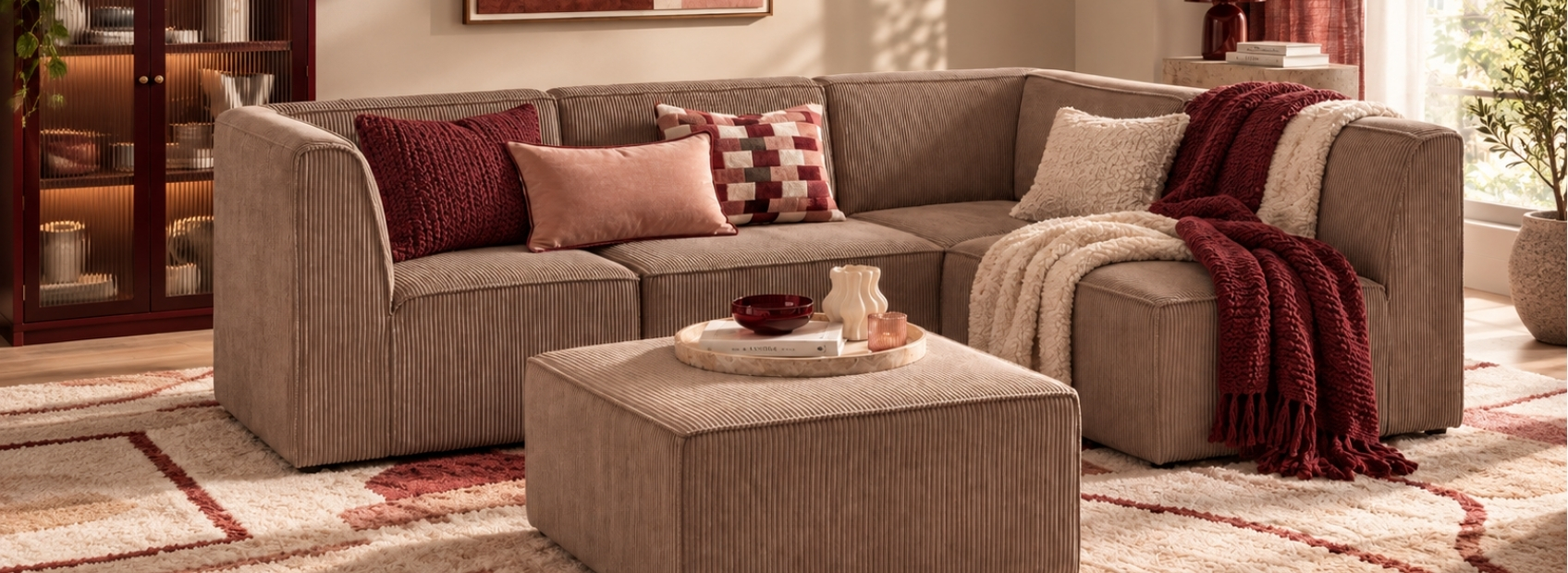
A room with bare floors and a single cushion can feel unfinished no matter how good the furniture is. Textiles are what turn a functional living room into one that feels lived-in, and the right combination depends on your room size, your existing colours and how much wear the pieces need to survive. This guide shows you how to build a layered look from the rug up, with the specifics for your situation along the way.
In short
What does layering textiles actually mean?
Layering means combining a rug, one or two throws and a set of cushions so they read as one considered arrangement rather than separate purchases. Start with the rug for scale, add a throw for texture contrast, then finish with cushions sized to your sofa. The right combination varies with:
- Your room size and furniture layout
- The colours and materials already in the room
- How much everyday wear the textiles need to withstand
Which approach suits your situation?
Before choosing individual pieces, it helps to know how the general rules below change depending on your room and household.
| Your situation | What to do |
|---|---|
| Small living room | Use one correctly sized rug, fewer cushions (2–3), and a single contrasting throw rather than several competing pieces |
| Large or open-plan room | Use a larger rug to define the seating zone, then repeat its main colour in a cushion or throw elsewhere in the space |
| Mostly neutral room | Build interest through contrasting textures (bouclé, wool, linen) rather than adding more colours |
| Patterned sofa or rug | Keep the remaining textiles solid or in a small-scale pattern so the existing piece stays the focal point |
| Children or pets in the home | Prioritise removable, washable cushion covers and durable, easy-clean rug materials over delicate fabrics |
| Renting your home | Stick to freestanding rugs, throws and cushions with a non-slip rug pad; nothing needs fixing to floors or walls |
How should you start layering textiles?
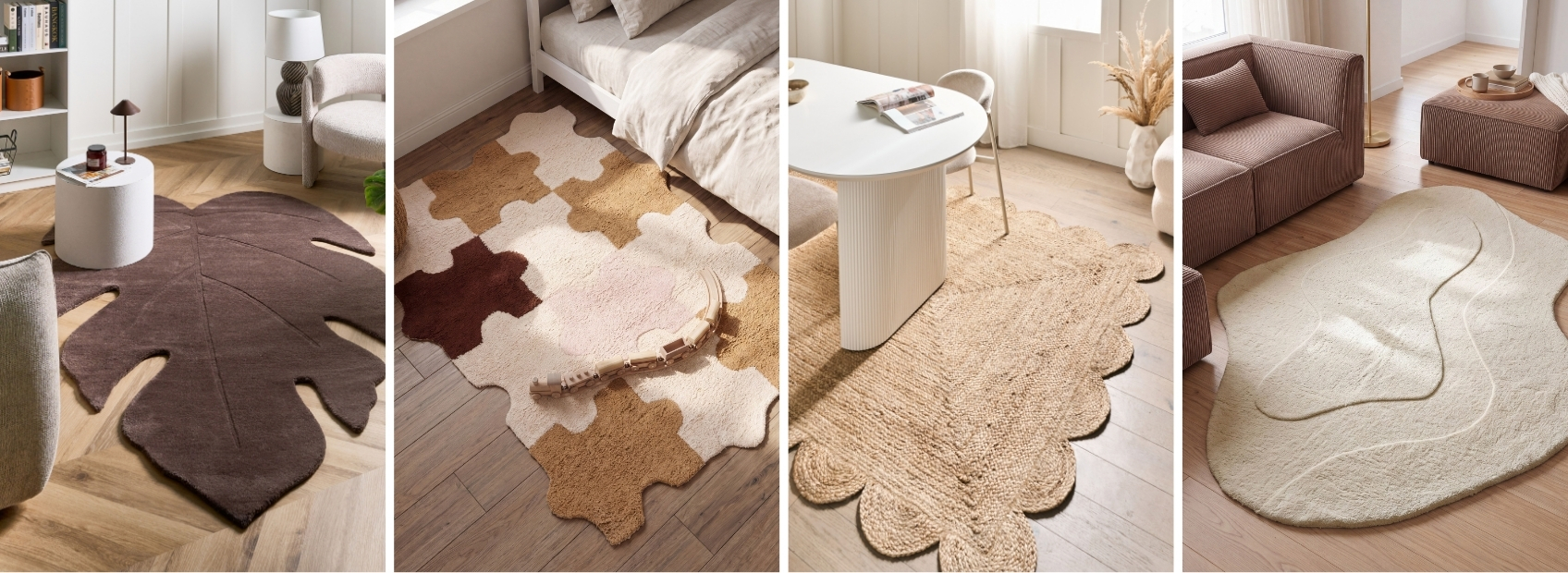
The rug sets the scale for everything layered on top of it, so choose it before anything else. Flat-weave and low-pile rugs work well as a base layer because they sit flush and don't compete with the throws and cushions added later.
Read more: the ultimate rug guide
How do you get the rug size right?
Rug size is the detail that most affects whether a room feels finished, so it's worth being specific about it. The most common mistake is sizing a rug only to the coffee table: the sofa and armchairs end up floating around the edges, and the rug reads as disconnected from the seating rather than part of it.
Workable minimum
Front legs on the rug
Every sofa and armchair has at least its front legs resting on the rug, which ties the furniture into one visual group. This works well in most standard living rooms.
Best for larger rooms
All legs on the rug
The whole seating group sits on the rug. It needs more floor space to look right but defines the seating zone most clearly, which suits open-plan or larger rooms.
Measure your own seating layout before buying rather than relying on a general size band. If you're adding a second, smaller rug on top for texture, keep it at least 15–20cm smaller on each side than the base rug, so the base rug's border stays visible as a frame.
How should you layer throws?
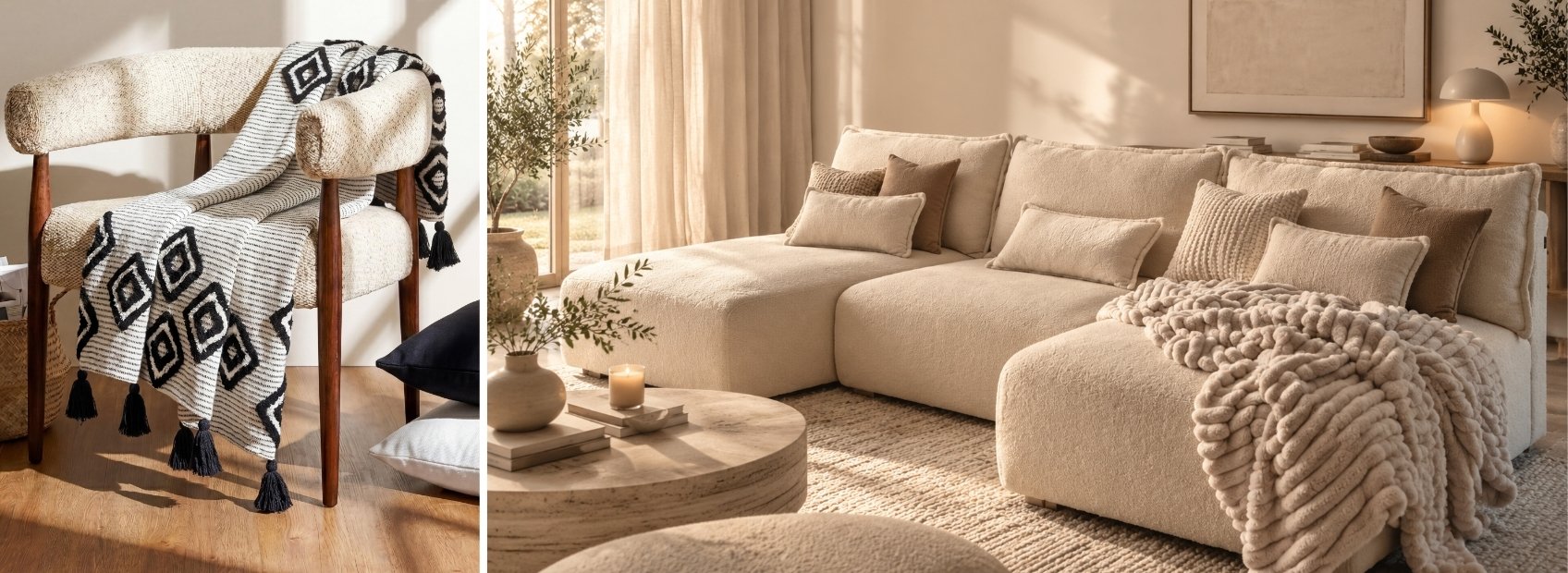
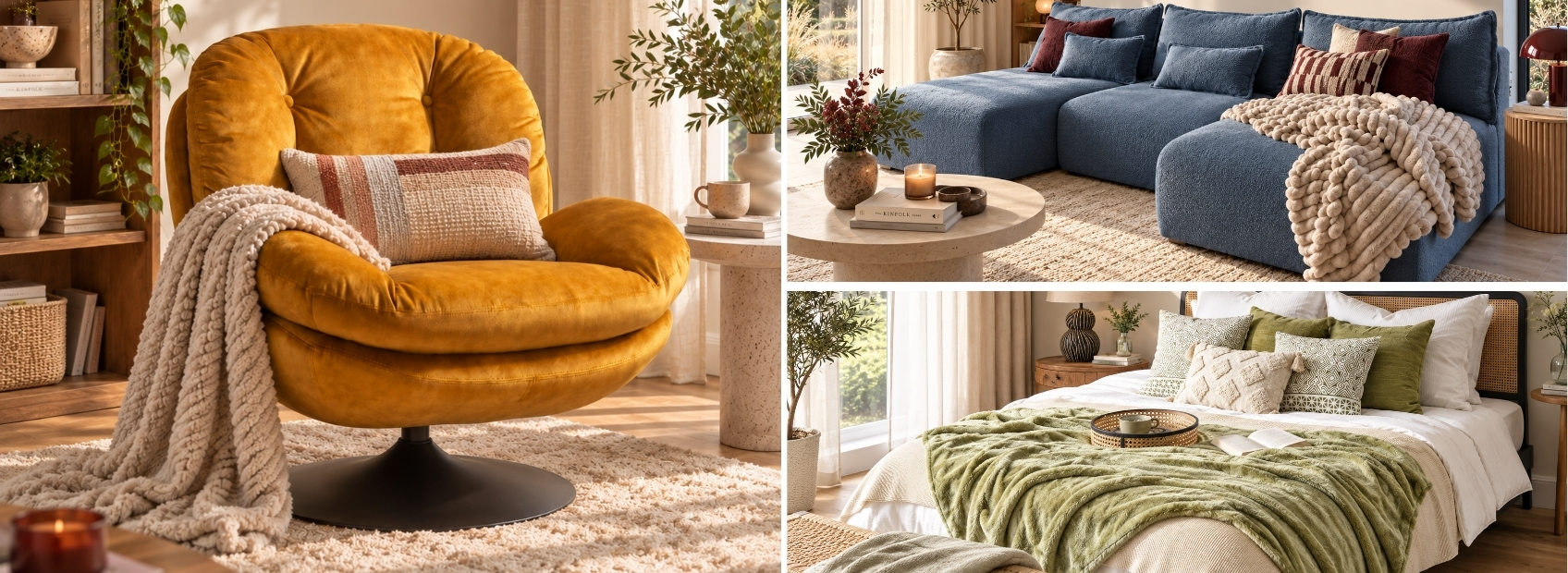
A throw's job is to add a tactile surface that visibly contrasts with your sofa's upholstery. A chunky knit against smooth linen or leather creates a clear contrast; a throw in the same fabric family as the sofa tends to blend in and add little.
Fold the throw in thirds and drape it over one arm or the back corner of the sofa, rather than spreading it flat across the seat. One throw per sofa is usually enough; a second belongs on an armchair or the foot of a bed rather than doubled up on the same seat.
Shop now: blankets and throws
How many cushions should you use?
The right count depends on the sofa itself more than on a fixed formula. The general principle is to vary the sizes and leave enough usable seating space; the exact number matters less than variety.
| Sofa type | Suggested cushions | Arrangement tip |
|---|---|---|
| 2-seater sofa | 2–3 | Vary two sizes; avoid crowding a small seat |
| 3-seater sofa | 3–5 | Use an odd number with a mix of two to three sizes |
| Corner or modular sofa | 5–7 | Spread across each section rather than clustering in one corner |
Shop now: scatter cushions
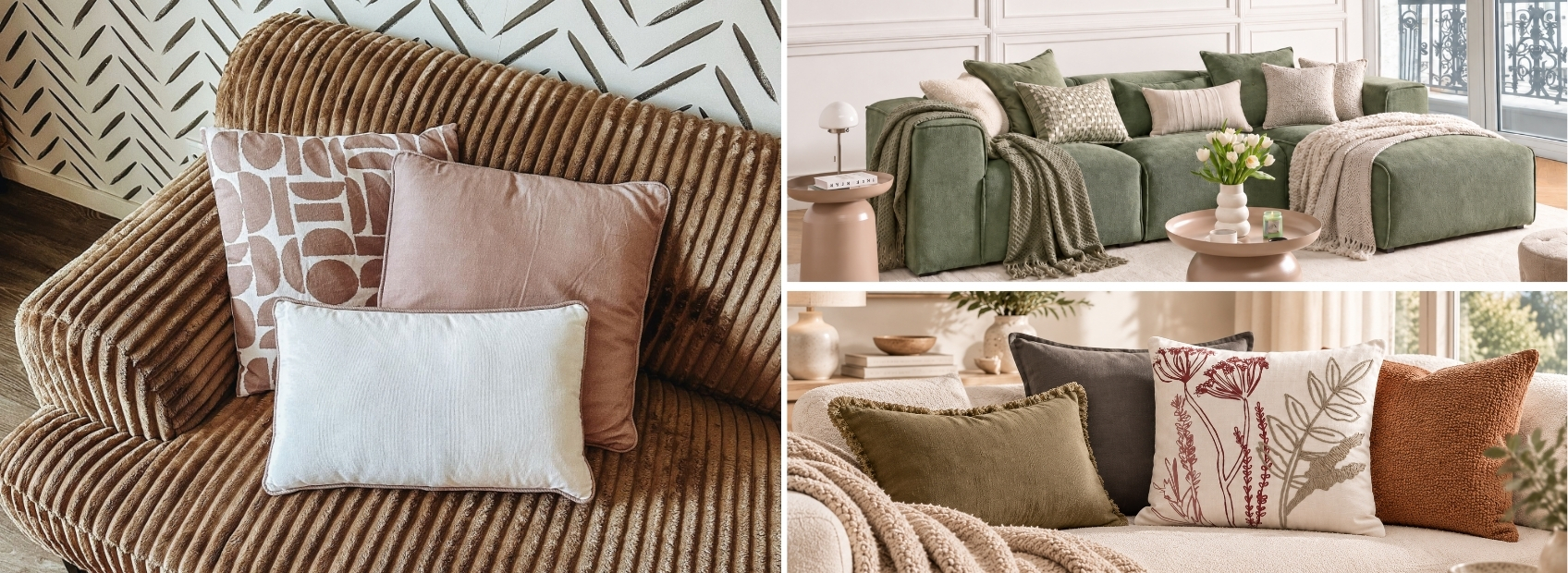
Whichever count you land on, buying inserts one size up from the cover, for example a 50cm insert in a 45cm cover, makes the cushions look plump rather than deflated.
If you're working to a budget, the rug is worth prioritising: it's the layer you'll live with for five to ten years, while cushions and throws are the cheapest and easiest to swap in and out by season once the rug is settled.
Read more: how to mix and match scatter cushions like a pro
How to mix patterns and textures?
Combine one large-scale pattern with one small-scale pattern and one plain, tactile fabric, rather than mixing several bold patterns of similar size.
| Layer | What to choose | Where to use it |
|---|---|---|
| Large-scale pattern | A bold stripe, large floral or another dominant print | Rug or larger cushion |
| Small-scale pattern | A fine check, dot or narrow stripe | Smaller cushion or accent piece |
| Solid texture | Bouclé, ribbed knit or another tactile plain fabric | Throw or cushion |
Repeat one colour across the rug, throw and at least one cushion. This is the simplest way to connect the pieces without adding more colours to the room.
The most common layering mistake
Buying every textile in the same fabric and colour. It coordinates in a shop but looks flat in a room, because there is no texture for the eye to move across.
How to choose colours for layered textiles?
Main colour
Pick one already in the room
Use a colour already present in the walls, flooring or existing furniture as the starting point.
Supporting colour
Repeat it across two pieces
Add a complementary shade that appears on at least two of the rug, throw or cushions, so they read as chosen together.
Accent shade
Use it on one small piece
Put a stronger accent colour on a single cushion or throw rather than repeating it across every piece.
Neutral textiles can also be layered without strong colour contrast by mixing materials instead, which works well when the room already has several colours or patterns elsewhere.
Which textiles work best for everyday use?
How much a textile needs to withstand should shape what you buy as much as how it looks.
Children
Prioritise washable covers
Choose removable, machine-washable cushion covers and a rug in a durable, easy-clean material such as a wool blend or synthetic weave.
Pets
Choose durable weaves
Look for tightly woven, stain-resistant rugs and cushion fabrics that resist snagging, rather than loose weaves or delicate wool piles.
Everyday pieces
Check the care label first
For a sofa, throw or cushions in daily use, confirm the covers are machine-washable or can be professionally cleaned before you buy.
Decorative-only pieces
Prioritise texture over easy-care
A throw or cushion that's rarely handled, such as one on a guest bed, can prioritise appearance and texture over easy maintenance.
What should you check before buying?
Run through these checks so the pieces work together once they're home.
- Measure the seating area, not just the rug's own footprint
- Compare new colours against existing walls, flooring and furniture
- Mix at least two different textures so the arrangement doesn't feel flat
- Confirm cushion and rug covers are washable if you have children or pets
- Leave enough open floor space so the room doesn't feel crowded
Frequently asked questions
How to stop a rug from moving on a hard floor?
Use a suitable non-slip rug pad underneath the rug to increase grip and reduce movement on hard flooring. Choose a pad designed for your specific floor type and make sure it sits fully underneath the rug.
Can you layer a rug over carpet?
Yes, a low-pile rug can sit over carpet, though it works best as a defined layer rather than covering the full floor. Use a rug pad made for carpet-to-carpet contact to stop it slipping or bunching underfoot.
How large should a rug be in front of a sofa?
A rug should be large enough for at least the front legs of the sofa and any accompanying armchairs to sit on it. This helps connect the furniture into one seating area instead of leaving the rug looking too small or detached.
Which textile materials are most practical for everyday use?
For everyday use, choose textiles based on how much wear, cleaning and contact they will receive. Homes with children or animals benefit from durable, easy-care fabrics with removable or washable covers, while decorative textiles used less often can prioritise texture and appearance.
How often should throws and cushion covers be washed?
Throws and cushion covers in daily use are best washed every four to six weeks, following the care label for temperature. Decorative pieces handled less often can go several months between washes unless they're visibly marked.