Free Delivery
 365-Day Returns
 10 Million Happy Customers
 500,000 Products in Stock
How to Take Care of Your Wooden Furniture
Reviewed by the Beliani Content Team · Updated October 2026
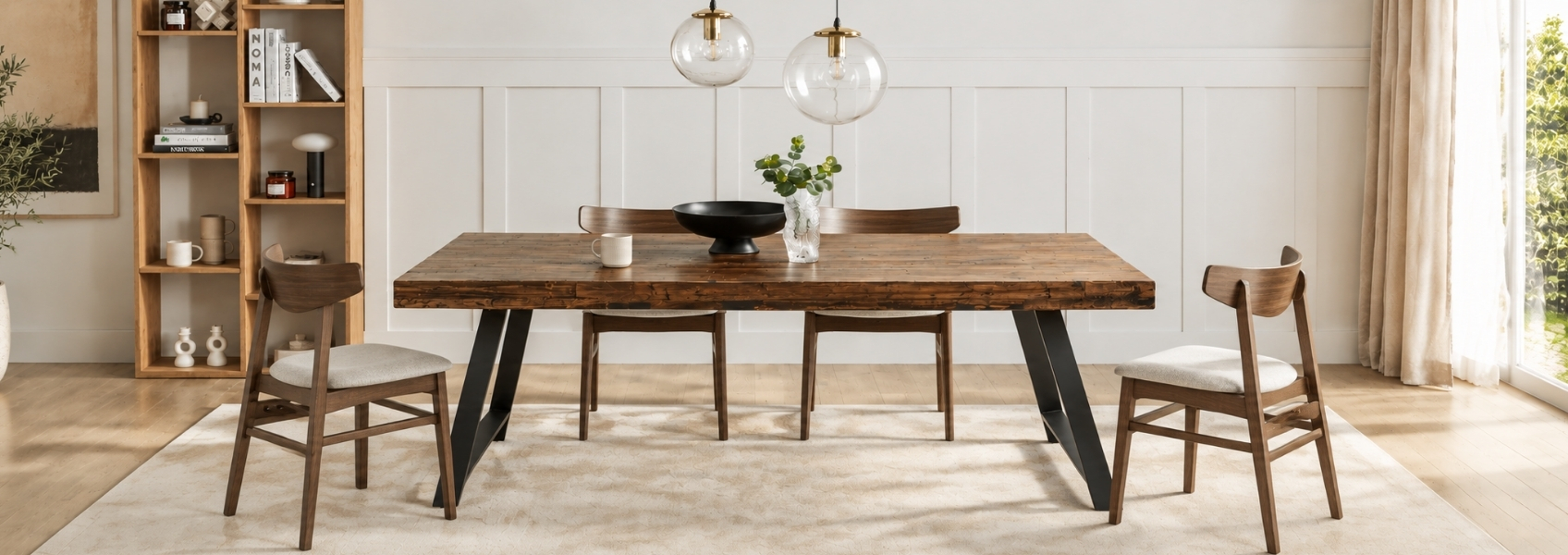
Wood is a natural material that keeps reacting to its surroundings long after it becomes a table, a bed or a chest of drawers. Heat, damp, sunlight and the wrong cleaning product can all leave marks, while the right routine keeps the grain looking good for decades. This guide helps you identify the finish and construction of your furniture, whether it is solid wood, wood veneer or wood effect, choose the right care for it and deal with the marks that everyday life leaves behind.
In short
How do you take care of wooden furniture?
Dust wooden furniture weekly with a soft, dry cloth and wipe up spills immediately. For deeper cleaning, use a cloth wrung out in lukewarm water with a little mild soap, then dry the surface straight away. Keep furniture away from radiators and strong sunlight, and avoid very dry or very humid air in the room. How often the surface needs oil or wax, and how much repair a piece can take, depends on the finish and construction:
- Oiled wood needs re-oiling roughly once or twice a year
- Lacquered, painted and wood-effect finishes need no oil or wax at all
- Veneer and wood-effect furniture have a board core, so keep them dry and never sand them deeply
- Heavily used pieces, such as dining tables, need more frequent care than a bookcase or a bed frame
- Outdoor wooden furniture needs treatment at least at the start and end of each season
Which finish does your wooden furniture have?
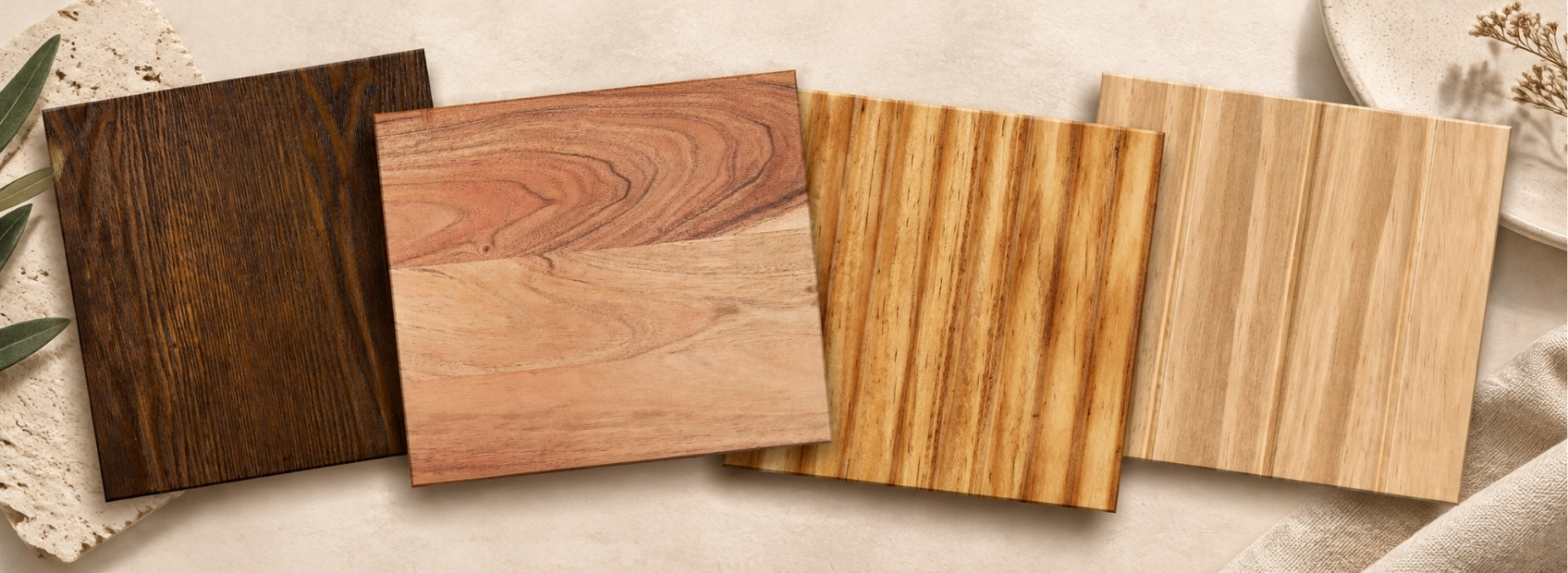
The finish is the protective layer on the surface of the wood, and it matters more than the type of wood itself. A product that is right for oiled oak can leave a greasy film on lacquered oak, so identify the finish before you clean or treat anything.
A simple water test tells you most of what you need to know. Place a few drops of water on a hidden spot, such as the underside of a table top. If the drops bead and stay on the surface, the wood is sealed with lacquer or varnish. If they soak in and darken the wood within a few minutes, the wood is oiled or unfinished.
| Finish | How to recognise it | Everyday cleaning | Ongoing upkeep |
|---|---|---|---|
| Lacquered or varnished | Smooth, sealed surface with a matt, satin or gloss sheen; water beads on top | Damp cloth with mild soap, then dry | No oil or wax needed; avoid polishes that build up a film |
| Oiled | Natural, matt look; you can feel the texture of the grain; water darkens the wood | Well-wrung cloth with mild soap or a wood soap, then dry | Re-oil when the surface looks dry or water no longer beads |
| Waxed | Soft, warm sheen; a warm finger can leave a faint smear | Dry cloth; only a barely damp cloth for sticky spots | Buff with a dry cloth; re-wax when the sheen fades |
| Painted | Opaque colour; the grain is hidden or only faintly visible | Damp cloth with mild soap, then dry; no abrasive pads | Touch up chips with matching paint; no oil or wax |
| Veneered (real wood layer on a board) | Real grain on the surface, but the edge shows a thin strip or a grain that does not quite match the top; usually lacquered or oiled, so check the finish with the water test too | Follow the finish on top, but keep the cloth barely damp and dry the surface straight away | Re-oil lightly only if the finish is oiled; never sand deeply, as the wood layer is very thin |
| Wood effect / laminate | A printed foil or laminate layer over MDF or chipboard; the grain pattern often repeats and feels perfectly smooth and flat | Damp cloth with mild soap, then dry; no wood-specific cleaners | Never oil or wax; chipped edges need a matching touch-up product, not sanding |
Solid wood, veneer or wood effect: why it matters for repairs
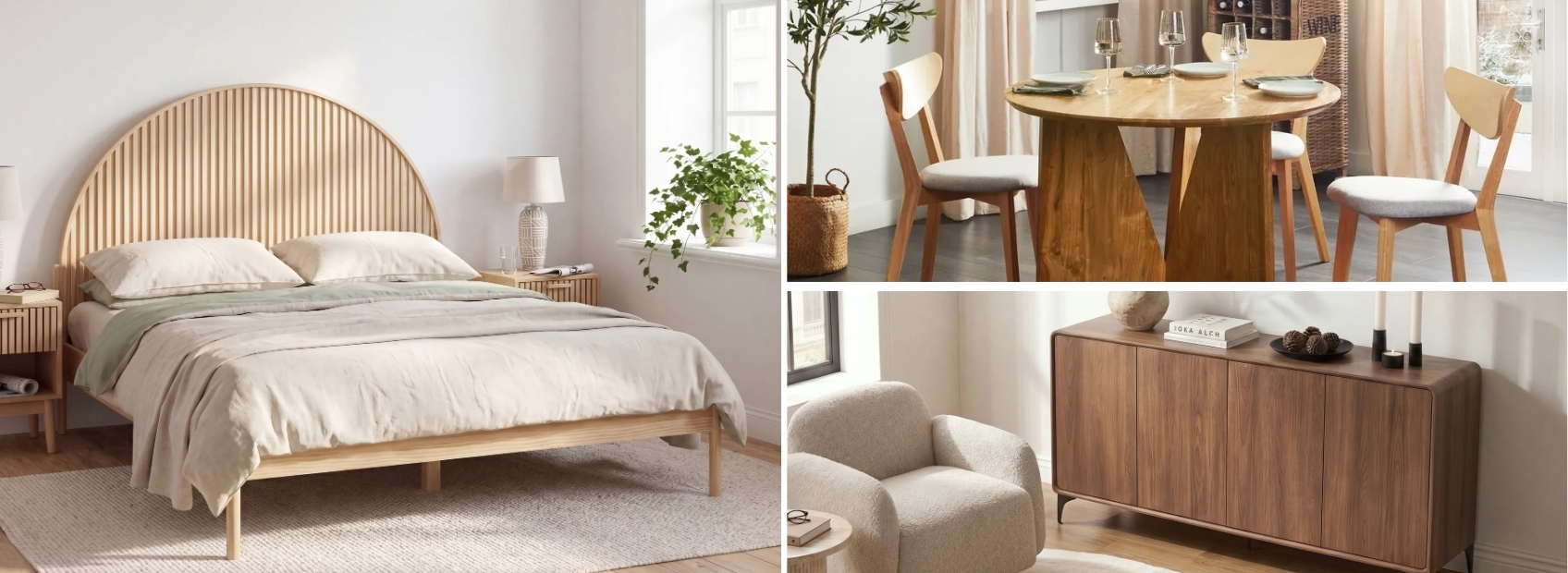
These three terms describe what is actually underneath the surface, and that decides how much repair work a piece can take. Mixing them up is the most common reason a repair goes wrong, such as sanding a surface that has no real wood to sand back to.
Solid wood
Real wood all the way through
The grain pattern on the top continues around the edges and end grain, and it varies slightly from board to board. It can be sanded back and refinished several times over its life, which is why scratches and dents are usually repairable rather than permanent.
Veneer
A thin layer of real wood on a board
A layer of genuine wood, often under 1 mm thick, glued onto MDF or chipboard. The edge usually shows a thin strip or a grain that does not quite match the top. It is cleaned exactly like solid wood, but it cannot be sanded deeply, so scratches need touch-up products rather than sandpaper.
Wood effect
A printed pattern, not real wood
A foil or laminate printed to look like wood grain, wrapped over MDF or chipboard. The pattern often repeats noticeably across the surface and the edge has no visible grain at all. Never apply wood oil or wax to it, since there is no wood underneath to absorb it; a build-up just sits on top as a sticky film.
How to clean wooden furniture day to day
Most wooden furniture needs nothing more than regular dusting and an occasional gentle wipe. Follow this routine for any sealed or oiled finish.
- Remove dust with a soft, dry cloth, working along the grain. Dust left on the surface acts like fine sandpaper when you wipe it.
- Dip a soft cloth in lukewarm water with a few drops of mild washing-up liquid, then wring it out until it is only just damp.
- Wipe the surface along the grain, paying extra attention to handles, edges and the areas where hands and plates rest.
- Dry the surface immediately with a clean, dry cloth so no moisture is left to soak in or leave marks.
What not to use on wooden furniture
- All-purpose sprays, glass cleaners and products containing ammonia or bleach, which can cloud lacquer and dry out oiled wood
- Scouring pads, the rough side of a sponge or abrasive creams, which leave fine scratches
- Steam cleaners and very wet cloths, which push moisture into joints and can lift veneer
- Silicone-based polish sprays, which build up a film and make later re-oiling or refinishing difficult
How often should you oil or wax wooden furniture?
Only oiled and waxed finishes need regular treatment. Lacquered, painted and wood-effect furniture is sealed, so oil or wax simply sits on top and leaves a sticky or streaky layer.
For oiled furniture, the surface tells you when it is time. If water no longer beads briefly before soaking in, or the wood looks pale and dry, it needs a new coat. A dining table in daily use typically needs re-oiling once or twice a year, while a sideboard or bed frame may go several years between treatments.
Always use the same type of product that was used originally, or one the manufacturer recommends. Different oils and waxes do not always bond with each other, so test a new product on a hidden spot first and wait 24 hours before judging the result.
How to re-oil a wooden table
This routine is written for oiled solid wood. Oiled veneer can be re-oiled in the same way, but skip the sanding step. Wood effect furniture should never be oiled.
- Clean the surface with mild soapy water and let it dry completely, ideally overnight.
- Solid wood only: sand any rough or stained patches lightly along the grain with fine sandpaper, around 240 grit, then remove all the dust. On veneer, skip this step, because the real wood layer is very thin and sanding can wear through it to the board underneath.
- Apply a thin, even coat of furniture oil with a lint-free cloth, working along the grain.
- Leave the oil to soak in for the time stated on the product, then wipe off every trace of excess oil with a clean cloth.
- Let the surface cure for the time on the label, usually at least 24 hours, before you put anything on it.
Oily cloths can catch fire on their own
Cloths soaked in drying oils, such as linseed, tung or Danish oil, give off heat as they dry and can ignite if left crumpled in a pile or a bin. After oiling, lay the cloths flat outdoors to dry, or put them in a sealed metal container filled with water before you dispose of them.
Shop now: solid wood tables and wooden chairs
How to care for veneer and wood effect furniture
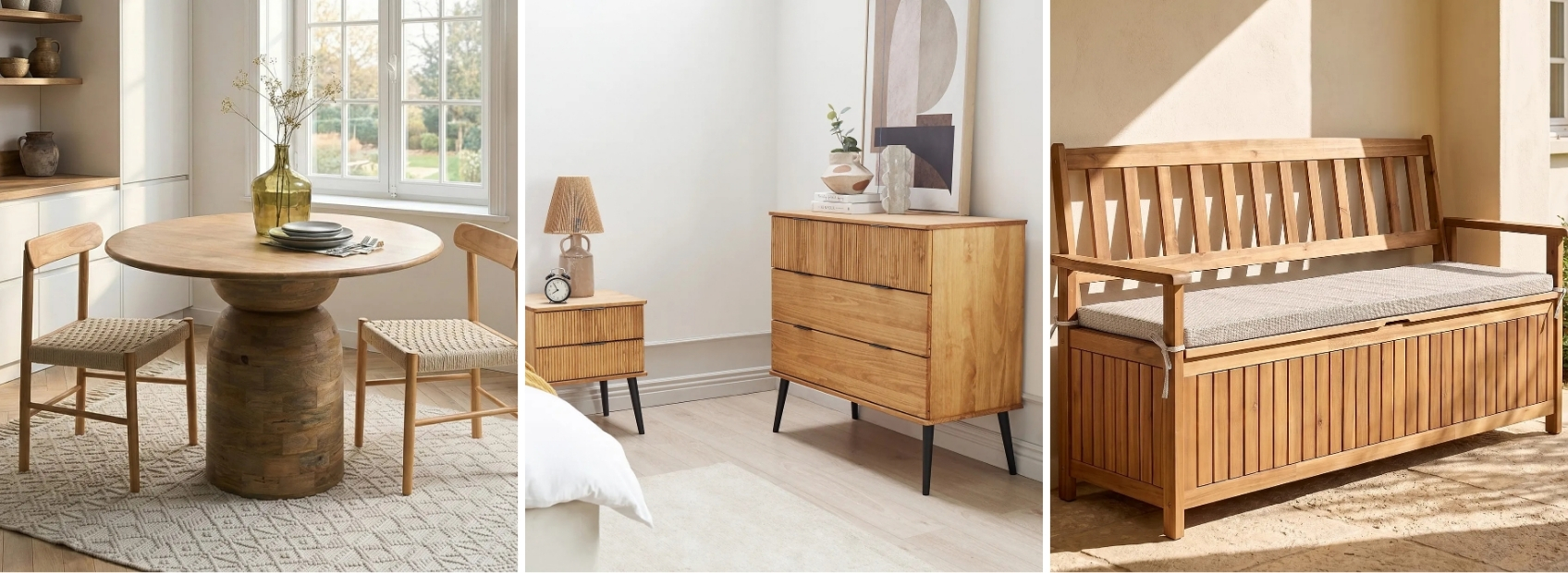
Veneer and wood effect furniture are both built on a board core, usually MDF or chipboard. That board is stable in normal conditions, but it can swell and crumble if moisture reaches it. Most care for these pieces comes down to one rule: keep them dry, especially around edges, corners and joins.
Veneer
Gentle care for a thin layer of real wood
- Clean as you would for the finish on top, but with a barely damp cloth, and dry straight away
- Wipe up spills at once, especially near edges, where water can get under the veneer
- Do not sand with sandpaper; fill light scratches with a wax filler stick or a matching touch-up marker instead
- Keep it away from radiators, heaters and strong direct sunlight, which can dry out the finish and weaken the glue over time
- If an edge lifts or the surface bubbles, stop wet cleaning and ask the manufacturer or a furniture restorer for advice rather than pulling at it
Wood effect
Simple care for a printed, sealed surface
- Wipe with a damp cloth and a little mild soap, then dry; the sealed surface is easy to keep clean
- Do not use oil, wax, polish or wood-specific cleaners, as they only leave a sticky film
- Avoid abrasive pads and creams, which can scratch through the printed layer
- Use trivets and placemats, because hot dishes can mark or lift the surface layer
- Treat chipped edges quickly with a matching touch-up product, and keep the spot dry so the board underneath does not swell
What veneer and wood effect have in common
- Standing water is the main risk, so wipe up spills straight away and avoid wet cloths or steam cleaners
- Edges and corners are the weak points, so take extra care when moving, cleaning and wiping around them
- Deep sanding is not an option, because there is little or no real wood to sand back to
- Always check the manufacturer's care instructions first, as finishes and constructions vary between products
How to protect wood from heat, damp and sunlight
Humidity and heating
Wood absorbs moisture from the air when it is humid, and releases it again when the air is dry, so it is constantly swelling and shrinking by small amounts. Air that is too dry, especially during the heating season, leads to visible gaps in tabletops, creaking and loose joints. Air that is too humid makes doors and drawers start to stick, and in extreme cases encourages mould. The safest range to keep at home is 40–60% relative humidity, where wood barely moves at all. An inexpensive hygrometer from a hardware shop will show you the exact level in your room, rather than relying on guesswork.
Do not place wooden furniture directly against radiators, in front of heaters or next to a fireplace. Concentrated heat dries out one side faster than the other, which can cause warping, splitting and loose joints.
Sunlight
Strong, direct sunlight changes the colour of wood over time. Light woods such as oak and pine tend to yellow, while darker woods such as walnut can fade. Move ornaments and table runners now and then so the surface ages evenly, and use curtains or blinds on south-facing windows in summer.
Everyday protection
- Coasters under glasses and cups, because condensation and heat cause white rings
- Placemats or trivets under hot dishes, as heat can soften and mark a lacquered finish
- Felt pads under chair and table legs, replaced when they wear thin or collect grit
- Lifting furniture when you move it, rather than dragging it, to avoid stress on the legs and joints
Shop now: placemats and coasters
How to fix common marks on wooden furniture
White rings
Moisture trapped in the finish
A white or cloudy ring is usually moisture caught in the top layer of the finish. Direct a hairdryer on its lowest heat setting at the mark, keep it moving and stop as soon as the ring fades. Dark rings mean the water has reached the wood itself and usually need sanding and refinishing.
Light scratches
Surface scratches in the finish
Fill fine scratches with a wax filler stick or touch-up marker in a matching shade, then buff with a soft cloth. On oiled solid wood, a small amount of oil rubbed into the scratch often makes it almost invisible.
Dents
Small dents in solid wood
On oiled or unfinished solid wood, place a damp cloth over the dent and press a warm iron on it for a few seconds. The steam swells the compressed fibres back up. Do not try this on lacquer, veneer or wood effect, as heat and moisture can damage the finish or loosen the glue.
Sticky surface
Build-up of polish or oil
A tacky or smeary surface usually means too much product has built up. Clean it with a cloth wrung out in warm soapy water, dry it well and buff with a dry cloth. Use less product next time and always wipe away the excess.
How to care for wooden garden furniture
Outdoor wood faces rain, frost and UV light all year round, so it needs a proper seasonal routine rather than the occasional wipe that suits an indoor piece.
Start of season: clean and re-oil
Scrub the furniture with mild soapy water and a soft brush, paying attention to joints and the underside of arms and seats, where dirt and algae collect. Rinse with clean water and let the wood dry fully, ideally over a full dry day, before applying an outdoor wood oil. Work the oil along the grain and wipe away any excess so it cannot turn sticky.
During the season: what to check
- Whether water still beads briefly on the surface; if it soaks straight in, the oil has worn through and the piece needs re-oiling
- Green or black patches in shaded, damp corners, which are early mould or algae and should be scrubbed off before they spread
- Movement in screws or joints after a run of hot days, since wood expands and contracts outdoors just as it does indoors
- Standing water on flat surfaces after rain, which should be wiped off rather than left to dry in the sun
Why outdoor wood turns silver-grey
Untreated teak and some other hardwoods gradually turn silver-grey outdoors as UV light breaks down the surface fibres. This change is only cosmetic and does not weaken the wood. If you prefer the original warm colour, oil the furniture regularly from the start rather than waiting for it to grey, since reversing established greying takes more sanding and oil than simply preventing it.
End of season: treat and store
Repeat the cleaning and oiling routine before the cold, wet months set in, so the wood goes into winter protected. Stand furniture on paving or decking rather than directly on grass or soil, so the feet do not sit in standing water. Store it in a dry shed or garage where possible, or use breathable covers that let moisture escape; tight plastic sheeting traps condensation underneath and encourages mould.
Read more: outdoor furniture material guide
What to check before you clean or treat wooden furniture
Work through these checks before you use any new product or start a repair.
- The finish type, using the water-drop test on a hidden spot
- Whether the piece is solid wood, veneer or wood effect, by looking at the edges and end grain, before you sand or oil anything
- That the product label matches the finish, so you never put oil or wax on lacquered, painted or wood-effect surfaces
- That veneer and wood effect pieces are kept dry, with spills wiped up straight away and no sanding
- How a new product looks on a hidden area after 24 hours, before you treat the whole surface
- The room humidity, aiming for 40–60%, and the distance between the furniture and radiators or heaters
- The condition of felt pads under chair and table legs
- For outdoor pieces, whether water still beads on the surface or it is time for a new coat of oil
Frequently asked questions
Can I use olive oil or other cooking oil on wooden furniture?
No. Cooking oils such as olive or sunflower oil never fully dry, so they leave a sticky surface that attracts dust and can turn rancid over time. Use a furniture oil made for wood, such as a hardwax oil or Danish oil, instead.
Can I use disinfectant wipes on a wooden table?
Avoid using them regularly. Many disinfectant wipes contain alcohol or strong detergents that can dull lacquer and dry out oiled wood. For everyday hygiene, a cloth wrung out in mild soapy water and dried straight away is enough.
How do I get rid of a musty smell in wooden drawers or cabinets?
Empty the piece, wipe the inside with mild soapy water, dry it and leave the doors or drawers open in a dry, airy room for a day or two. Then place a small open bowl of bicarbonate of soda inside for a few days to absorb what remains. If the smell returns, check the room for damp.
Why are small gaps or cracks appearing in my solid wood table?
Solid wood shrinks when the air is dry and swells when it is humid, so fine gaps often appear during the heating season and close again later in the year. If cracks keep widening, the room is probably too dry. Bring the humidity back towards 40–60% and move the table away from radiators.
Can I leave a plastic tablecloth on a wooden table all the time?
It is better not to. Plastic and rubber-backed covers can trap moisture and, on some lacquered finishes, leave cloudy or sticky marks where they touch. A breathable cloth tablecloth, removed regularly, protects the surface without these risks.