Free Delivery
 365-Day Returns
 10 Million Happy Customers
 500,000 Products in Stock
Fabric Sofa vs Leather Sofa: Which Is Better for Your Home?
Reviewed by the Beliani Content Team · Updated October 2026
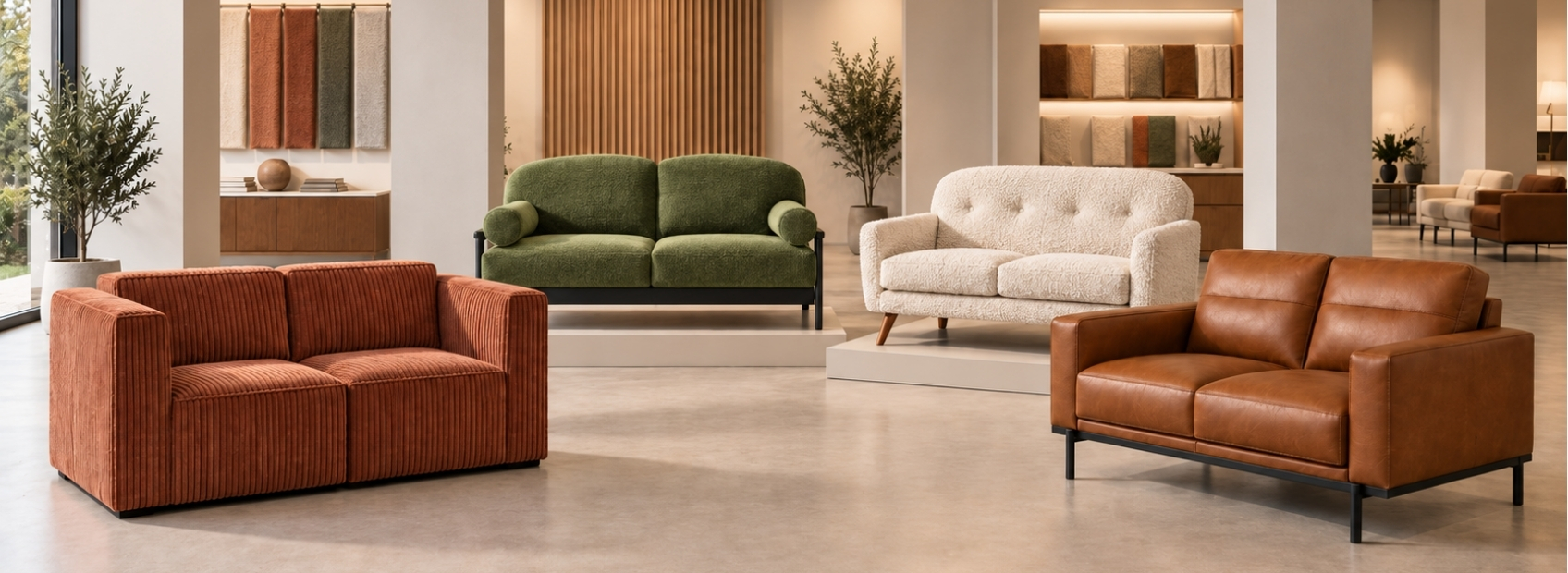
While fabric and leather sofas offer different strengths, the right choice depends on daily use rather than showroom appeal. Fabric gives you softness, colour and texture, while leather gives you a firmer surface that is easier to wipe clean. This guide compares comfort, leather types, fabric weaves, durability, cleaning and family use, so you can choose the upholstery that fits your home.
In short
Which is better, a fabric sofa or a leather sofa?
Leather is usually the more practical choice for homes with young children, pets or frequent guests because spills and pet hair are easier to wipe away. Fabric is usually better if softness, warmth and a wider choice of colours or textures matter more. For everyday family use, look for upholstery fabric rated at least 15,000 Martindale rubs; for very frequent use or pets, aim for 25,000 rubs or more.
- Choose leather if wipe-clean care matters most
- Choose fabric if softness and colour choice matter most
- Check sunlight, heating and cleaning requirements before deciding
- Match the material to pets, children and how often the sofa is used
Fabric or leather? Take a quick quiz to help you choose
How does the feel and temperature compare?
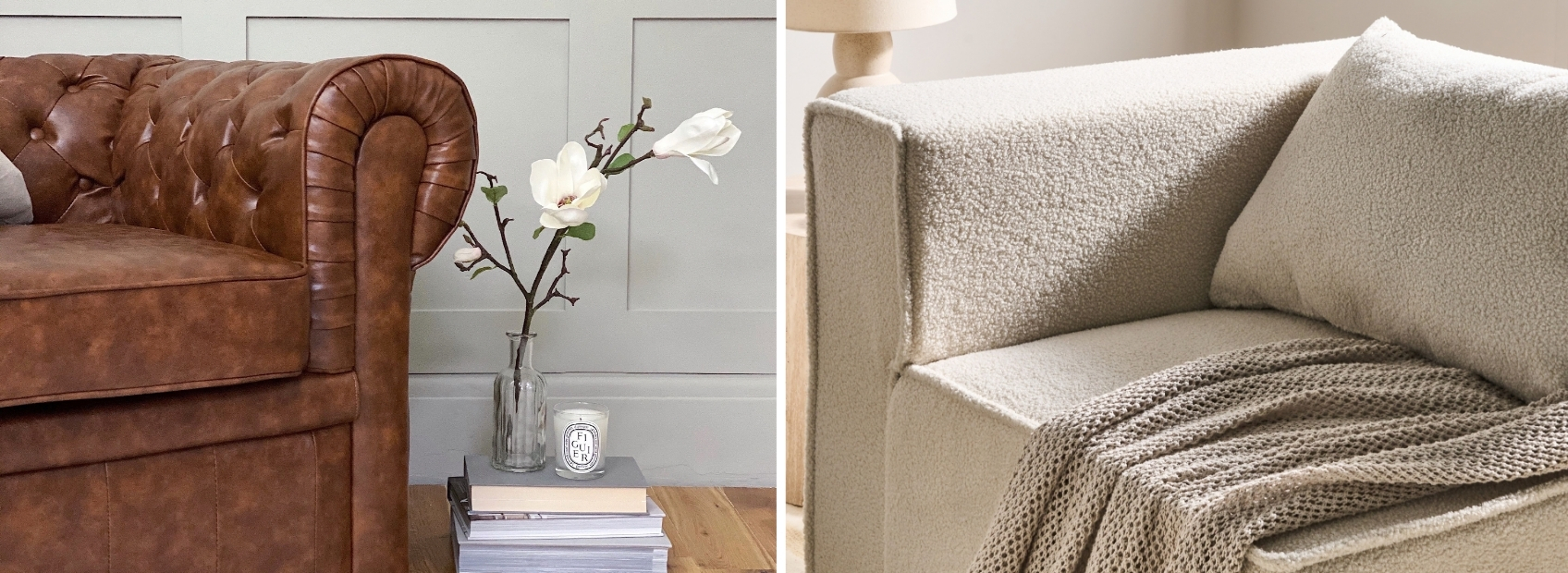
A fabric sofa feels soft against the skin from the first sit and stays close to room temperature through the year, which is why it often feels more comfortable for long evenings. Leather has more structure and a firmer surface, and it responds more strongly to the room around it. It can feel cool at first in winter or warm in direct summer sun, so placement matters if the sofa sits near a window, radiator or in a conservatory.
Genuine leather vs faux leather: what's the real difference?
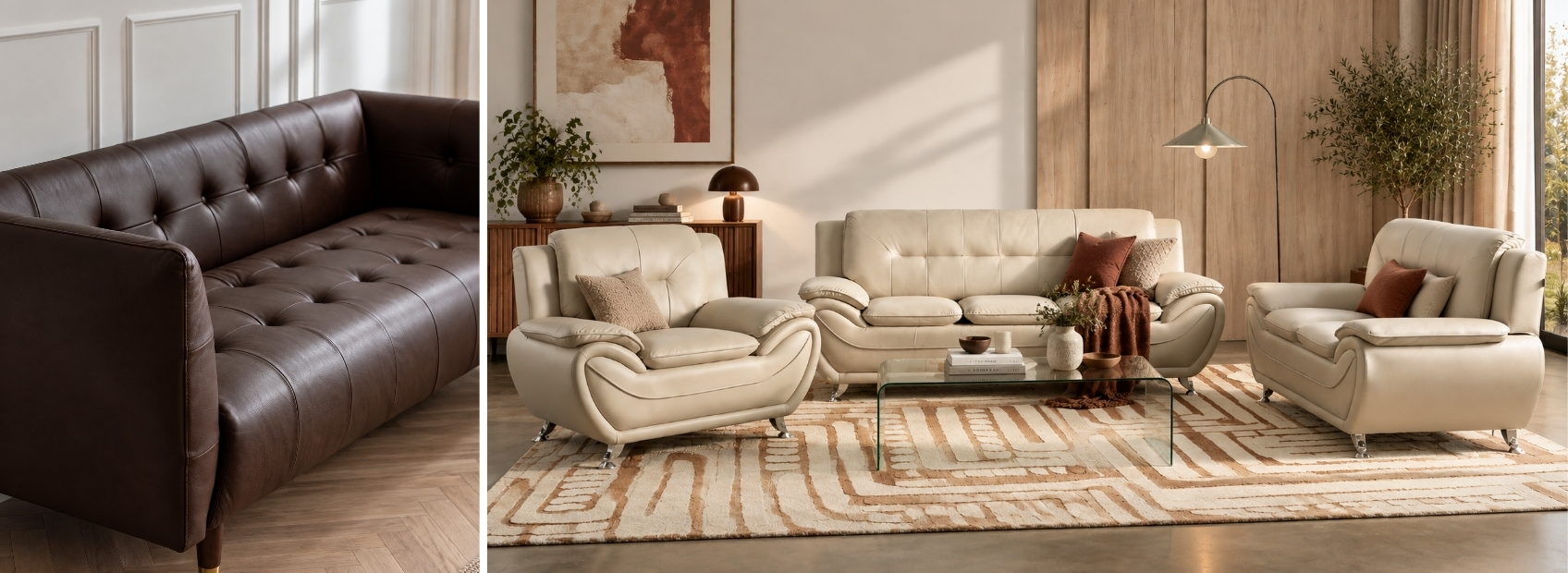
Genuine leather comes from a tanned animal hide, typically graded as full-grain or top-grain. Full-grain leather keeps the whole natural surface and develops a patina, while top-grain leather is sanded and treated for a more even finish. Faux leather, also sold as bonded leather, PU leather or vegan leather, uses a coated backing to mimic the look of hide without being genuine leather.
| What matters | Genuine leather | Faux leather |
|---|---|---|
| Feel & breathability | Softens and breathes with use, and develops a natural patina | Feels similar when new but does not breathe or age the same way |
| Typical lifespan | Can last for years of daily use if conditioned and kept away from strong heat | Usually shows wear sooner; the coated surface can peel or crack |
| Price | Higher upfront cost | Lower upfront cost |
| If damaged | Small scuffs can often be buffed or treated with leather conditioner | Peeling or cracking is difficult to repair neatly |
| Animal-free option | No | Yes |
What do split leather and vegan eco leather mean?
Split leather is made from the lower layer of hide, so it is real leather but usually less durable and less naturally grained than full-grain or top-grain leather. Vegan eco leather is a synthetic leather-look material, not animal hide, so treat it as faux leather when comparing lifespan, breathability and repair options.
Which fabric type should you choose?
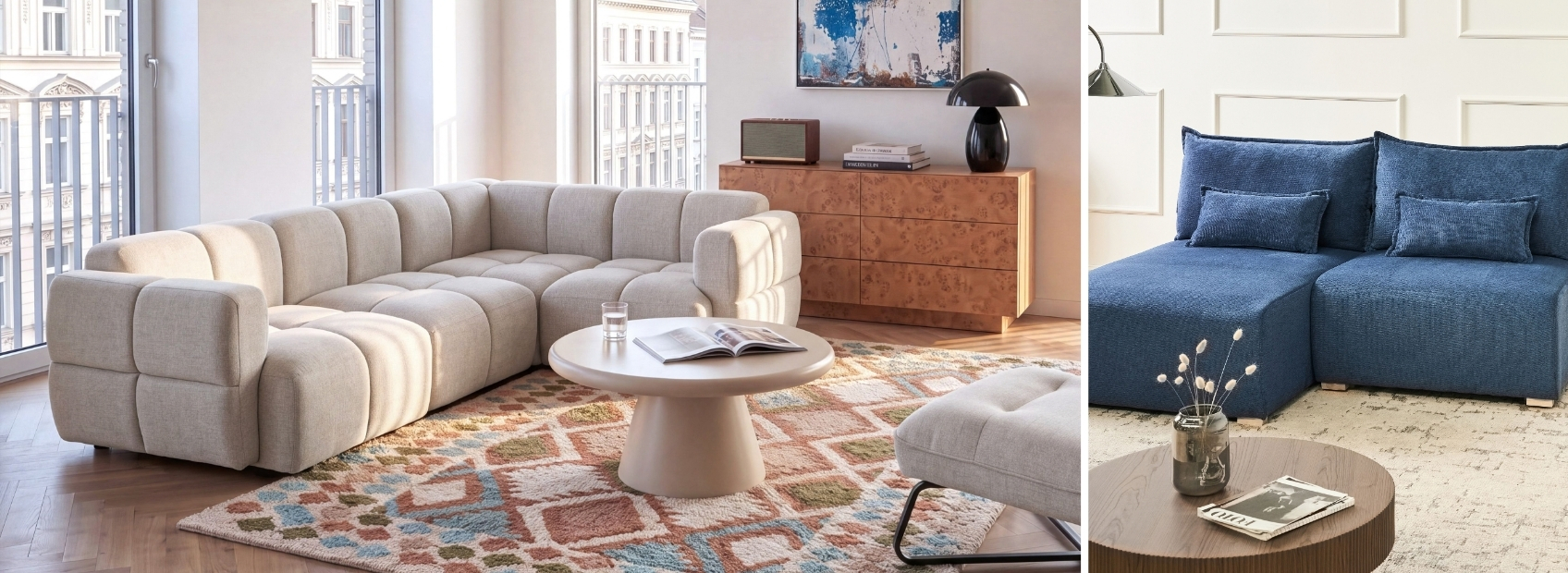
"Fabric" covers many weaves, so the best choice depends on whether you need softness, easy care, strong texture or better resistance to daily wear.
| Fabric type | Best for | Be careful if |
|---|---|---|
| Bouclé | A textured, cosy look with visible softness | You have cats or pets with claws, as loops can catch |
| Corduroy | Warmth, casual comfort and a tactile ribbed surface | The same seat is used every day, as ridges can show wear paths |
| Velvet | Rich colour, smooth texture and a more elegant look | You need simple water-based stain cleaning |
| Linen-look weave | A breathable, relaxed look with natural texture | You want a very smooth surface that hides creases and marks |
| Chenille | Everyday comfort with a soft, slightly fuzzy feel | You prefer a crisp, flat weave without pile |
| Cotton and polyester blends | Practical family use and easier day-to-day cleaning | You want a very textured or luxury-looking surface |
How do you clean and maintain each material?
Fabric upholstery carries a cleaning code that tells you how it can be treated: "W" means water-based cleaners only, "S" means solvent-based products, "WS" allows either, and "X" means vacuuming or light brushing only, with no liquid. Checking this code before treating a stain helps prevent watermarks, shrinkage or damage. Leather is simpler day to day: wipe spills with a damp cloth and mild soap, avoid soaking the surface, and condition genuine leather periodically if it sits near heat or direct sun.
Read more: our full sofa upholstery guide
Which material works best for pets and children?
For children and pets, the best material depends on the type of mess. Leather is easier for spills, crumbs and pet hair, but claws can leave visible marks on smooth leather. A tightly woven fabric can be better than leather for homes with scratching cats, while bouclé and loose textured loops are usually riskier because claws and crumbs can catch in the surface. Fabrics in sofas have different features for everybody, from pet owners to households that want an easy-clean or water-repellent finish.
Spills
Leather has the edge
Liquids sit on the surface for longer, so they are easier to wipe before they soak in.
Pet hair
Leather is easier
Hair can be lifted with a damp microfibre cloth instead of being pulled from a weave.
Claws
Tight fabric can be safer
Smooth leather can scratch, while loose loops such as bouclé can snag.
Shop now: pet-friendly, easy-clean and water-repellent fabric sofas
How do fabric and leather compare side by side?
| What matters | Fabric sofas | Leather sofas |
|---|---|---|
| Feel & temperature | Soft, warm to the touch and steady in feel | Firmer; can feel cool at first in winter |
| Durability check | Check Martindale rub count; 15,000+ for everyday use | Check whether it is full-grain, top-grain, split, bonded or faux leather |
| Cleaning method | Follow the W, S, WS or X cleaning code | Wipe with a damp cloth; condition genuine leather periodically |
| Pets & children | Good if tightly woven; stains can absorb into the fibres | Good for spills and hair; claws can leave visible scratches |
| Colour & texture | Wider choice of colours, patterns and textures | Mostly neutral tones; develops character with age |
Which suits your style and budget?
Fabric gives the widest choice of colour, pattern and texture, from soft chenille to bold bouclé or a practical cotton blend. Leather usually comes in a smaller range of neutral tones, but genuine leather can develop character rather than looking worn if it is cared for properly. Genuine leather usually costs more upfront, faux leather sits closer to mid-range fabric, and fabric varies widely by weave, finish and durability rating.
Shop now: fabric sofas and leather sofas
What to check before buying
Once you know which material fits your household, check the details that affect comfort, care and lifespan.
- Check the fabric's Martindale rub rating, an international abrasion test: aim for 15,000+ rubs for everyday use and 25,000+ for pets or heavy use
- Check the cleaning code before treating any stain
- Check whether a leather sofa is full-grain, top-grain, split leather, bonded leather, faux leather or vegan eco leather
- Check whether the sofa will sit near direct sunlight or a radiator, as heat can dry out genuine leather
- Choose tightly woven fabric over loose looped textures if pets may scratch the sofa
- Budget for ongoing care, such as leather conditioner or professional fabric cleaning
Frequently asked questions
Does real leather crack or fade over time?
Genuine leather can dry out and crack if it's placed near a radiator or in direct sunlight without occasional conditioning. Conditioning it periodically keeps the surface supple and helps it develop an even patina instead of cracking.
Which is better for people with allergies?
Leather is generally easier for allergy sufferers because its smooth, non-woven surface doesn't hold dust and pet dander the way a fabric weave can. Regular wiping keeps a leather sofa largely free of the build-up that settles into fibres.
How do you remove pet hair from a sofa?
On fabric, a rubber glove or lint roller lifts hair out of the weave more effectively than a vacuum alone. On leather, a slightly damp microfibre cloth picks up hair without needing any special tools.
Can a worn sofa be reupholstered later?
Fabric sofas can usually be reupholstered in a new fabric once the original wears out, giving the frame a fresh life. Leather reupholstery is possible but more specialised and typically costs more than switching to a fabric cover.
Is a heavily textured fabric like bouclé harder to keep clean than a smooth weave?
A textured weave such as bouclé or corduroy can trap crumbs and pet hair in its loops more than a smooth, flat weave. Regular vacuuming with an upholstery attachment keeps this in check and stops dirt building up between the loops.