Free Delivery
 365-Day Returns
 10 Million Happy Customers
 500,000 Products in Stock
Mix, Don’t Match: How to Style Mismatched Furniture and Make It Work Together
Reviewed by the Beliani Content Team · Updated October 2026
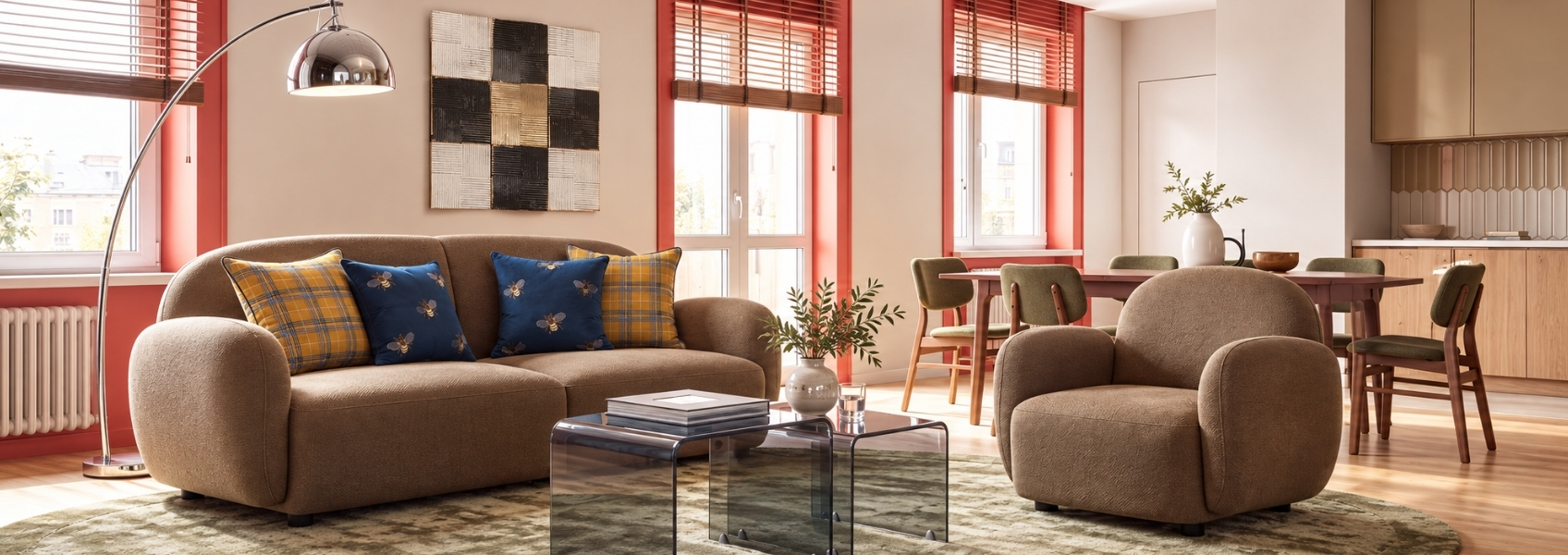
Your furniture does not have to belong to one collection, period or interior style to work together. A modern sofa can sit beside a vintage table, an industrial lamp can work with Scandinavian furniture, and a classic cabinet can be part of a boho or contemporary room. The key is knowing which details should connect the pieces and which differences can become part of the decoration.
In short
How do you make mismatched furniture look good together?
Do not try to make every item match. Instead, repeat two or three visual elements across the room, such as colour, material, shape or scale, and let other features differ. Furniture can come from different styles and periods as long as the room has enough repetition to make those differences look deliberate.
What needs to be cohesive, and what can be different?
The easiest way to decorate with mismatched furniture is to separate the elements that organise the room from those that create character. Some consistency is useful, but it does not need to come from matching furniture.
| Element | Does it need to match? | How to handle it |
|---|---|---|
| Colour palette | Keep some connection | Repeat a small group of colours across furniture, textiles and accessories rather than using an unrelated colour on every piece. |
| Furniture scale | Keep balanced | Combine pieces with compatible visual weight so one small chair does not disappear beside several bulky pieces. |
| Materials | Repeat selectively | Wood, metal, glass, rattan and upholstery can all be mixed, but repeating one or two materials helps connect the room. |
| Furniture style | No | Modern, industrial, classic, Scandinavian, mid-century, rustic, boho and Art Deco pieces can share one room. |
| Wood finish | No | Different woods can work together. Similar undertones or deliberate contrast matter more than an exact colour match. |
| Furniture legs | No | Straight, tapered, turned and metal legs can be mixed if the furniture proportions remain balanced. |
| Age and period | No | New furniture can sit beside vintage or traditional pieces without trying to make them look the same age. |
Start with what you already have
When a room contains furniture bought at different times, do not treat the existing pieces as a problem to correct. Start with the items you want or need to keep. A sofa, dining table, bed or large cabinet usually has enough visual weight to become the starting point for the rest of the scheme.
Look at each piece without concentrating on its style label. Note its colour, material, shape, size and strongest visual feature. A Scandinavian oak table and an industrial black metal shelf may belong to different styles, but both can work with simple lines and neutral colours. A classic velvet armchair and an Art Deco lamp may connect through richer texture and curved forms.
How do you mix different furniture styles together?
Mixing furniture styles is easier with a simple three-part approach: set a base style, add one contrasting piece, then link it back to the rest of the room with a repeated colour, material or shape. Here’s how each step works.
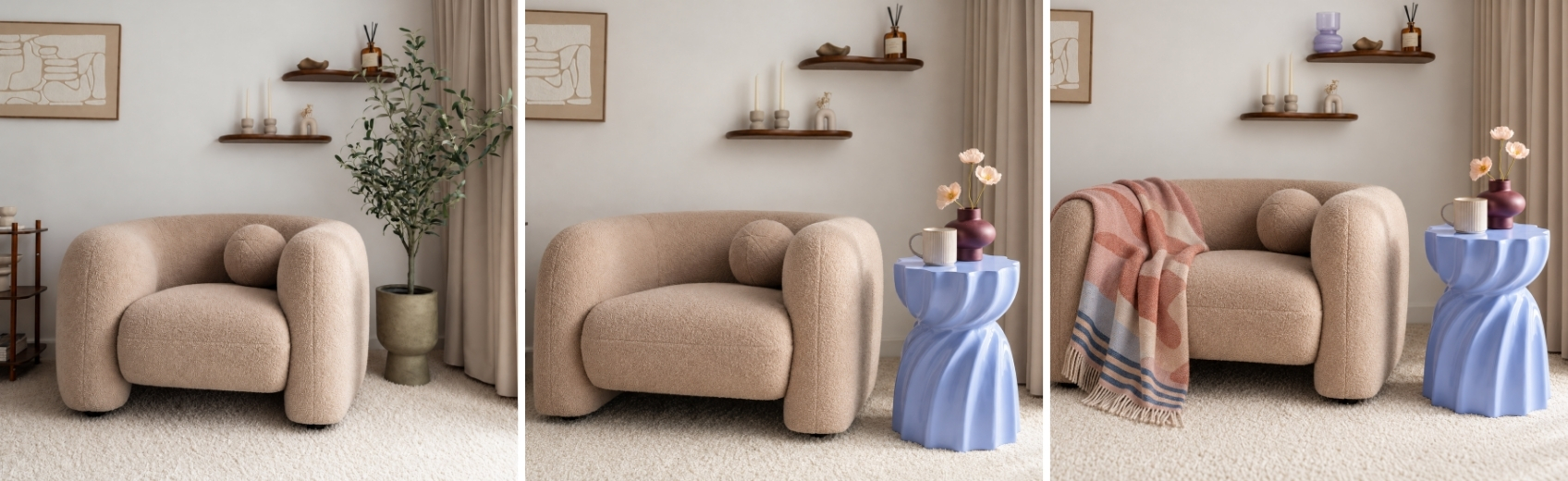
Base
Let one style set the background
Use the largest pieces and the room itself to establish the main direction. This gives contrasting furniture something stable to work against.
Contrast
Add a clearly different piece
A vintage cabinet, industrial lamp, Art Deco table or boho chair can provide contrast without needing several coordinating pieces from the same style.
Link
Connect the difference
Repeat one colour, material or shape from the contrasting piece elsewhere so it becomes part of the room rather than an isolated object.
What can you repeat to connect furniture that doesn’t match?
A few shared details, repeated in more than one spot, are usually enough to tie very different pieces together. These are the elements worth repeating, and how each one works.
- Colour: Pick one colour that’s already in the room and repeat it in at least two other spots, such as a rug, a cushion or a lampshade. Pair a green armchair with a patterned rug that picks up the same green, or echo a brown wooden cabinet in tan cushions or another warm wood tone nearby. Repeat it twice, and the room reads as one composition.
- Materials: Natural materials are particularly useful as bridges between styles. Wood, stone-look surfaces, linen-like fabrics, wool, rattan and leather can appear in modern, rustic, Scandinavian, boho and traditional interiors, so they can make very different furniture feel more related.
- Shapes: A rounded armchair can relate to an oval coffee table and a globe lamp even if all three come from different styles. Straight-edged shelving can balance a rectangular sofa and angular side table. Look at the outline of each piece rather than only its material or design period.
Do different wood tones need to match?
No. Trying to find an exact wood match can make decorating harder than necessary, particularly when furniture was bought at different times. Different wood colours can work together if their undertones are compatible or the difference is large enough to look intentional.
If one piece is noticeably warmer, darker or more rustic than the others, repeat that tone somewhere else rather than trying to disguise it. Another small wooden element, picture frame or decorative object can be enough to make the finish feel part of the room.
Do metal finishes have to match?
Black metal, chrome, brass and other finishes can be mixed. The important point is hierarchy: choose one finish that appears most often and use the others as smaller accents.
For example, black furniture legs and lighting can form the main metal finish, while a brass table lamp or decorative object adds contrast. Problems usually start when every item introduces another unrelated finish with no repetition elsewhere.
Which styles can you combine?
Style names are useful for describing furniture, but they should not become rules. Look for shared features between styles and use those as the connection.
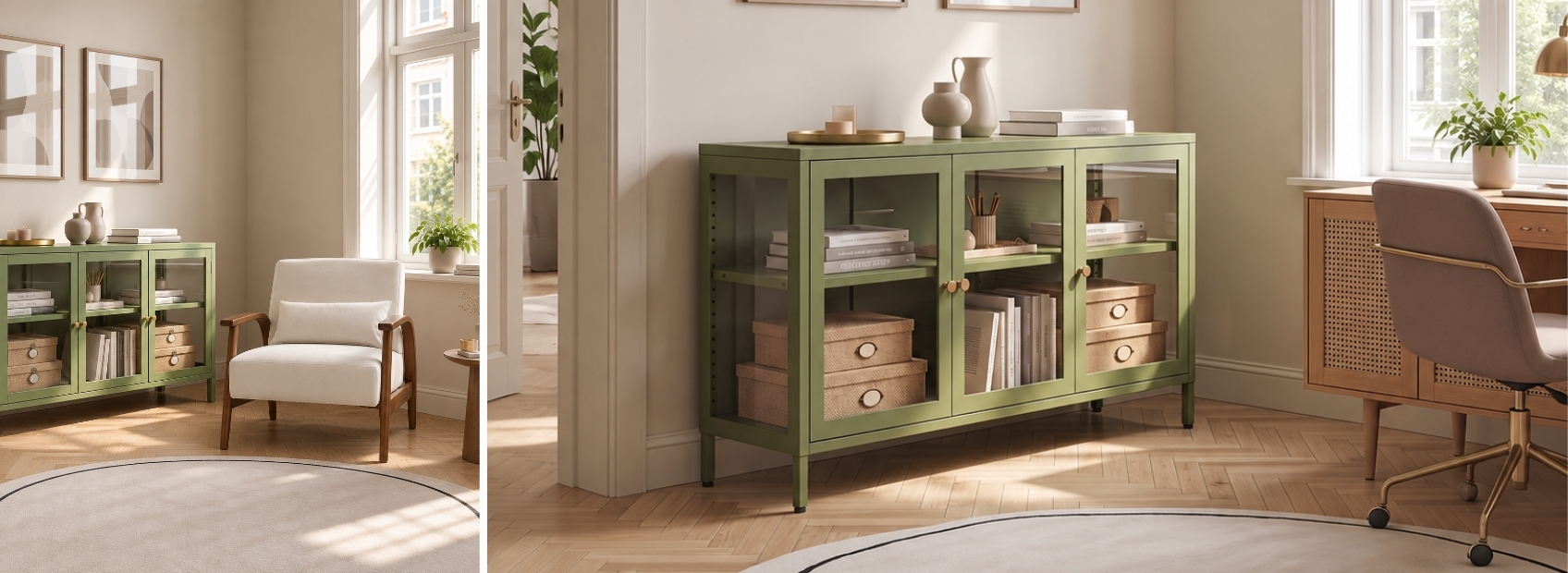
Scandinavian + industrial
Both styles often use simple silhouettes and functional furniture. Light wood can soften black metal, while repeated black details in lamps, furniture frames or handles can link the two.
Mid-century + contemporary
Mid-century furniture can add warmer woods and more distinctive shapes to a simple contemporary room. Keep surrounding furniture relatively restrained so tapered legs, curved seating or characteristic wood finishes remain visible.
Boho + modern
A simple modern sofa or storage unit can provide structure for more relaxed boho elements. Add natural materials, textured textiles, rattan or irregular decorative pieces without changing every large item in the room.
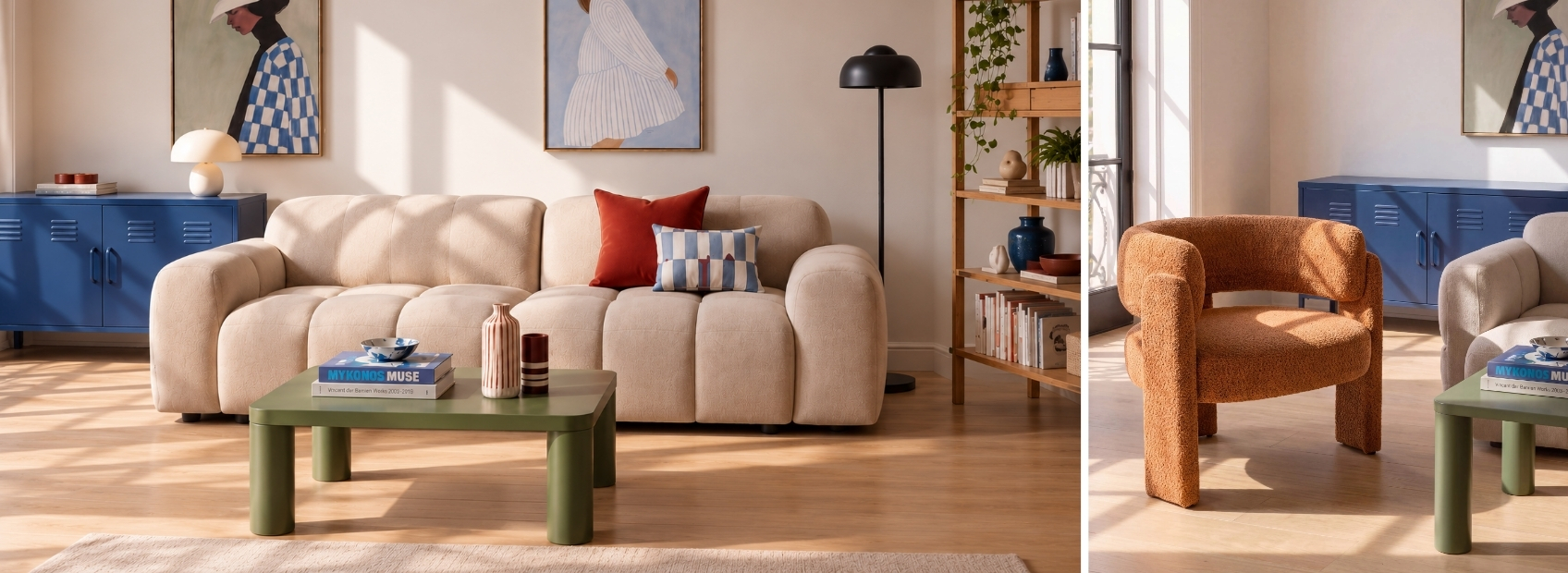
Classic + industrial
Ornate or traditional furniture can work against simple metal and glass pieces when both have enough visual weight. A classic upholstered armchair, for example, can sit beside a minimal black metal table without needing a traditional matching side table.
Art Deco + modern
Use Art Deco as an accent rather than reproducing the entire style. Curved furniture, richer upholstery, glass or metallic details can stand out against cleaner modern furniture while repeated rounded shapes or finishes keep the combination connected.
Rustic + Scandinavian
Natural wood provides an obvious link between these styles. Keep the more rustic textures as the contrast and use simpler forms and lighter colours around them to stop the room becoming visually heavy.
Want to learn more about styles? Get to know our shop by style collection
How do you decorate around one piece that does not match?
Do not immediately replace a chair, table or cabinet simply because its style differs from newer furniture. First look for one feature you can repeat elsewhere.
- Repeat its colour in a cushion, rug or artwork.
- Pick up its wood tone in another small item.
- Repeat its curved or angular shape elsewhere.
- Use a nearby lamp or accessory with a similar finish.
- Give a distinctive piece enough empty space to read as intentional contrast.
If the piece still looks disconnected after these links are added, the problem may be proportion rather than style. Furniture that is much taller, smaller, heavier or more delicate than everything around it can be difficult to balance even when its colours work.
How to style a mismatched living room?
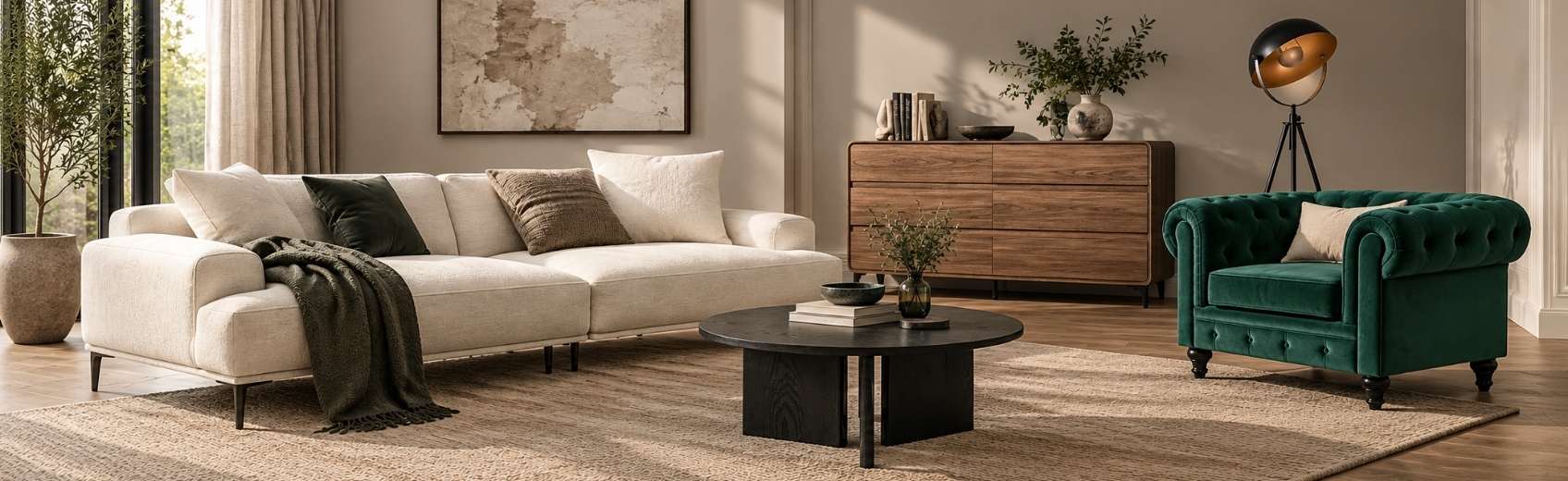
Imagine a room with a simple beige contemporary sofa, a dark wooden mid-century sideboard, a black industrial floor lamp and a green velvet armchair with a more classic shape. None of the main furniture pieces belongs to the same style or collection.
Start with the beige sofa as the neutral base. Place the green armchair beside it and repeat a muted green tone in a rug or one or two cushions. Keep the dark sideboard as a stronger contrast, but introduce another warm brown detail through a small table, frame or decorative object. The black floor lamp can remain different from the wooden furniture; repeat black once elsewhere, for example in a coffee table frame or smaller light fitting.
The finished room does not match in the conventional sense. What makes it cohesive is the repetition of green, warm wood and black, together with balanced furniture proportions. The differences in period, upholstery, legs and furniture style remain visible and become part of the design.
What makes mismatched furniture look accidental?
The problem is usually not that the styles are different. It is that there is no hierarchy or repetition between them.
- Every piece introduces a completely new colour, material and shape.
- Several large statement pieces compete for attention in the same area.
- One furniture item has a very different scale from everything around it.
- A finish appears only once and has no connection to another part of the room.
- Too many small decorative objects are used to compensate for furniture that already has strong character.
- Almost-matching finishes are placed directly beside each other, making the difference look accidental.
What to check when decorating with mismatched furniture
Before adding or replacing furniture, look at the room as a whole rather than trying to make individual pieces match.
- Decide which existing large pieces will stay and use them as the starting point.
- Identify the main colour palette rather than matching furniture upholstery exactly.
- Repeat important colours or materials in more than one area of the room.
- Check whether large furniture pieces have reasonably balanced proportions and visual weight.
- Allow furniture styles, periods, leg shapes and exact finishes to differ.
- Keep one or two clear focal pieces rather than making every item a statement.
- Use rugs, lighting and small accessories to create links only where the furniture needs them.
Frequently asked questions
Can every piece of furniture be a different style?
Yes, but the room still needs visual repetition. When furniture styles vary strongly, keep elements such as colour, scale, materials or shapes connected so the pieces feel deliberately collected rather than unrelated.
Can you mix different wood tones in one room?
Yes. Different wood tones can work together when their undertones are compatible or when the contrast is clearly intentional. Repeating the main wood tones elsewhere in the room also prevents one finish from looking isolated.
Can you mix several metal finishes?
Yes. Choose one metal as the main finish and repeat other metals selectively in lighting, furniture legs or accessories. Avoid introducing a different metal on every object, as this can make the room feel unnecessarily fragmented.
How do you make mismatched furniture look intentional?
Repeat a few elements across otherwise different pieces, such as colour, wood tone, upholstery texture or curved shapes. Keep the largest furniture visually balanced and use rugs, lighting and accessories to connect separate parts of the room.
Should all furniture in an open-plan room match?
No. Different areas can have their own character, but repeating selected colours, finishes or materials helps them read as one interior. A shared rug colour, wood tone or metal finish can be enough to create continuity.