Free Delivery
 365-Day Returns
 10 Million Happy Customers
 500,000 Products in Stock
Modular Outdoor Kitchen Ideas for Your Garden
Reviewed by the Beliani Content Team · Updated October 2026
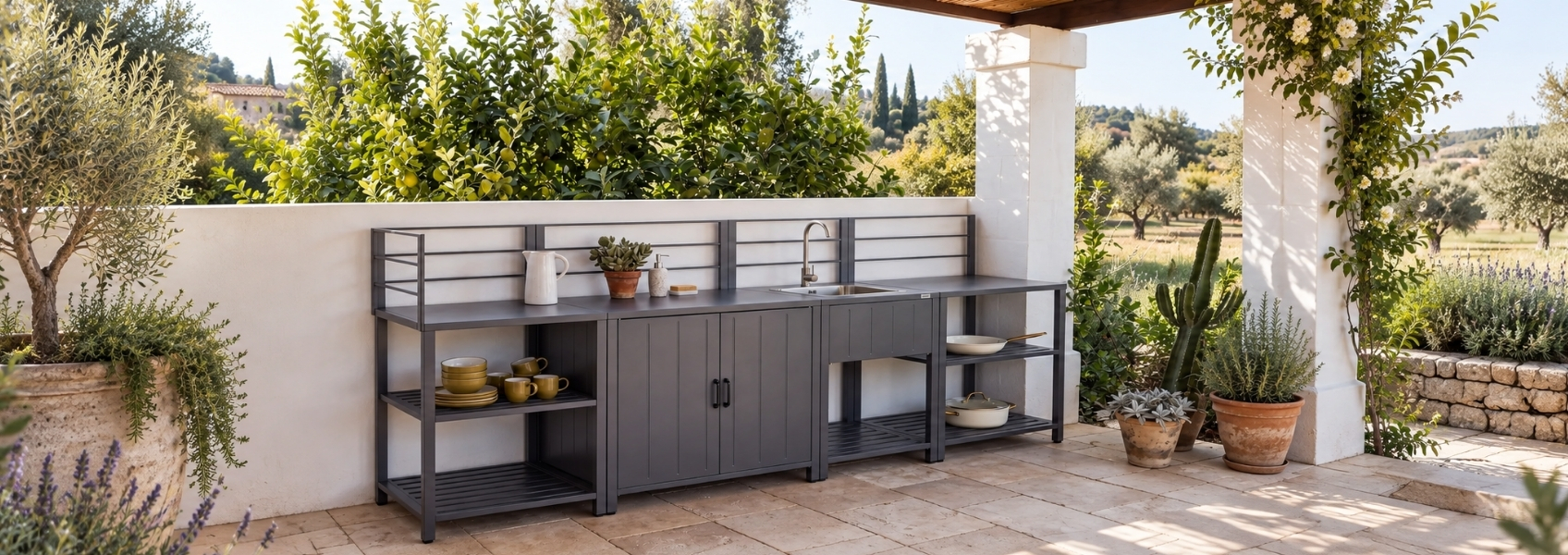
A modular outdoor kitchen lets you create a dedicated cooking area without building a permanent brick structure. Separate units offer flexibility, but their arrangement, materials and connections affect how comfortably the kitchen works. Understanding these differences helps you plan a setup that suits your garden and cooking habits.
In short
What is a modular outdoor kitchen?
A modular outdoor kitchen combines separate, factory-built units for cooking, food preparation and storage. Many modules are around 90 cm high, with depths commonly around 50 to 70 cm, although actual dimensions vary by range. For a smaller patio, start with a grill and preparation surface; larger spaces can accommodate additional storage, a sink or serving area. Check that the units are compatible and that the installation surface and utility connections meet their requirements.
Which layout fits your garden?
Start with the available floor space and the position of your cooking area. The layout should provide enough room to prepare food, move safely around the grill and open cupboards without blocking nearby paths.
Compact gardens
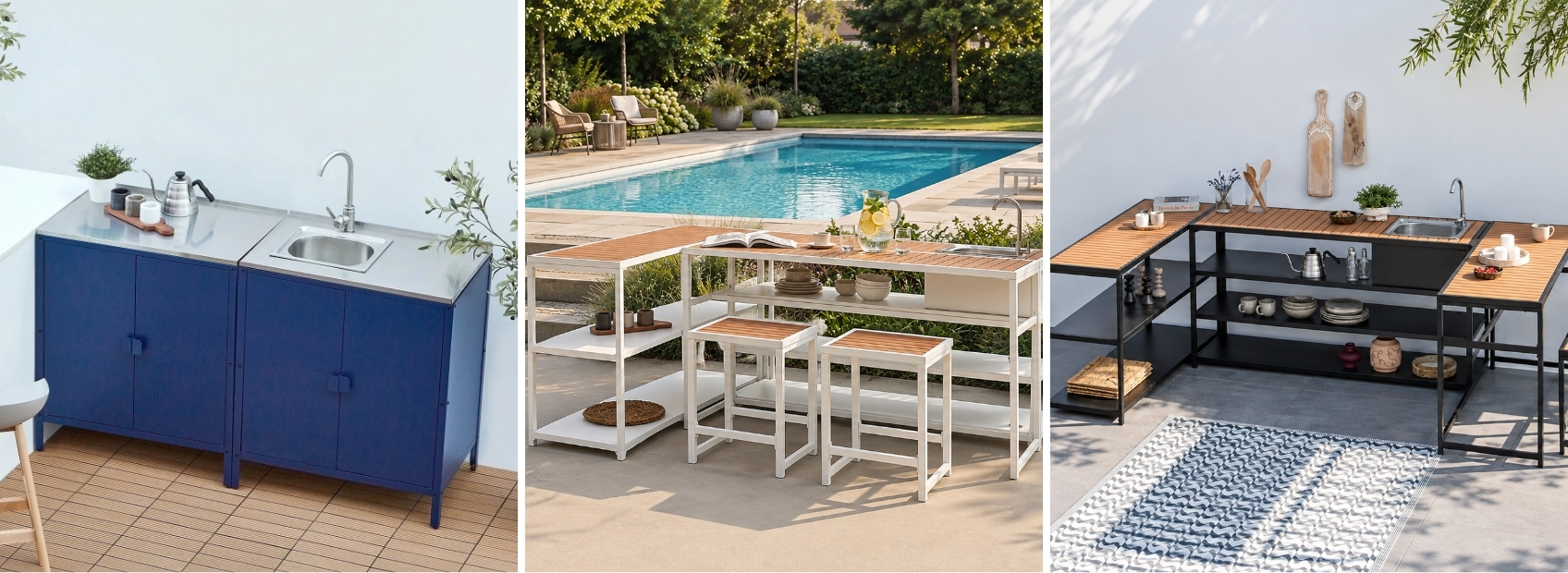
Single-run layout
All modules form one straight line, making this arrangement suitable for narrow patios and terraces. Position preparation space beside the grill so food and utensils remain within easy reach. Check the grill's required clearance before placing the kitchen near a wall or fence.
Corner spaces
L-shaped layout
Two connected runs create separate areas for cooking and preparation. This works well on a square patio or in a garden corner, provided there is sufficient space to access cupboards and move between the modules.
Larger gardens
U-shaped or island layout
A U-shaped arrangement surrounds the cooking area with preparation and storage surfaces, while an island can face the dining area. Both need more floor space and careful planning of access, circulation and connections.
Read more: how to set up a BBQ and al fresco dining area
Which modules do you actually need?
Not every outdoor kitchen needs a sink, fridge or bar counter. Start with the equipment you use most often and consider whether additional modules would make cooking and serving easier.
- Grill module: the main cooking area; choose a grill suitable for your preferred fuel and follow its installation requirements.
- Worktop or preparation module: provides space for preparing ingredients, placing utensils and serving food.
- Sink module: useful for washing hands and produce, but requires a suitable water supply and wastewater connection.
- Storage module: keeps cooking utensils and accessories organised; check whether the interior is suitable for the items you intend to store.
- Fridge or drinks module: provides nearby refrigeration when an outdoor-rated appliance and appropriate electrical connection are available.
- Bar or serving module: adds a separate surface for serving meals and drinks, particularly in larger layouts.
Check module compatibility before ordering
Modules from different collections may not share the same height, depth or connection system. Compare their specifications and confirm that the units can be installed together before combining them into one kitchen.
Shop now: outdoor kitchen sets, kitchen islands & racks and garden shelving units
Which outdoor kitchen material should you choose?
Outdoor kitchens are available in different metals and wood finishes. The material affects the appearance, cleaning routine and level of protection needed against moisture and changing weather conditions. Check the material specified for the actual product, as frames, worktops and sinks may use different materials.
| Material | Characteristics | Care and maintenance |
|---|---|---|
| Stainless steel | A durable, corrosion-resistant material used for outdoor kitchen frames, worktops, sinks and taps. Its smooth, hygienic surface is easy to clean, although resistance to moisture and corrosion varies depending on the steel grade. | Clean with mild detergent and a soft cloth, then dry to prevent water marks. Avoid abrasive cleaners, harsh chemicals and prolonged contact with salt or standing moisture. |
| Powder-coated steel | Steel with a protective coloured coating that helps shield the surface from moisture and corrosion. It is often used for frames and storage units, but exposed scratches can allow rust to develop. | Clean with a damp cloth and mild detergent. Check for chips or scratches and follow the manufacturer's instructions for repairing damaged coating. |
| Solid wood | Creates a natural appearance and can be used for kitchen frames, cabinets or work surfaces. Its suitability outdoors depends on the wood species, protective treatment and exposure to moisture. | Clean gently, dry after contact with water and renew protective finishes when required. Avoid prolonged rain exposure and strong sunlight, and store movable units indoors when not in use. |
Read more: outdoor furniture material guide
How should you arrange the modules for easier cooking?
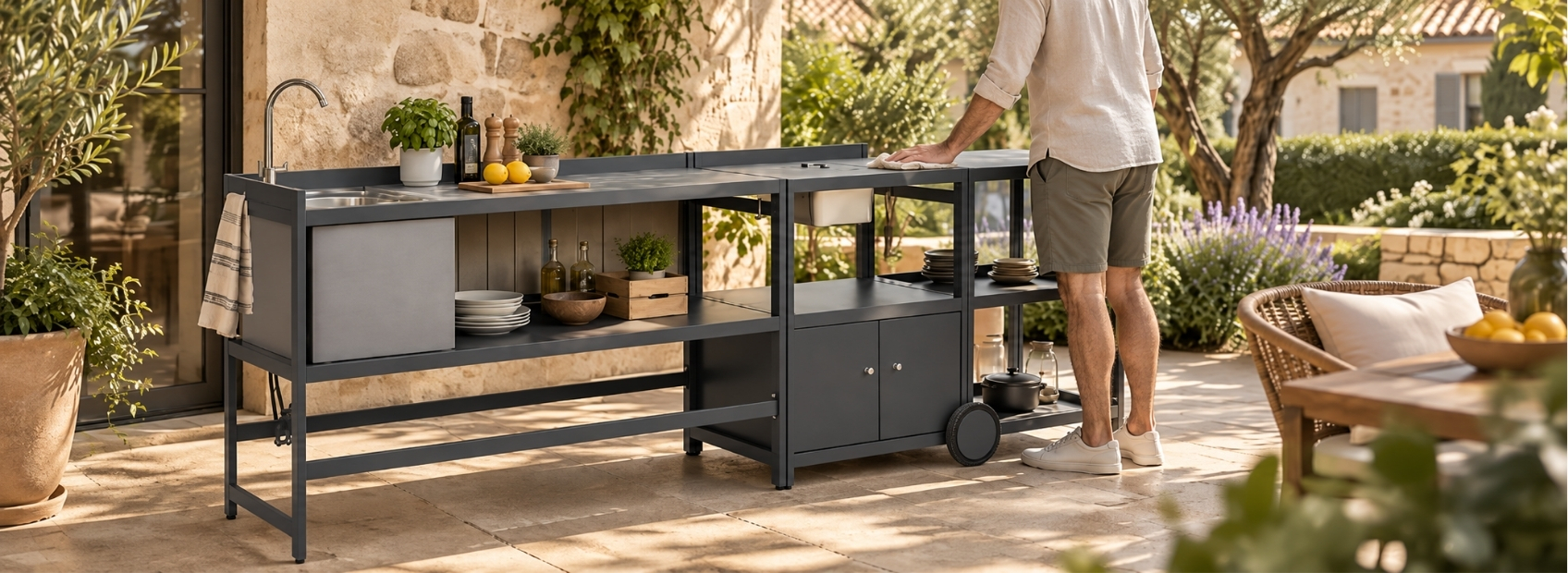
Once you have chosen the general layout, think about the order of the modules. A practical kitchen should allow you to take out ingredients, prepare them, cook and serve without repeatedly crossing the same space. The arrangement matters more than the number of modules.
Cooking zone
Keep preparation space next to the grill
Place a worktop beside the cooking module so you can prepare ingredients, set down utensils and transfer food without walking across the patio. If space allows, leave another surface on the opposite side for serving cooked food.
Washing and storage
Group related tasks together
Position a sink near the preparation surface if you regularly wash vegetables or cooking utensils outdoors. Keep cupboards and drawers accessible from the worktop, with frequently used equipment stored closest to where it is needed.
Serving area
Separate cooking from entertaining
Position a serving counter towards the dining area so guests can collect food without entering the cooking space. If you include bar seating, allow enough room behind the seats for people to move without approaching the hot grill.
For a single-run kitchen, a preparation surface between the sink and grill can make everyday cooking more convenient. In an L-shaped or U-shaped arrangement, keep the grill and preparation areas close together while using the additional sections for storage or serving. Always leave the clearances required by the grill manufacturer, regardless of the chosen configuration.
Power, water and gas: what to plan before you buy
Electrics
Outdoor refrigerators, lighting and other electrical equipment require suitable outdoor-rated connections. Socket protection and installation requirements depend on their exposure and local electrical regulations. Have a qualified electrician assess the location, provide appropriate protection and install any necessary connections rather than relying on indoor extension leads.
Water supply
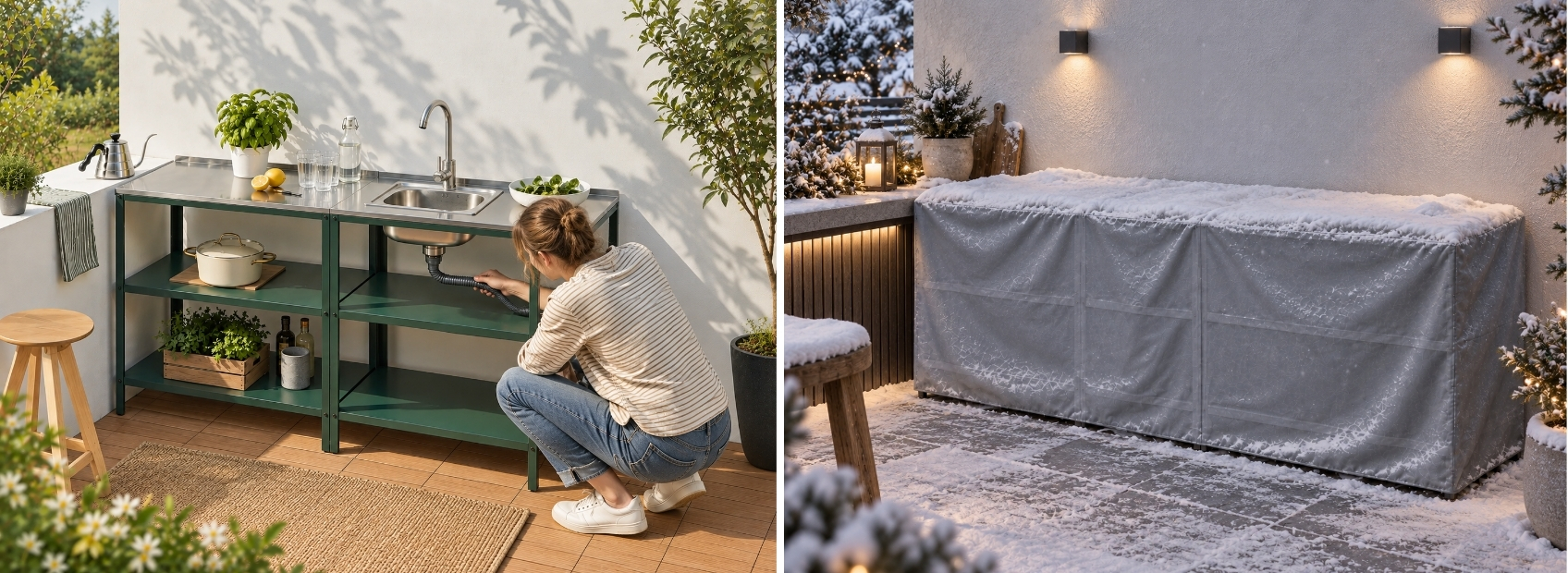
A sink module needs a suitable water supply and a way to dispose of wastewater. Depending on the installation, this may involve connecting to an existing outdoor tap or installing a dedicated water line. In areas with freezing winters, include a shut-off valve and ensure the system can be drained before temperatures fall below freezing.
Gas and grill safety
Check the grill manufacturer's instructions before positioning the kitchen near fences, walls, pergolas or wooden structures. Required distances and ventilation conditions vary between appliances and fuel types. Gas installations must follow applicable local regulations, and any fixed gas connection should be installed by a suitably qualified professional.
Does a modular kitchen need groundwork?
Many modular kitchens can be installed on an existing patio without constructing new foundations. However, the surface must be level, stable and capable of supporting the total weight of the units, equipment and contents. Paving slabs and properly supported decking may be suitable, provided they meet the manufacturer's requirements.
Measure the available space before ordering and check that doors, drawers and appliances can open fully. Remember to include sufficient room for people to move around the kitchen and keep the cooking area away from combustible surfaces according to the grill manufacturer's instructions.
How should you care for an outdoor kitchen throughout the year?
Regular cleaning and protection help limit damage caused by grease, moisture and changing weather conditions. Different materials require slightly different care, but the main principle is to keep surfaces clean and dry and reduce unnecessary exposure when the kitchen is not being used.
During the season
Cleaning and maintenance
Remove grease and food residue after cooking, once the surfaces have cooled. Wipe metal surfaces with a mild cleaner, dry the sink and worktop, and inspect powder-coated finishes for scratches. For wooden elements, follow the recommended treatment and maintenance schedule.
Outside the season
Protection and storage
Clean and dry the kitchen before storing it. Drain water connections before freezing weather and follow the appliance instructions for disconnecting gas and electricity. Store movable units indoors where possible, or protect them with suitable breathable covers if outdoor storage is unavoidable.
What to check before buying
Before choosing an outdoor kitchen, make sure the individual modules will fit your space and work together safely.
- Measure the available patio area and compare it with the complete dimensions of the assembled kitchen, including space for opening doors and drawers.
- Check that the planned position meets the grill manufacturer's clearance and ventilation requirements.
- Choose modules according to the tasks you perform most often, keeping preparation space within easy reach of the grill.
- Compare materials and their care requirements, particularly if the kitchen includes solid wood or powder-coated steel.
- Confirm that the patio or decking can support the loaded kitchen and provides a stable, level base.
- Plan any water, drainage, gas and electrical connections before ordering the relevant modules.
- Check whether compatible modules can be added later and arrange suitable protection or storage for the off-season.
Frequently asked questions
Do you need planning permission for a modular outdoor kitchen?
Rules vary by country and sometimes by local authority, so there is no single answer across Europe. A freestanding modular kitchen on an existing patio may be simpler to install than a permanent masonry structure, but check local planning requirements before installation.
Can a modular outdoor kitchen stay outside all year?
Outdoor kitchens are designed for outdoor use, but exposure to moisture, frost and prolonged sunlight can affect their condition over time. For longer-lasting results, clean and dry the units after use, protect them with suitable covers and store movable furniture indoors during the off-season.
Does a modular outdoor kitchen need a roof?
A roof is not essential, but a suitable shelter can reduce exposure to rain and direct sunlight. Any pergola or canopy must meet the grill manufacturer's ventilation and clearance requirements, especially where combustible materials are involved.
Can modules be added to an existing patio without extra groundwork?
Often, yes, provided the surface is level, stable and capable of supporting the fully loaded modules. Uneven ground, unsuitable paving or an insufficiently supported deck may need preparation before installation.
Can you add more modules later if the kitchen was bought in stages?
Yes, if compatible modules remain available within the chosen range. Check the dimensions, connection points and installation requirements before buying the first units, particularly if you plan to add a sink or electrical appliance later.
Can you connect an outdoor kitchen to a standard garden tap?
Some sink modules can use an existing outdoor water supply if the fittings, water quality and pressure are suitable. You also need an appropriate wastewater connection and a way to isolate and drain the supply before freezing weather.