
 Free Delivery
 365-Day Returns
 10 Million Happy Customers
 500,000 Products in Stock
Scandinavian Furniture: Simple, Functional Pieces for a Nordic-Inspired Home
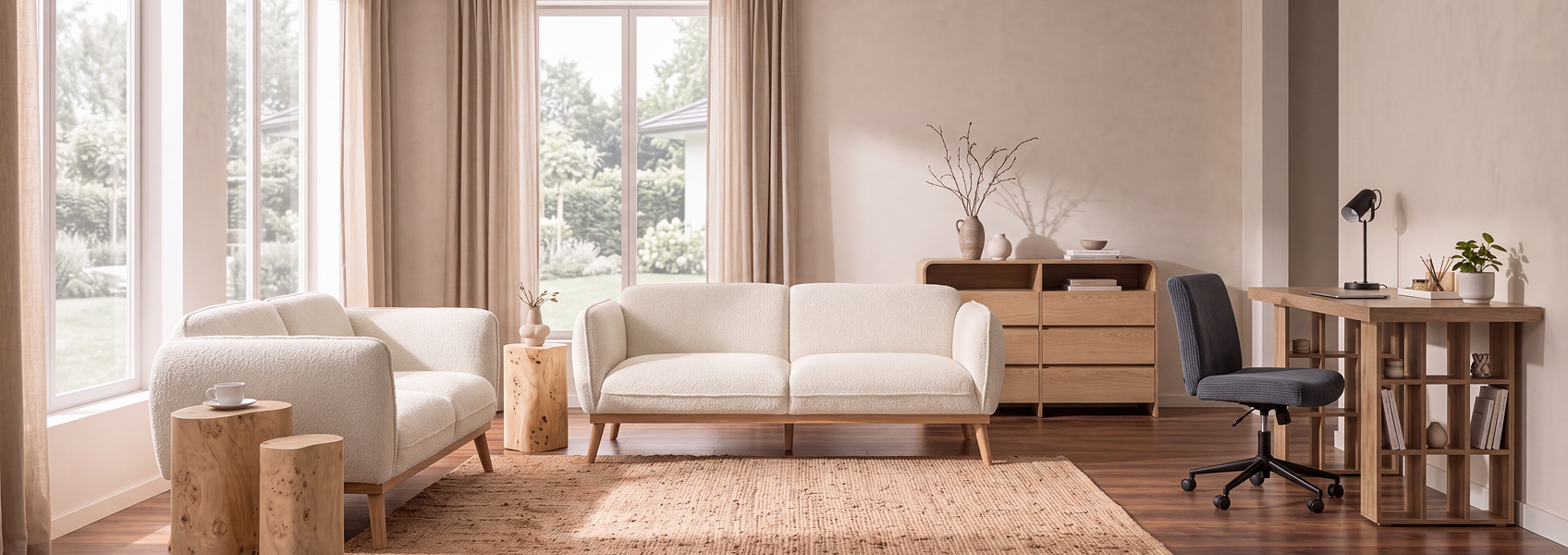
Scandinavian style is about rooms that breathe. Pale woods, soft neutrals, and furniture with nothing to prove - just clean shapes and quiet comfort built for long, dark winters and even longer nights in.
What characterises Scandinavian style?
Scandinavian style isn't about filling a room with Nordic clichés - it's a design philosophy born out of necessity, shaped by long winters and short days across Denmark, Norway, Sweden, Finland and Iceland. The result is an interior that prioritises light, comfort and function above all else. That said, certain things make a Scandinavian room unmistakable:
- Clean, simple silhouettes: tapered legs, gentle curves, no unnecessary ornament - every piece looks like it was designed with a specific job in mind, and does that job well.
- A light, airy palette: walls, floors and larger furniture stay pale and neutral so they bounce whatever daylight is available around the room.
- Function first: storage that's actually useful, chairs that are actually comfortable, a coffee table that might fold flat or hide a drawer. Nothing is decorative for decoration's sake.
- A cosy, lived-in layer: this is where hygge comes in - the Danish idea of comfort and contentment. Chunky throws, candles and soft rugs stop the minimalism from tipping into coldness.
What colours belong in a Scandinavian palette?
What materials should you look for?
Scandinavian interiors rely on a small, honest set of materials rather than a wide mix - the point is restraint, not variety for its own sake. Here's what defines the look and why each one belongs.
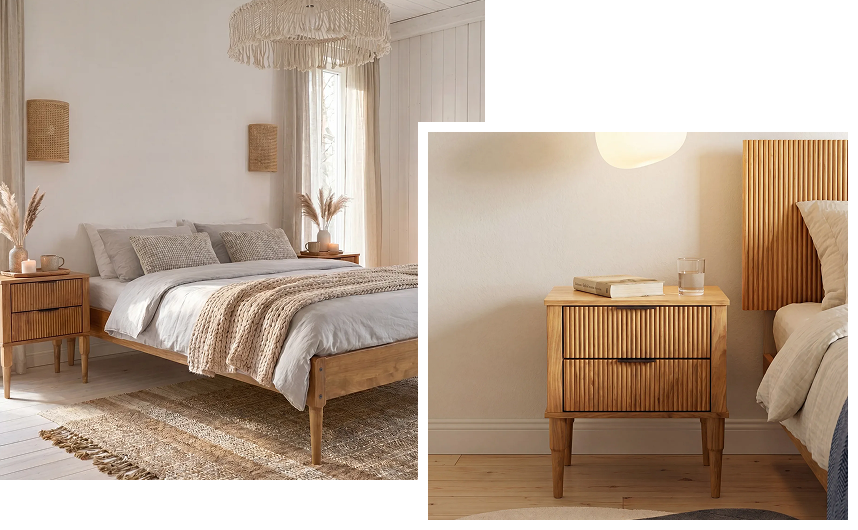
Light wood
Pale, blonde woods - oak, birch, pine and ash - are the backbone of Scandinavian furniture. They're used everywhere: dining tables, chairs, shelving, bed frames. Compared with darker hardwoods, light wood reflects more light and keeps a room feeling open, which matters in a part of the world where daylight is in short supply for half the year. A simple, natural or lightly oiled finish is preferred over anything glossy - the grain should still be visible.
Light wood
Pale, blonde woods - oak, birch, pine and ash - are the backbone of Scandinavian furniture. They're used everywhere: dining tables, chairs, shelving, bed frames. Compared with darker hardwoods, light wood reflects more light and keeps a room feeling open, which matters in a part of the world where daylight is in short supply for half the year. A simple, natural or lightly oiled finish is preferred over anything glossy - the grain should still be visible.
Wood and natural textiles
Wool, linen, cotton and sheepskin are what turn a spare, functional room into a cosy one. Wool throws and cushions add warmth without adding clutter, sheepskin over a wooden chair softens its lines, and linen curtains let daylight filter through rather than blocking it out. These textiles are almost always left undyed or in muted, natural tones so they don't compete with the palette.
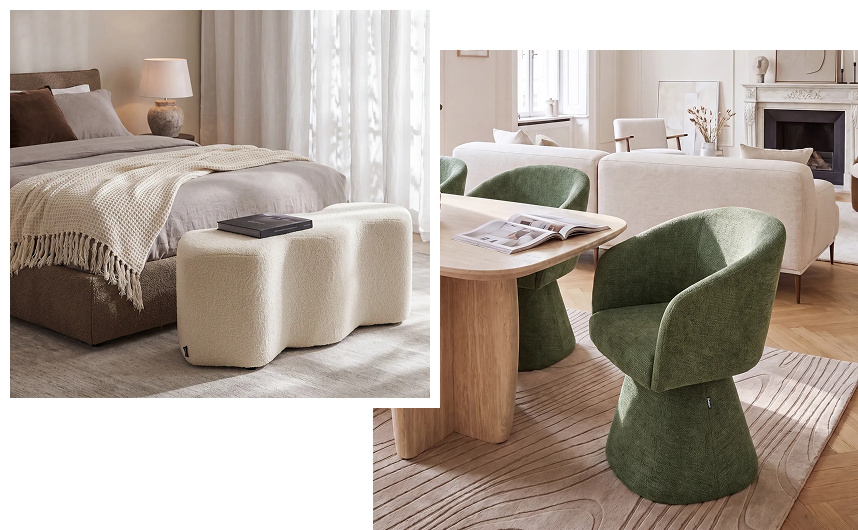
Wool and natural textiles
Wool, linen, cotton and sheepskin are what turn a spare, functional room into a cosy one. Wool throws and cushions add warmth without adding clutter, sheepskin over a wooden chair softens its lines, and linen curtains let daylight filter through rather than blocking it out. These textiles are almost always left undyed or in muted, natural tones so they don't compete with the palette.
Natural fibres
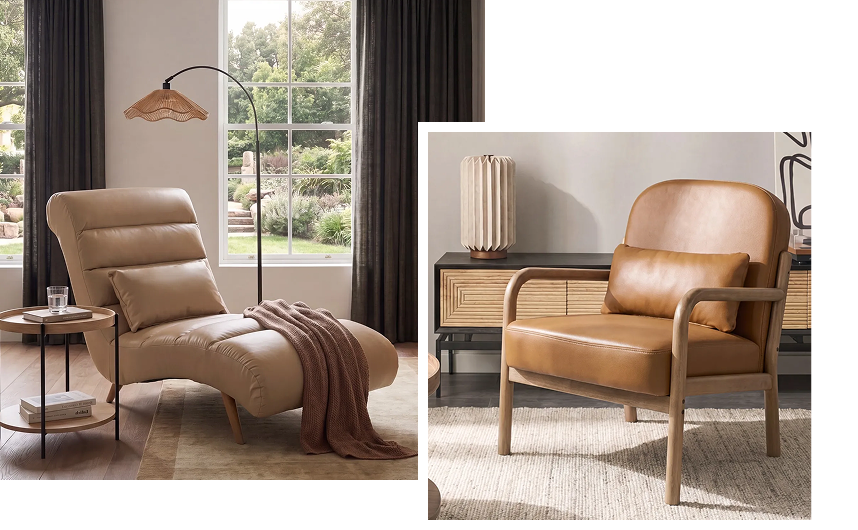
Tan or black leather shows up on chairs, sofas and accessories, often paired directly with light wood frames - think of the classic Scandinavian lounge chair. It ages well and adds a bit of warmth and weight against all the pale surfaces, without introducing pattern or colour that would disrupt the simplicity of the room.
Leather
Tan or black leather shows up on chairs, sofas and accessories, often paired directly with light wood frames - think of the classic Scandinavian lounge chair. It ages well and adds a bit of warmth and weight against all the pale surfaces, without introducing pattern or colour that would disrupt the simplicity of the room.
Metal and glass
Black, matte-finished metal and clear or smoked glass appear mostly in lighting and small accents - pendant lamps, table legs, vases. They're kept minimal and functional, never ornate, and their job is mostly to add a bit of contrast and structure against all the softness of wood and textiles.
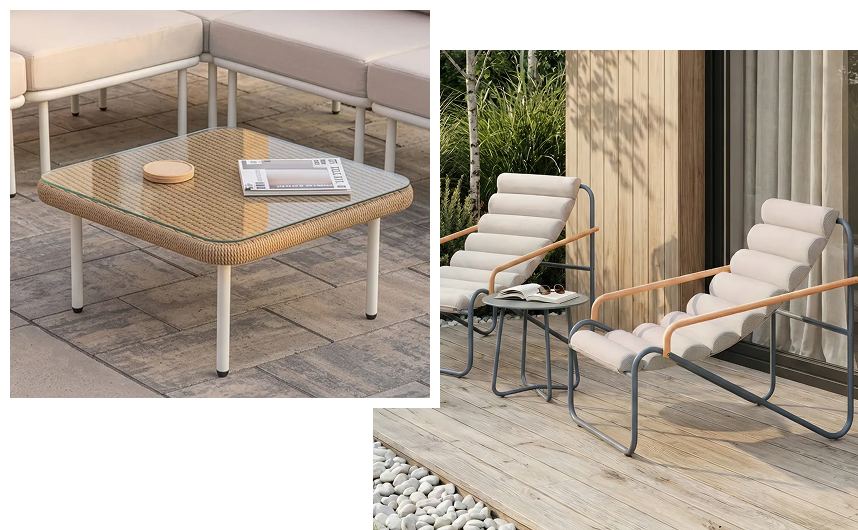
Metal and glass
Black, matte-finished metal and clear or smoked glass appear mostly in lighting and small accents - pendant lamps, table legs, vases. They're kept minimal and functional, never ornate, and their job is mostly to add a bit of contrast and structure against all the softness of wood and textiles.
How to spot a genuine Scandinavian piece?
Scandinavian design has been copied and diluted for decades, so it's worth knowing what separates the real thing from a generic "minimalist" label. Here's what to look for:
Purposeful, not just plain
A genuine Scandinavian piece is simple because every unnecessary detail has been removed, not because nothing was ever added. Look for smart functionality - hidden storage, stackable chairs, adjustable shelving - hiding behind the plain exterior.
Solid, honest materials
Real Scandinavian furniture favours solid or high-quality veneered light wood over cheap laminate, and natural fibres over synthetic ones. The materials should feel warm and tactile, not cold or plasticky.
Considered proportions
Scandinavian pieces tend to look light on their feet - slim legs, narrow frames, a sense that the furniture isn't taking up more visual space than it needs to. Bulky, oversized pieces rarely belong in this style.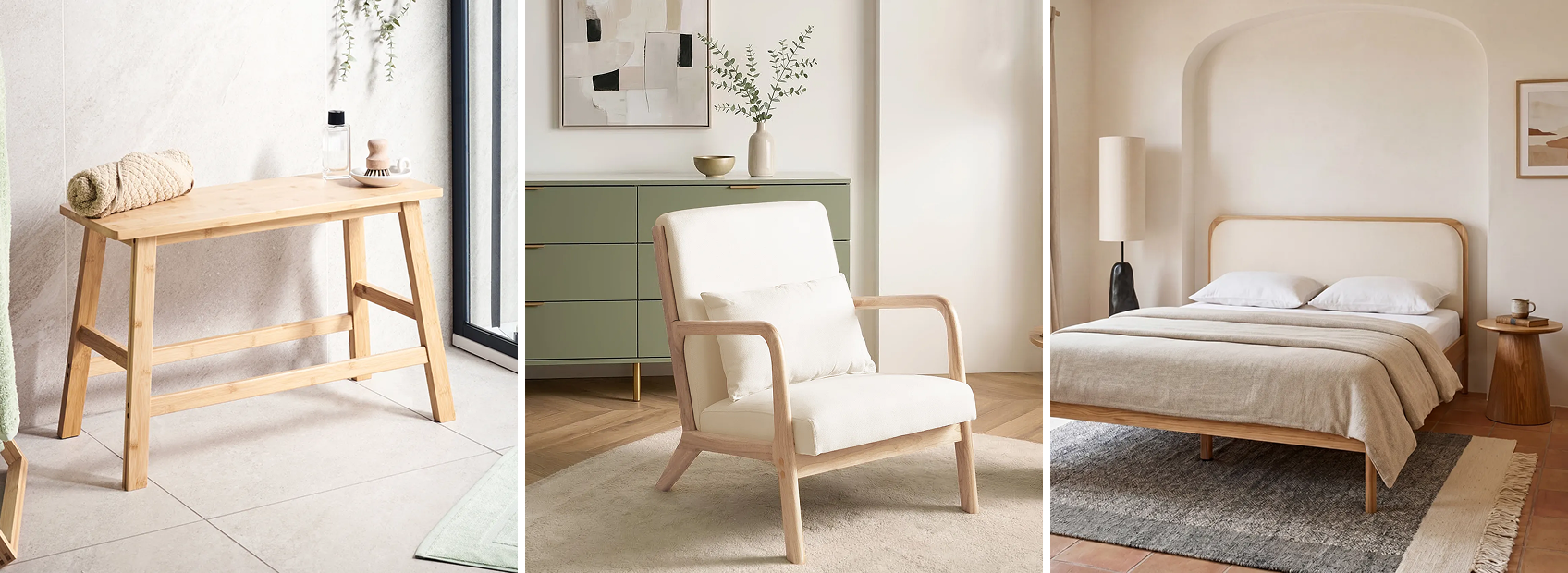
What other styles pair well with Scandinavian?
Scandinavian style is famously easy to live with, and it blends comfortably into plenty of other looks as a calming base note.
- Japandi: Scandinavian simplicity meets Japanese craftsmanship and a slightly darker, more grounded palette. A natural pairing for anyone who wants a touch more depth.
- Rustic: pale Scandinavian wood softens rustic's rougher, heavier pieces, while rustic adds a bit more texture and history to a Scandinavian room.
- Minimalist: the two overlap heavily, but Scandinavian keeps things warmer and more lived-in where pure minimalism can feel stark.
- Coastal: the light palettes and natural materials of both styles sit well together, especially in rooms that get a lot of natural light.
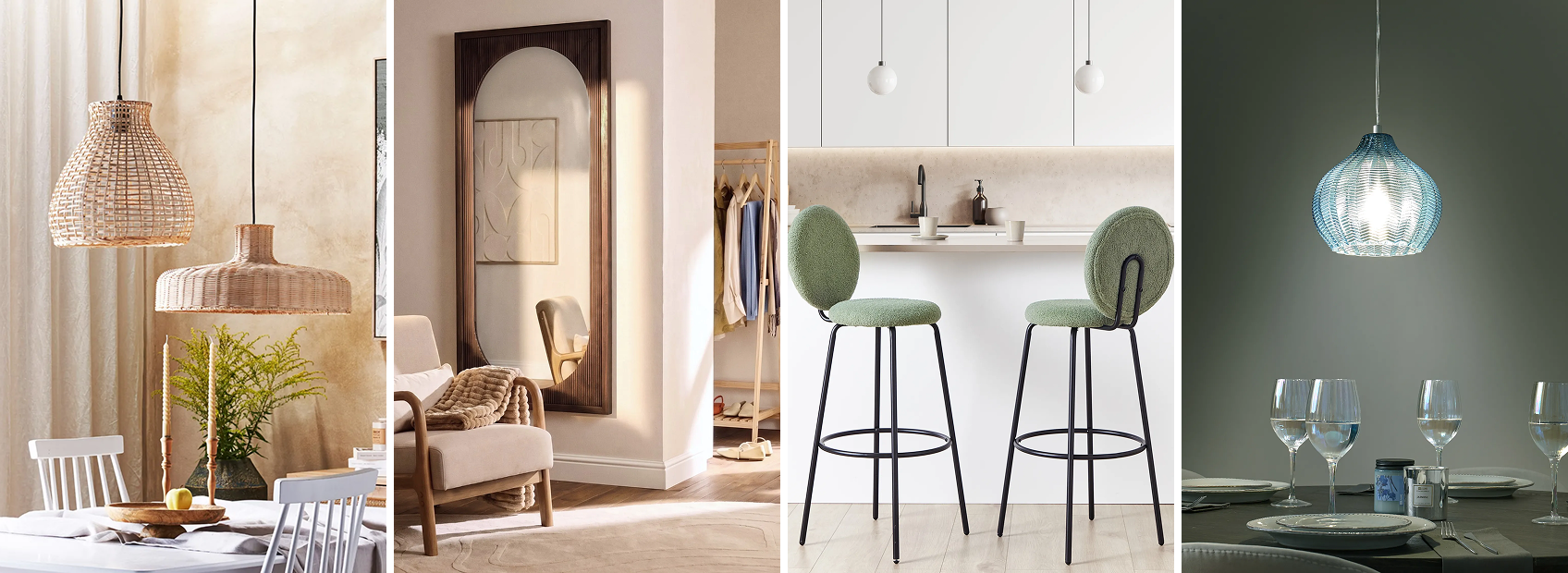
Final tips: how to add a Scandinavian touch to your home
You don't need a full renovation to bring in this look - Scandinavian style is one of the easiest to introduce gradually.
- Start with the walls and floor: a coat of white or light grey paint and pale flooring do most of the heavy lifting before you even buy new furniture.
- Choose one or two light-wood anchor pieces: a dining table or a sideboard in oak or birch sets the tone for the rest of the room.
- Layer in cosiness: a wool throw, a sheepskin on a chair, a few candles - this is what stops the look from feeling bare.
- Let daylight in: keep window treatments minimal or sheer, and skip heavy curtains that block out what little light there is.
- Edit, don't accumulate: keep surfaces clear and only display objects you actually like. A cluttered room undoes the whole effect.
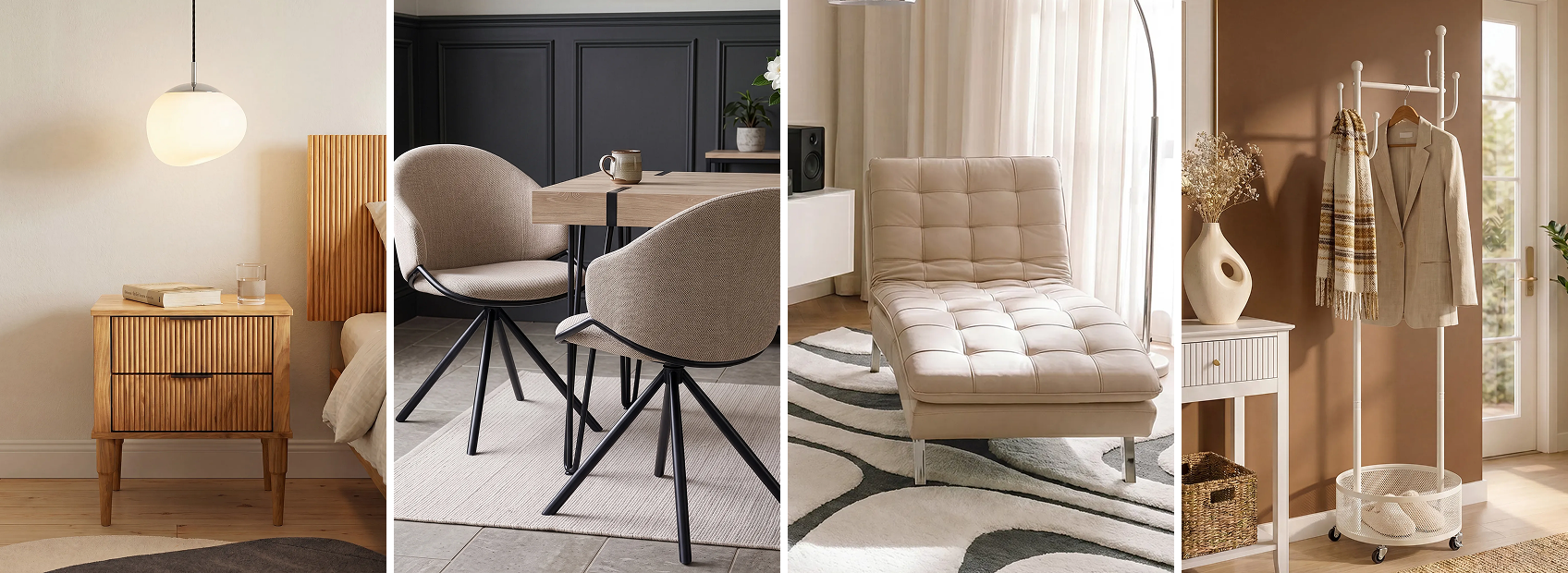
Ready to bring some Scandinavian calm into your home? Browse our full Scandinavian collection

Forgotten password?
A new password has been sent
If an account with this email exists, you’ll receive an email with instructions to reset your password.
Log in