Free Delivery
 365-Day Returns
 10 Million Happy Customers
 500,000 Products in Stock
Furniture Care Guide: Cleaning Codes, Wash Symbols and Maintenance Tips
Reviewed by the Beliani Content Team · Updated September 2026
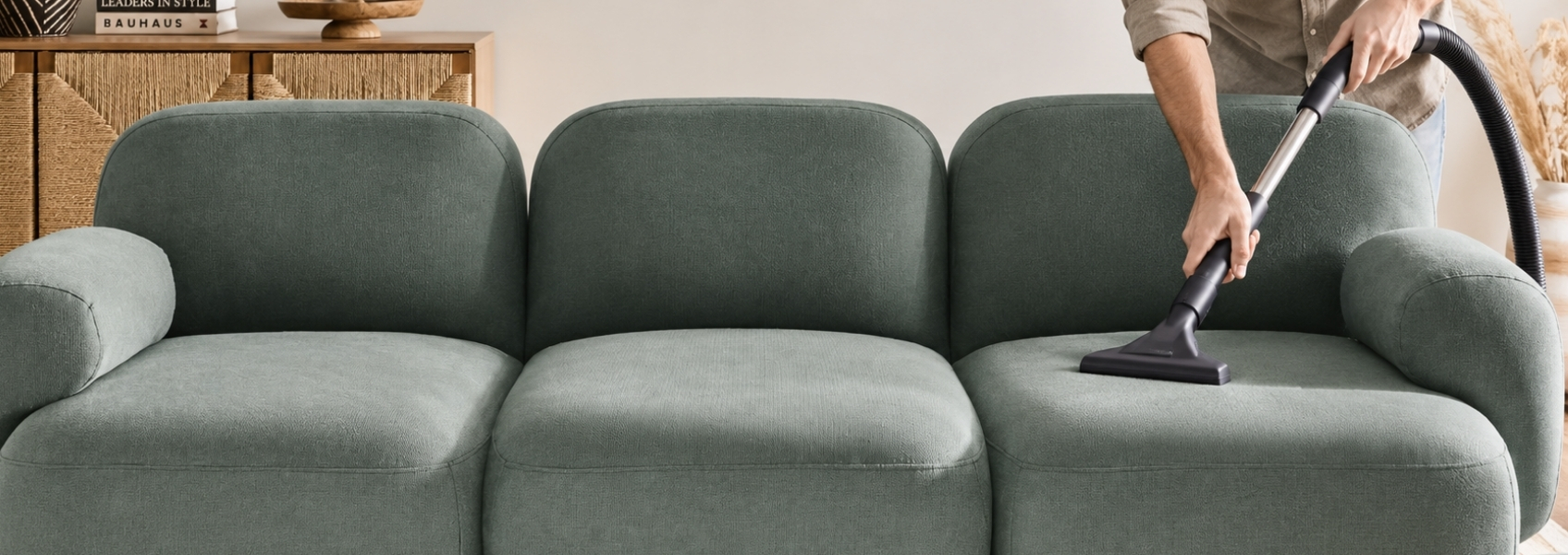
We've all been there: a stray mug of coffee tips over onto your favourite velvet settee. The knee-jerk reaction is to scrub it with a damp cloth and detergent, but that quick fix is actually wrong - it will leave a permanent water ring on the fabric. Every material in your home responds differently to water, heat and everyday wear - this guide walks through the codes and symbols manufacturers use, and the specific care each major furniture material needs to last.
Upholstery cleaning codes: what do they mean?
Most upholstered furniture has a cleaning code label hidden under cushions or attached to the frame. This code tells you which cleaning methods are suitable for the fabric. Using the wrong product can cause stains, fading, shrinkage or permanent damage.
Water-based cleaning
Use a water-based upholstery cleaner or a slightly damp cloth. Suitable for fabrics that tolerate moisture. Avoid: solvent-based cleaners.
Solvent cleaning only
Use a water-free solvent cleaner designed for upholstery. Avoid introducing moisture to the fabric. Avoid: water and steam cleaning.
Water or solvent
The most flexible option. Choose the cleaner depending on the type of stain and always test first in a hidden area. Avoid: mixing water and solvent cleaners on the same stain.
Vacuum only
Use gentle vacuuming or brushing only. Leave stain removal to a professional upholstery cleaner. Avoid: liquid cleaners.
Dry clean only
An occasional, stricter code seen on delicate fabrics that require specialist treatment. Avoid: home cleaning of any kind.
W and WS are usually the easiest codes for everyday living rooms, while X and D require the most caution.
Read more: sofa upholstery guide
Wash symbols explained: how to read a care label?
Care labels use internationally recognised symbols to show how fabrics should be washed, dried, ironed and professionally cleaned. A crossed symbol means "do not", while numbers show maximum temperatures and lines indicate gentler care processes.
Washing symbols
Normal wash
Machine washable. The number shows the maximum temperature.
Mild wash
One underline means a gentler cycle with reduced spinning. Max 40°C.
Delicate wash
Two underlines mean the gentlest machine cycle. Max 30°C.
Hand wash only
Wash gently by hand, usually at a maximum of 40°C.
Do not wash
Do not wash by machine or hand.
Bleaching symbols
Any bleach allowed
Plain triangle. Both chlorine and oxygen-based bleach are safe to use.
Non-chlorine bleach only
Diagonal lines inside. Use oxygen-based bleach only.
Do not bleach
Crossed-out triangle. Avoid all bleaching products.
Drying symbols
Tumble dry: normal
Amount of dots inside circle indicates temperature: two dots mean normal heat, up to 80°C, and one dot means lower heat, up to 60°C.
Do not tumble dry
Crossed-out circle in a square. Air or flat dry instead.
Line drying
Square with vertical lines. One line means hang to dry, two lines mean hang while still wet, without wringing.
Flat drying
Square with horizontal lines. One line means lay flat to keep its shape, two lines mean lay flat while still wet.
Ironing symbols
Iron: high heat
Three dots indicate the highest temperature setting, up to 200°C.
Iron: medium heat
Two dots indicate medium heat, up to 150°C.
Iron: low heat
One dot indicates low heat, up to 110°C, suitable for delicate fabrics.
Do not iron
Avoid ironing. Heat may damage the fabric.
Professional textile care symbols
Dry clean
A professional cleaner should choose the correct solvent.
Mild dry clean
Use a gentler professional cleaning process.
Professional wet clean
Controlled water-based cleaning carried out by specialists.
Do not wet clean
Avoid professional water-based cleaning.
How to remove common furniture stains?
Accidents happen, but acting quickly can prevent permanent marks. Always check the care label before cleaning and test any product on a hidden area first.
Blot only
Liquid spills
Blot immediately with a clean, dry cloth. Don't rub, as this pushes the liquid deeper into the fibres.
Lift & clean
Food stains
Remove any solid pieces first, then clean according to the upholstery code. Avoid aggressive scrubbing.
Solvent only
Grease marks
Use a suitable solvent cleaner only if the fabric's cleaning code allows it.
Vacuum
Pet hair and dust
Vacuum regularly with a soft upholstery attachment to stop dirt building up.
How to care for indoor furniture?
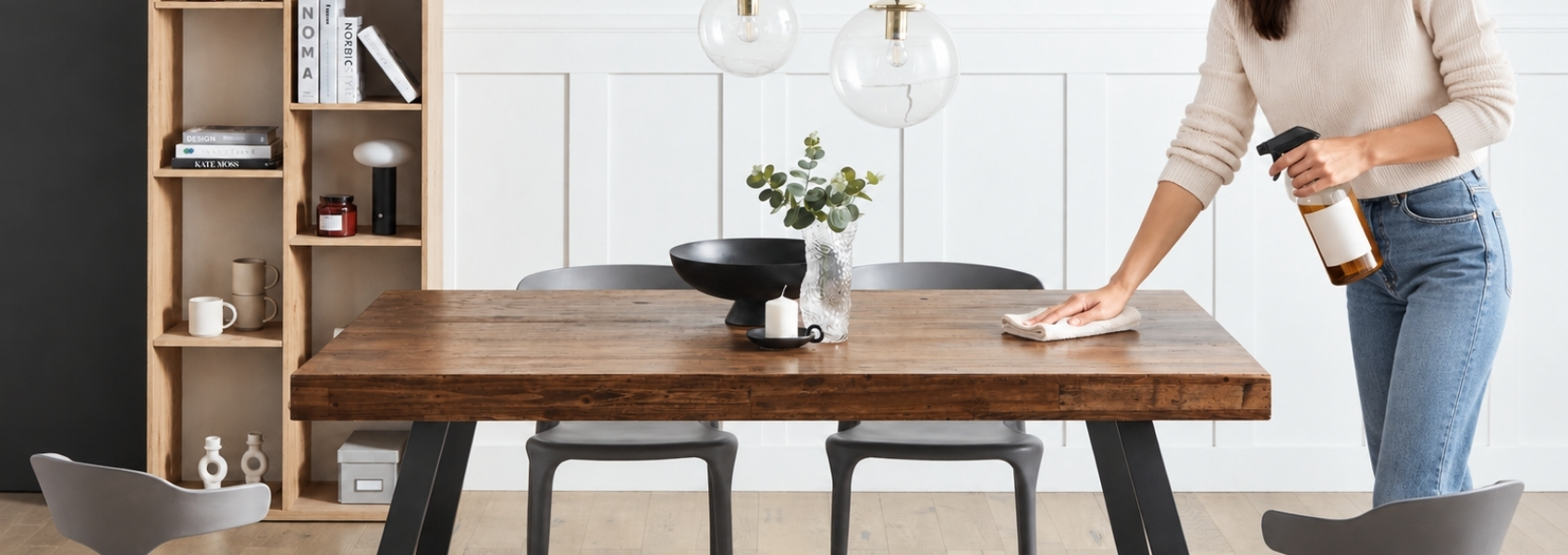
Indoor furniture is made from a mix of materials, and each one needs slightly different care. Proper maintenance protects the finish, stops cracks or warping, and keeps pieces looking their best for longer.
Everyday care for indoor furniture
These habits suit almost every indoor material:
- Remove dust regularly with a soft, dry cloth
- Wipe up spills immediately, then dry the surface completely
- Use coasters, placemats and protective pads to guard against heat marks and scratches
- Keep furniture away from direct sunlight and strong heat sources such as radiators and fireplaces where possible
Material-specific indoor care
The right cleaning method depends heavily on the exact material, not just the broad category. The table below breaks down the most common types of indoor wood, wood-effect, leather, metal and glass furniture.
| Material | Care advice |
|---|---|
| Solid wood | Responds to changes in humidity, so avoid soaking it; polish only when needed, since too much product leaves a sticky surface that attracts dust, and always use wood-specific oils, waxes or conditioners that suit the finish, following the manufacturer's instructions |
| Wood veneer | Clean gently and avoid excess moisture around edges and joins, where the thin veneer layer is most vulnerable to lifting |
| Melamine / paper laminate | Wipe with a damp cloth and a mild cleaner; the surface resists scratches and heat well, but unsealed edges can swell if they stay wet for long |
| High-pressure laminate (HPL) | The toughest wood-effect option, coping well with heat and daily knocks; clean with a soft cloth and a non-abrasive cleaner |
| PVC foil / wrap | Fully waterproof and easy to wipe clean, but keep it away from radiators and other direct heat sources, since it withstands heat less well than melamine or HPL |
| Real leather | Dust with a soft, dry cloth, vacuum seams and gaps with a soft attachment, and blot spills immediately rather than wiping; use a furniture leather conditioner only when needed and test it on a hidden area first. Keep away from radiators, fireplaces and strong sunlight, and avoid harsh household detergents, alcohol-based products, excess water and rough brushes, all of which can strip the finish or scratch the surface |
| Faux leather | Wipe with a soft, slightly damp cloth and dry the surface to prevent moisture marks; a mild soap solution is usually enough. Avoid conditioners made for natural leather unless the label confirms they suit faux leather too, and skip abrasive scourers and prolonged soaking, which can damage the coated surface. It is less prone to drying out than real leather, but prolonged direct heat can still crack the coating over time |
| Metal | Dust regularly with a soft cloth and clean marks with warm water and a mild detergent; dry thoroughly afterwards, especially around joints and connections, and avoid abrasive pads, which can damage painted or powder-coated finishes |
| Glass | Use a soft microfibre cloth to avoid streaks and clean spills quickly, especially acidic liquids that can leave marks; avoid dragging objects across the surface and use protective mats under decorative items and heavy objects |
Important safety tip
Never place a very hot object directly on glass furniture. A sudden change in temperature can stress the glass enough to crack it.
Shop now: solid wood tables, wooden chairs and leather sofas
How to care for outdoor furniture?
Spring and summer care
- Remove dust, leaves and debris regularly, before they trap moisture against the surface
- Clean surfaces with mild soap and water when needed, then rinse and dry fully
- Dry cushions completely after rain before storing or covering them, since damp fabric is what invites mould
- Check fixings and joints periodically and tighten any that have worked loose from regular use
- Use a protective cover during longer periods when the furniture isn't in use, especially over cushions and other fabric parts
Preparing furniture for winter
- Clean and dry furniture completely before storing it, so nothing is packed away damp
- Bring cushions and other textiles indoors where possible, since fabric is the part most vulnerable to cold, wet weather
- Keep furniture in a dry, ventilated space if you have one, rather than sealed tightly in plastic, which can trap condensation
- Avoid leaving textiles exposed to frost, snow or prolonged damp
- If a piece has to stay outdoors, use a breathable cover rather than an airtight one, and check underneath it occasionally for trapped moisture
Read more: how to prepare outdoor furniture for winter
Material-specific outdoor care
How much upkeep outdoor furniture needs depends heavily on the exact material, not just the broad category. The table below breaks down the most common types of outdoor wood, metal, rattan and fabric.
| Material | Care advice |
|---|---|
| Teak | Its high natural oil content makes it the lowest-maintenance outdoor wood; left untreated it weathers to a silver-grey patina, or an occasional oiling keeps its original honey tone |
| Acacia | Contains less natural oil than teak, so it needs regular sealing or oiling, roughly once or twice a year, to stop the wood cracking and drying out |
| Eucalyptus | A mid-priced option that benefits from occasional oiling, plus a light yearly sanding to smooth any roughness caused by sun and rain |
| Aluminium | Naturally resists rust and forms its own protective oxide layer; wipe clean and keep the powder-coated finish intact to prevent pitting |
| Steel | More prone to rust than aluminium unless it's stainless steel or has a protective coating; touch up any chips in the paint or powder coating promptly |
| Wrought iron | Heavy and long-lasting, but needs a protective coating or paint maintained regularly, since scratches and welded joints are the first places rust takes hold |
| Natural rattan | Best suited to covered or sheltered spots; keep it out of prolonged sun and rain, since moisture trapped in the weave can lead to mould |
| Synthetic / PE rattan | UV-stabilised and weatherproof, so it copes well left outdoors; brush away dirt regularly and clean with mild soapy water |
| Solution-dyed acrylic fabric | The most fade-resistant outdoor fabric; clean with mild soap and let cushions dry out fully before covering or storing them |
| Olefin fabric | Dries quickly and resists mould well, but keep it out of intense heat and repeated friction, which weaken the fibres over time |
Shop now: outdoor furniture
Common furniture care mistakes to avoid
Wrong cleaner
Using the wrong cleaner
A product that works on one material can damage another. Always check the care label and test on a hidden area first.
Scrubbing
Scrubbing at stains
Rubbing can push a stain deeper into the fibres and damage the surface. Blot gently instead.
Too much water
Using too much water
Excess moisture can cause marks, swelling or damage to wood, upholstery and other materials.
Sunlight
Ignoring sunlight exposure
Prolonged direct sunlight can fade fabric, leather, wood finishes and some outdoor materials.
Skipped care
Skipping regular maintenance
Small amounts of dust and dirt build up over time and become harder to remove. A simple routine makes a big difference.
Dragging
Moving furniture incorrectly
Dragging heavy furniture can damage floors, legs and joints. Lift it where possible and use protective pads underneath.
A simple furniture maintenance schedule
A small amount of regular care prevents bigger problems later. This routine works across most materials, though it's worth adjusting the detail to what each piece needs.
| Frequency | What to do |
|---|---|
| Daily | Wipe up spills straight away and clear off crumbs or debris |
| Weekly | Dust surfaces, vacuum upholstery and cushions, and check for early signs of wear |
| Monthly | Clean each material according to its type and rotate cushions for even wear |
| Seasonally | Prepare outdoor furniture for the season ahead and deep-clean textiles according to their care label |
What to check before you clean or treat furniture
Before reaching for a cleaner or tackling a stain, run through this short list.
- Check the cleaning code or care symbol before applying any product
- Test a new cleaner on a hidden area first
- Blot spills immediately rather than rubbing them
- Match the cleaning method to the material, not just the type of stain
- Keep leather, wood and glass away from direct heat and strong sunlight
- Let any damp area dry completely before using or covering the furniture again
Frequently asked questions
What should I do if my furniture has no cleaning code?
Treat it with the same caution as an X code until you know more: vacuum only, and contact the retailer or manufacturer for the correct cleaning method before using any liquid product.
Can I use the same product on fabric and leather upholstery?
No. Fabric cleaners and leather conditioners are formulated for different materials, and using one on the other can strip finishes, dry out leather or leave a residue on fabric.
Why does my sofa smell even after cleaning?
A lingering musty smell almost always means moisture was left trapped in the padding rather than fully dried out, which lets mould or mildew develop out of sight. Make sure the sofa dries completely after any wet clean, and use an enzyme cleaner rather than a scented product if odours were already trapped deep in the cushions.
Do outdoor cushions need to come inside every night?
Not for a single dry evening, but bring them in during prolonged rain or damp weather, and always store them inside before winter or any long period the furniture won't be used.
Will regular dusting scratch wood furniture?
No, as long as the cloth is soft and dry. Scratches are more likely to come from grit trapped under a dirty cloth, so shake it out often or switch to a clean one.
Does humidity affect wood or leather furniture?
Wood is affected the most: it swells in high humidity and cracks or shrinks in very dry air, so it does best between roughly 45-55% relative humidity. Leather is more sensitive to heat and dryness than to humidity itself, though sustained damp conditions can still encourage mould on its surface.