Free Delivery
 365-Day Returns
 10 Million Happy Customers
 500,000 Products in Stock
How To Style A Small Hallway: Mirrors, Lighting & Décor Tips
Reviewed by the Beliani Content Team · Updated September 2026
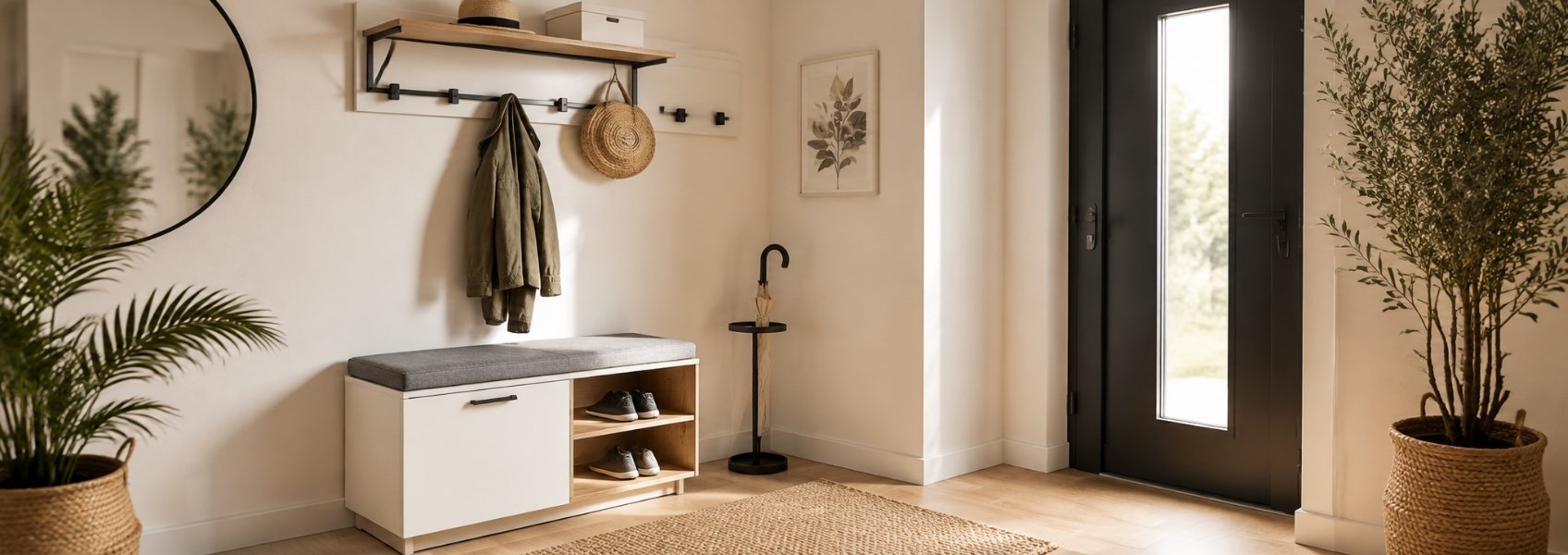
A small hallway sets the tone for the whole home, yet it is usually the room with the least space to work with. The right mirror placement, layered lighting and a handful of well-chosen pieces can make a narrow entrance feel wider and brighter without any structural changes. This guide works through what actually makes a difference, from where to hang a mirror to which furniture still fits.
In short
How do you make a small hallway look bigger?
Hang a large mirror on a side wall to bounce natural light across the space, layer at least two light sources instead of relying on a single ceiling fitting, and keep walls, floor and any furniture within a close, pale tonal range. Combined, these three changes do more for a narrow hallway than any single piece of furniture. Leave at least 90 cm of clear walking width once furniture is in place, since this is the minimum for comfortable single-file passage.
Where should a mirror go in a small hallway?
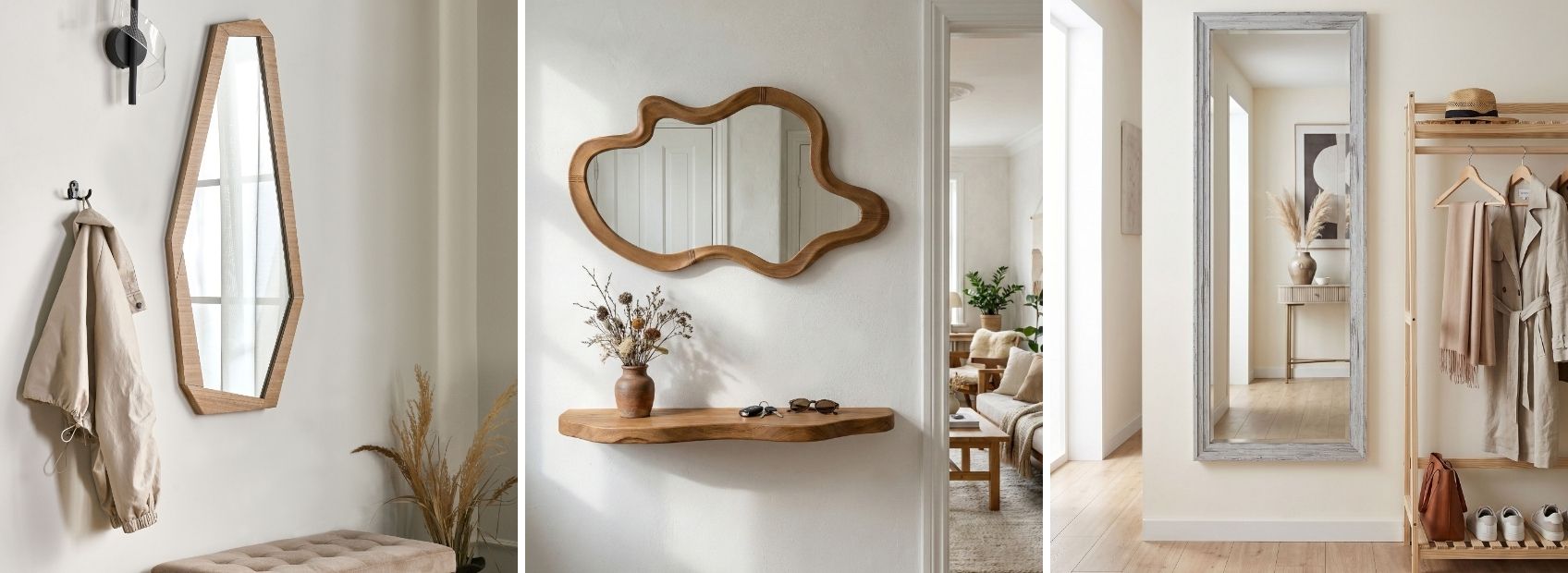
A mirror works best on a side wall, positioned to catch light from a window or doorway and reflect it back into the hallway. Placed directly opposite the front door, a mirror reflects incoming light straight back outside instead of into the space, which reduces the brightening effect it is meant to have.
Size matters more than shape in a narrow hallway. A single large mirror reads as one clean reflective surface and makes the wall feel taller, while a cluster of small mirrors breaks the wall into fragments and can make a tight space feel busier rather than bigger.
- Hang the mirror with its centre at roughly eye level, around 150-160 cm from the floor
- Choose a mirror at least 70 cm tall if wall space allows, since undersized mirrors have less visual impact
- A vertical orientation suits a narrow wall better than a wide horizontal mirror
Read more: how to use mirrors to make your space look bigger
What lighting works best in a narrow hallway?
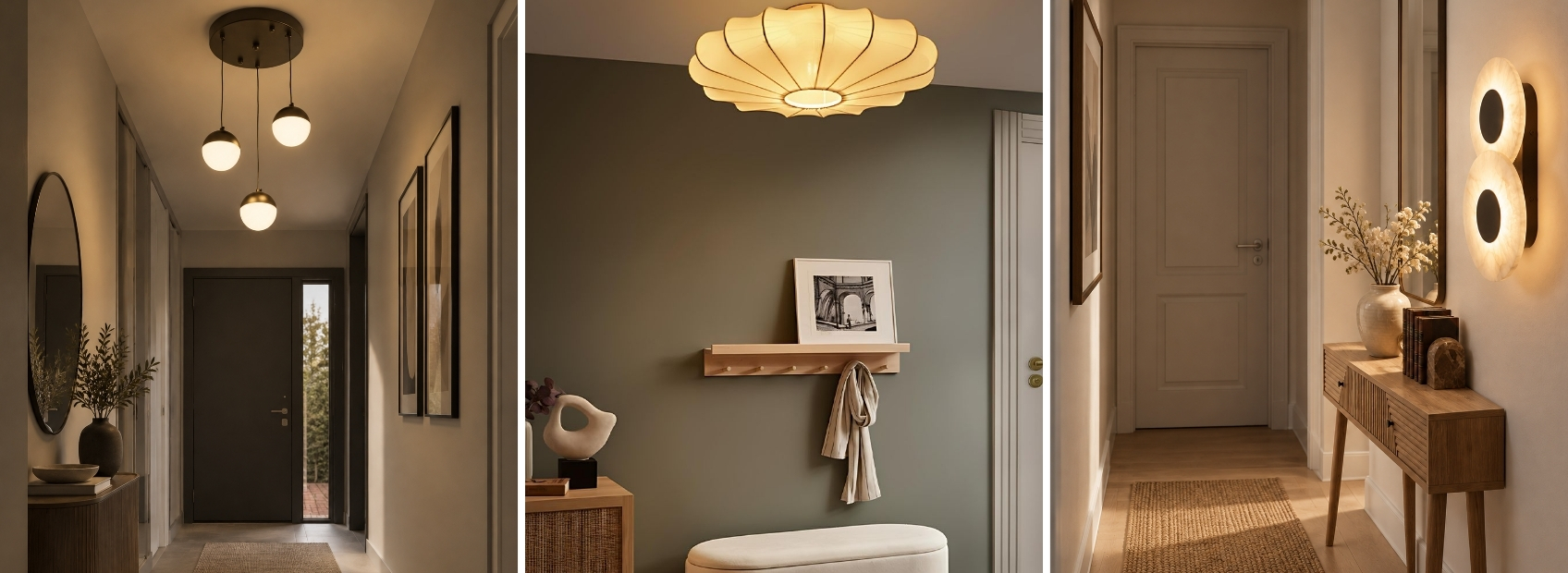
A single central ceiling light tends to flatten a narrow hallway, throwing shadows toward the walls rather than lifting the whole space. Layering two or three light sources at different heights gives more even coverage and makes the hallway feel taller and wider at the same time.
A slim wall lamp positioned near the mirror adds a second light source without taking up any floor space, which matters in a hallway where every centimetre of width counts. Where the ceiling height allows, a pendant light draws the eye upward and reinforces the sense of height.
Shop now: wall lamps and pendant lights
Warm or cool light for a hallway?
A warm white light, generally in the 2700-3000K range, suits a hallway better than a cooler daylight tone, since it feels welcoming rather than clinical in a space people pass through quickly. Reserve cooler, brighter light for task areas such as a mirror used for grooming.
Read more: lighting ideas to enhance the mood of a room
Which furniture actually fits a small hallway?
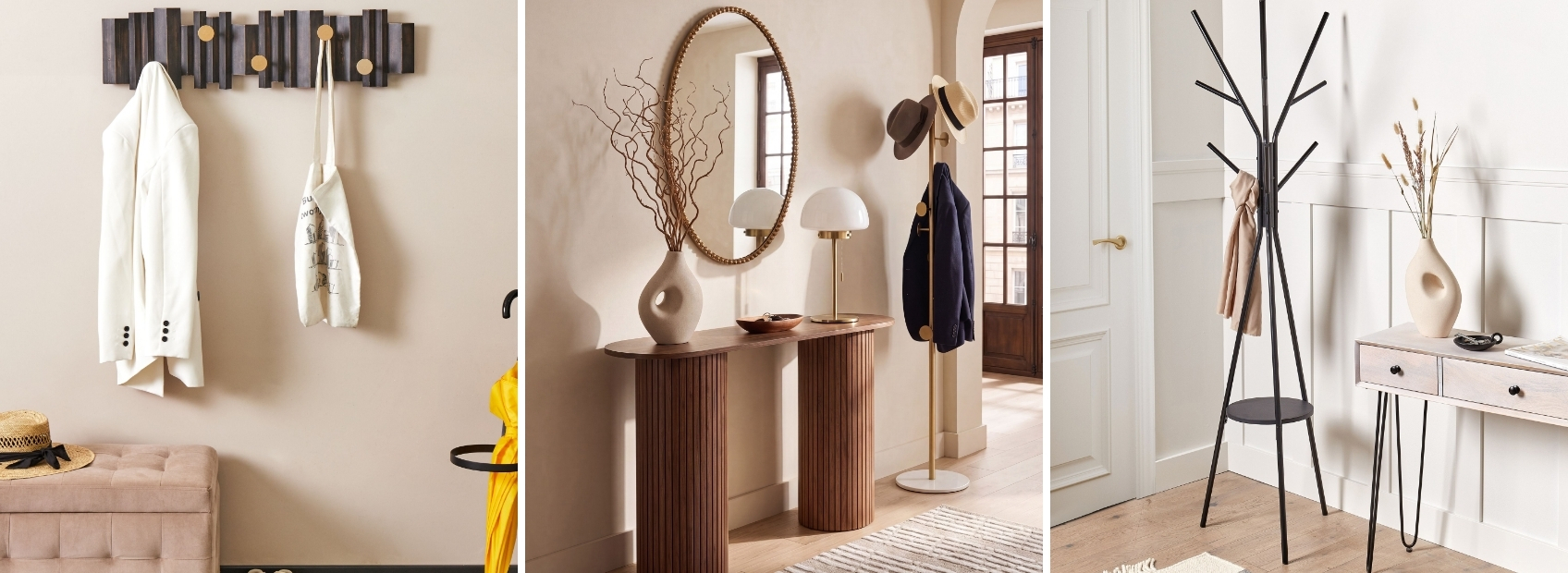
In a hallway narrower than around 120 cm, deep furniture is usually the first thing to rule out. A slim console table between 20-30 cm deep sits close to the wall without narrowing the walking path, and a wall-mounted coat rack avoids taking up any floor space at all.
Best for tight space
Wall-mounted coat stand
Keeps the floor entirely clear, which matters most in a hallway under 100 cm wide. Look for one with hooks at two heights so coats and bags do not overlap.
Best for storage
Slim console table
Adds a surface for keys and post as well as a shelf for shoes below, without the footprint of a full cabinet. Choose a depth of 30 cm or less against a wall narrower than 120 cm.
Shop now: console tables and coat stands
Should you use a rug in a small hallway?
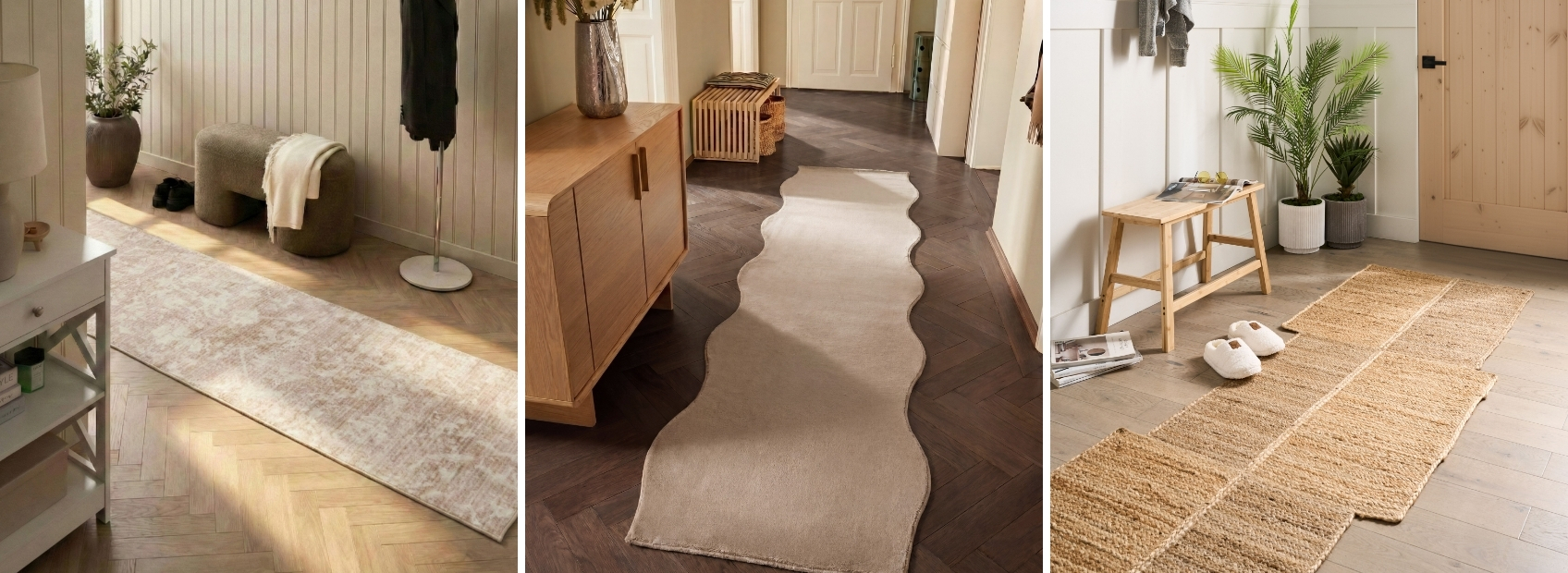
A runner rug is one of the few rug shapes suited to a narrow hallway, since its long, narrow proportions follow the walking line instead of cutting across it. Leave roughly 10-15 cm of bare floor visible on each side of the runner, as a rug that spans the full width can make the hallway look even narrower by removing the visible floor edge.
A common mistake: matching the rug to the walls
A runner in the same pale tone as the walls and floor disappears visually and adds nothing. A slightly darker tone, or a subtle pattern, defines the walking path and helps hide everyday marks in a high-traffic area.
Shop now: runner rugs
What colours make a hallway feel bigger?
Light, warm neutrals extend a hallway further than either stark white or a dark, saturated colour. White reflects light but can read as flat and cold in a space with little natural light of its own, while dark colours absorb light and close the walls in.
Keeping walls, skirting boards and ceiling within a close tonal range removes the visual breaks that make a corridor feel boxed in. A change in colour at the skirting or ceiling line draws a horizontal edge across the space, which shortens how tall or wide it looks.
What to check before buying
Before choosing mirrors, lighting or furniture for a small hallway, work through these practical checks.
- Measure the narrowest point of the hallway, not just the average width
- Confirm at least 90 cm of clear walking width remains once furniture is in place
- Check the mirror's position relative to windows and doorways, not just the front door
- Plan for at least two light sources at different heights, not one central fitting
- Measure furniture depth against the wall width, prioritising anything under 30 cm in tight hallways
- Choose a runner rug at least 10-15 cm narrower than the hallway on each side
Read more: how to arrange small spaces
Frequently asked questions
Should a hallway mirror face the front door?
It works best placed on a side wall rather than directly opposite the door, since a mirror facing the entrance reflects light straight back outside instead of into the hallway. A side placement bounces light across the space and still lets you check your appearance before leaving.
Is a runner rug a good idea in a small hallway?
Yes, a runner is one of the few rug shapes that suits a narrow hallway well, as it follows the natural walking line instead of interrupting it. Leave roughly 10-15 cm of floor visible on each side of the runner so the hallway still reads as wide.
What colour should a small hallway be painted?
Light, warm neutrals extend a hallway visually further than stark white or dark tones, because they reflect available light without the flatness of pure white. Keeping walls, skirting and ceiling within a close tonal range removes the visual breaks that make a corridor feel boxed in.
How do I stop a small hallway feeling cluttered with storage?
Choose one or two storage pieces rather than a full run of furniture, and prioritise wall-mounted or slimline designs over anything free-standing on both sides. A single console table or coat stand against one wall usually does the job without narrowing the walking path.
What is the minimum width for hallway furniture?
Keep at least 90 cm of clear walking width after any furniture is placed, since this is the standard minimum for a single person to pass through comfortably. In a hallway narrower than around 120 cm, this usually rules out anything deeper than 20-25 cm, such as a slim console table or wall-mounted shelf.